Apple’s First Foldable iPhone Ultra Ditches Face ID for Touch ID — Here’s the Real Story Behind the Leaks
- 60% of MD5 Password Hashes Can Be Cracked in Under an Hour with a Single GPU
- Dirty Frag: Root Access on Every Major Linux Distribution — No Patch, No Warning
- Ubuntu 26.04 LTS (Resolute Raccoon): The Most Ambitious Ubuntu LTS in a Decade
- Proton Mail: Data Transferred to FBI Again!
- How Close Are Quantum Computers to Breaking RSA-2048?
- How to Prevent Ransomware Infection Risks?
- What is the best alternative to Microsoft Office?
Apple’s First Foldable iPhone Ultra Ditches Face ID for Touch ID — Here’s the Real Story Behind the Leaks
Leaked dummy units and multiple supply-chain sources confirm major design compromises on Apple’s highly anticipated foldable — but framing the absence of Face ID as a “flaw” misses the engineering reality.
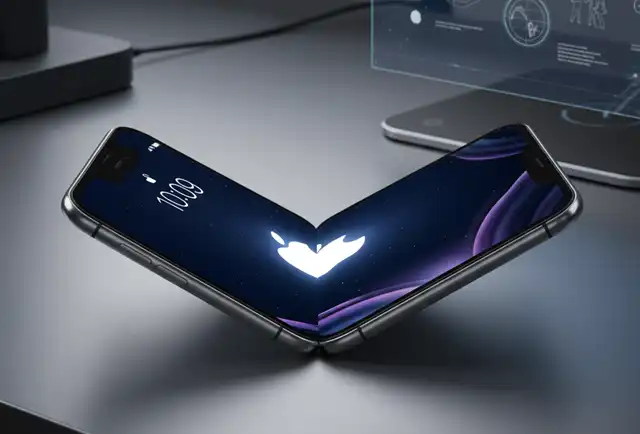
Leaked dummy units shared by Sonny Dickson on June 7, 2026, provided the clearest confirmation yet of the iPhone Ultra’s book-style foldable form factor. (Illustration)
Apple’s first foldable smartphone, expected to launch under the name iPhone Ultra this coming September, is rapidly taking shape in the supply chain — and the picture emerging from leaked dummy units, case manufacturer data, and analyst reports is one of dramatic engineering trade-offs in service of radical thinness.
The most headline-grabbing revelation is the confirmed absence of Face ID, Apple’s hallmark facial recognition system. Multiple independent sources — including prolific leaker Sonny Dickson, analyst Ming-Chi Kuo, and supply-chain insiders cited by 9to5Mac and BigGo — confirm that Apple has replaced Face ID with Touch ID integrated into the device’s side power button.
Why Face ID Isn’t Coming — And It’s Not a “Flaw”
The reason for the switch has nothing to do with a failure or defect in Face ID itself. Rather, it is a direct consequence of the iPhone Ultra’s astonishing unfolded thickness of just 4.5 mm — thinner than any current iPhone, any iPad Pro, and any commercial foldable on the market. Face ID requires a precise array of sensors including a flood illuminator, dot projector, and infrared camera, all of which demand a minimum physical depth that the iPhone Ultra’s chassis simply cannot accommodate.
For context, the iPhone Air — Apple’s current thinnest smartphone at 5.6 mm — is still able to house a Face ID module. The Ultra, at up to 1.1 mm thinner when unfolded, cannot. The challenge is compounded by the foldable form factor itself: a dual-display device would theoretically require two Face ID modules, one for each screen, further doubling the space demands. In this light, Touch ID is not a regression in technology but a calculated concession to achieve an unprecedented engineering milestone.
Design: Punch-Hole Screens Replace Dynamic Island
The iPhone Ultra is also set to abandon the pill-shaped Dynamic Island cutout that has defined Apple’s iPhone design since 2022. According to multiple leak sources, including a factory-floor video and leaked case manufacturer data, both the outer and inner displays will feature single punch-hole camera cutouts. The outer cover screen’s punch-hole is reported to be centrally positioned, while the inner display’s punch-hole sits in the upper-left corner when the device is fully unfolded — a layout familiar from competing Android foldables.
Display Sizes and Hardware Specifications
Leaked case dimensions and dummy units consistently point to a 5.3-inch outer (cover) display — some sources suggest up to 5.5 inches — and a 7.8-inch inner foldable display that is described as near-creaseless, which, if accurate, would be the single most significant foldable display achievement in the industry to date.
Under the hood, the iPhone Ultra is set to debut Apple’s next-generation A20 Pro chip, built on TSMC’s 2-nanometer process. This is the same chip expected to power the iPhone 18 Pro lineup, offering substantial gains in performance and energy efficiency over the A19 Pro. The device will be paired with 12 GB of RAM and storage options rumored to extend up to 1 TB.
On the camera front, the rear system features a dual 48MP setup — a 48MP main wide sensor and a 48MP ultrawide — arranged in a horizontal bar layout. Notably, unlike the iPhone 18 Pro, there is no telephoto lens, a trade-off attributed to the constraints of the foldable chassis.
Battery: Bigger Than Any iPhone Yet
The battery is one area where the iPhone Ultra appears to deliver without compromise. While some circulating summaries describe the capacity as “exceeding 5,000 mAh,” more specific leaks from multiple supply-chain sources put the figure between 5,400 mAh and 5,800 mAh — which would make it the largest battery ever fitted in an iPhone by a considerable margin. The Touch ID power button, by freeing up internal space previously reserved for Face ID sensors, is credited as one reason Apple was able to fit such a large cell.
Release: Fall 2026 Alongside iPhone 18 Pro
Apple is targeting a September 2026 unveiling for the iPhone Ultra, to be announced at the same event as the iPhone 18 Pro and iPhone 18 Pro Max. Bloomberg’s Mark Gurman has corroborated this timeline, though some reports suggest a December launch remains possible if engineering challenges arise. The device is expected to start at approximately $1,999 USD, positioning it firmly in the ultra-premium segment. It will reportedly launch in two color options: silver-white and deep indigo.
Specification Summary
| Feature | Leaked / Verified Detail | Accuracy |
|---|---|---|
| Biometrics | Touch ID in power button; Face ID absent due to 4.5 mm chassis | Confirmed |
| Display design | Punch-hole cameras on both screens; Dynamic Island removed | Confirmed |
| Outer screen | 5.3–5.5 inches, centered punch-hole | Confirmed |
| Inner screen | 7.8 inches, near-creaseless; upper-left punch-hole when unfolded | Confirmed |
| Chip | A20 Pro (2 nm, TSMC); 12 GB RAM; up to 1 TB storage | Confirmed |
| Rear cameras | Dual 48MP (wide + ultrawide); no telephoto | Confirmed |
| Battery | 5,400–5,800 mAh (not merely “exceeding 5,000 mAh”) | Partially Accurate |
| Launch timing | September 2026 (alongside iPhone 18 Pro) | Confirmed |
| Framing of Face ID absence as a “flaw” | Incorrect — it is a physical space constraint, not a technological defect | Misleading |
Bottom Line
The widely circulated account of the iPhone Ultra’s specifications is largely grounded in real, well-sourced leaks. The core hardware details — Touch ID power button, dual punch-hole displays, screen sizes, A20 Pro chip, dual 48MP cameras, and a September 2026 release — are supported by multiple independent sources from the supply chain, leakers, and analysts. Where the original framing falls short is in characterizing Face ID’s absence as evidence of a “flaw” in facial recognition: it is, in fact, a deliberate and unavoidable engineering choice to achieve unfolded thinness that no foldable smartphone has ever matched. Apple’s bet is that consumers will forgive the biometric step back in exchange for a genuinely unprecedented form factor — and with strong polling support for Touch ID’s return, that bet may well pay off.