Smartphone OS: Is the Ubuntu Touch Project Still Alive?
- 60% of MD5 Password Hashes Can Be Cracked in Under an Hour with a Single GPU
- Dirty Frag: Root Access on Every Major Linux Distribution — No Patch, No Warning
- Ubuntu 26.04 LTS (Resolute Raccoon): The Most Ambitious Ubuntu LTS in a Decade
- Proton Mail: Data Transferred to FBI Again!
- How Close Are Quantum Computers to Breaking RSA-2048?
- How to Prevent Ransomware Infection Risks?
- What is the best alternative to Microsoft Office?
Tech Report / Mobile Linux
Open-Source OS Report · June 2025
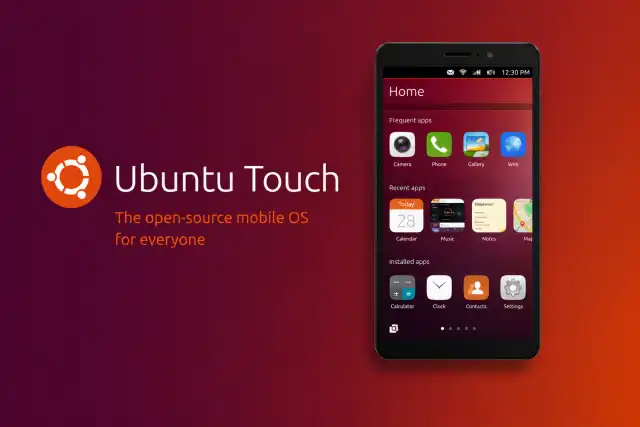
Smartphone OS: Is the Ubuntu Touch Project Still Alive?
Canonical killed it in 2017. The community refused to let it die. Today, Ubuntu Touch is not only alive — it’s shipping on Ubuntu 24.04 LTS.
When Canonical officially shuttered Ubuntu Touch development eight years ago, it looked like another promising mobile Linux project heading for the graveyard. Instead, the open-source community mobilised almost immediately. The UBports Foundation took stewardship of the codebase, and what began as a rescue mission has evolved into a mature, independently governed mobile operating system with a global contributor base.
01 — Base Upgrade
From Xenial to Noble: Ubuntu Touch Lands on 24.04 LTS
For years, Ubuntu Touch was locked to Ubuntu 16.04 (Xenial) — an increasingly long-in-the-tooth foundation. The UBports team completed the migration to Ubuntu 20.04 LTS (Focal Fossa) with a series of OTA updates, then immediately began work on the next jump. By 2025, the team had successfully transitioned to Ubuntu 24.04 LTS (Noble Numbat), with the first stable release in the new 24.04-1.x series scheduled for September 2025 and a Release Candidate shipped in October. The jump brings Qt 5.15 support, paving the way for a future Qt 6 migration, along with modernised libraries across the stack.
“Ubuntu Touch in 2025 is a viable daily driver with steady long-term maintenance and clear improvements from the 24.04 LTS base.”
02 — Hardware
Hundreds of Devices, Pre-installed Options
Beyond the earliest official hardware partnerships, the community has ported Ubuntu Touch to a wide range of Android devices. Privacy-oriented manufacturers have gone further, offering Ubuntu Touch as a factory-installed option:
- PinePhone & PinePhone Pro — Ubuntu Touch ships as one of several pre-installable OS choices, with first-class community support.
- Volla Phone & Volla Phone 22 — Available out of the box; community users report Waydroid running stably on the 24.04-1.x build.
- Fairphone 5 — An increasingly popular target for community porters who value repairability alongside software freedom.
- OnePlus, Google Pixel, Xiaomi (select models) — Many older flagships have mature, well-maintained community ports.
03 — Platform
Lomiri, Waydroid, and the OpenStore
The Unity 8 shell was renamed Lomiri and continues to evolve. It now runs on Debian as well as Ubuntu Touch, and received a redesigned boot logo in 2025.
Android app compatibility via a containerised Android runtime. Community users report stable operation on supported devices running the 24.04-1.x branch.
The native app store hosts community-built utilities, WebApps, and indie games. Support for apps built against the 24.04-1.x framework is being added alongside the stable release.
Connect a USB-C dock and Ubuntu Touch transforms into a desktop environment capable of running full Linux apps like LibreOffice and GIMP — the original vision, still intact.
04 — Verdict
Who Should Consider It?
Ubuntu Touch is no longer a commercially driven venture — it is a community-governed, open-source project with a clear release cadence and genuine momentum. Whether it makes sense for you depends on what you need from a phone:
| User Profile | Fit | Note |
|---|---|---|
| Linux & privacy enthusiast | Recommended | Mature experience on supported devices; active development, transparent governance. |
| PinePhone / Volla user | Recommended | First-class support, pre-installed option available from the manufacturer. |
| Mainstream daily driver | With caveats | Limited native banking and commercial app availability; Waydroid helps but is not universal. |
| Android / iOS replacement | Not yet | Localised commercial apps and broad hardware support remain ongoing challenges. |
For anyone curious about mobile Linux or seeking genuine data sovereignty on a smartphone, Ubuntu Touch in 2025 is more capable and better maintained than it has ever been. The community has earned that reputation through eight years of quiet, determined work.