The 2026 Vulnerability Explosion:Why Are So Many CVEs Being Discovered?
- Apple’s Native Linux Container Tool Has Arrived — But Can It Really Replace Docker?
- 60% of MD5 Password Hashes Can Be Cracked in Under an Hour with a Single GPU
- Dirty Frag: Root Access on Every Major Linux Distribution — No Patch, No Warning
- Proton Mail: Data Transferred to FBI Again!
- How Close Are Quantum Computers to Breaking RSA-2048?
- What is the best alternative to Microsoft Office?
The 2026 Vulnerability Explosion:
Why Are So Many CVEs Being Discovered?
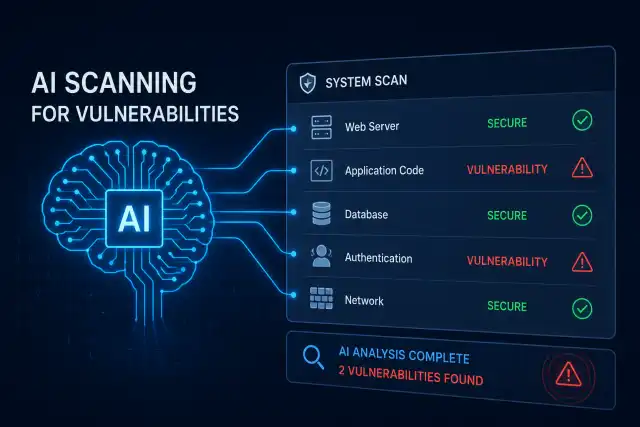
Vulnerability disclosures have shattered every previous record in 2026. AI tools that find bugs, AI tools that write bugs, and a decades-deep pile of legacy code have converged into a perfect storm — one that NIST’s National Vulnerability Database was not built to survive.
2020 → 2025
in 2025 (a 45% record)
(FIRST.org forecast)
🤖 AI Is Now a Vulnerability-Finding Machine
The single biggest new force reshaping the CVE landscape in 2026 is artificial intelligence deployed specifically to hunt for security bugs. What previously required dozens of skilled researchers working for months can now be accomplished in hours by a well-prompted language model scanning a codebase.
The most dramatic demonstration came in April 2026. Anthropic’s Project Glasswing, using its frontier Claude Mythos model, announced it had discovered thousands of high and critical severity vulnerabilities across the open source ecosystem in what security journalists described as a watershed moment for AI-driven disclosure.
The timeline of AI-driven security events in early 2026 illustrates how quickly this changed:
⚙️ AI-Generated Code Is Creating Bugs at Industrial Scale
The problem is not only that AI finds more vulnerabilities — it is that AI-assisted development produces more vulnerabilities to be found. Developers using AI coding assistants write code significantly faster, but that speed comes with a hidden cost: the code contains security flaws at a dramatically higher rate.
Veracode tested over 100 large language models on security-sensitive coding tasks and found that 45% of AI-generated code samples introduce OWASP Top 10 vulnerabilities — a failure rate that has not improved across multiple testing cycles from 2025 through early 2026, despite vendor claims to the contrary.
The result is a compounding loop: AI writes more code, faster; that code contains more flaws per unit time; AI then scans that code and finds those flaws at scale — producing a flood of new CVEs that no human-staffed enrichment operation can process.
🌐 The Attack Surface Has Never Been Larger
Beyond AI, the sheer scale of modern software infrastructure is an independent driver. The connected surface exposed to potential exploitation in 2026 is orders of magnitude larger than it was a decade ago.
Cloud-native architectures, containerized microservices, internet-of-things devices, operational technology (OT) systems now linked to corporate networks, and the proliferation of APIs have collectively created millions of new attack entry points. Since 2016, the annual volume of new CVE records has risen 520%. In 2024 alone, new CVE publications jumped 38% year-on-year to a then-record 40,009 — a figure that 2025 and 2026 have since exceeded.
🔬 Better Tools, More Researchers, More Bug Bounties
The security research community itself has expanded and professionalized significantly. Bug bounty programs operated by major vendors and independent platforms now pay researchers substantial sums for valid vulnerability reports, providing direct financial incentive to find and disclose flaws rather than hoard or sell them.
Automated tooling has improved dramatically as well. Traditional fuzzing — feeding random or malformed inputs to a program until it crashes — was already producing results. Google’s Big Sleep AI agent demonstrated in 2025 that it could discover a previously unknown zero-day in SQLite that 150 CPU-hours of traditional fuzzing had missed. The marginal cost of finding a new vulnerability has fallen sharply, which means more vulnerabilities get found.
📦 More CVE Numbering Authorities (CNAs)
The administrative structure of the CVE program has also expanded. More organizations have been authorized as CVE Numbering Authorities (CNAs) — entities permitted to assign CVE identifiers directly, without routing through MITRE. On a single day in April 2026, the Linux kernel CNA (kernel.org) published 100 CVE records, numbered sequentially, within a 24-hour period.
This decentralization speeds up disclosure but adds volume. More CNAs reporting independently means fewer coordination bottlenecks — and fewer natural filters on the rate at which new CVEs enter the system.
🗄️ The Consequence: NIST’s NVD Can No Longer Keep Up
The National Vulnerability Database was designed for an era of dozens of disclosures per week. It now faces hundreds per day. On April 15, 2026, NIST formally acknowledged that the old model of enriching every CVE with severity scores, affected product lists, and weakness classifications had become unsustainable.
Under the new policy, NIST now prioritizes only three categories for full enrichment: CVEs in CISA’s Known Exploited Vulnerabilities (KEV) catalog (target: enriched within one business day); CVEs affecting software used by U.S. federal agencies; and CVEs for critical software as defined under Executive Order 14028. Everything else is labeled Lowest Priority — Not Scheduled and may never receive CVSS scores or product mapping from NIST at all.
🔭 What Comes Next
There is no consensus on whether the current surge represents a temporary spike — frontier AI models being pointed at legacy codebases for the first time — or a permanent new baseline. The honest answer is probably both: an initial burst of discovering old, latent bugs followed by a sustained elevated rate as AI becomes standard practice in security research and development alike.
What is clear is that the industry’s vulnerability management infrastructure was built for a different era. The combination of AI-powered discovery, AI-generated flawed code, and a vastly expanded software attack surface has rendered the previous paradigm — a central public database that scores, classifies, and maps every vulnerability before it enters organizational workflows — structurally unworkable.
Organizations can no longer outsource vulnerability prioritization entirely to NIST. The burden has shifted to individual security teams, commercial enrichment vendors, and threat intelligence feeds to fill the gaps that the NVD no longer covers. That is not inherently bad — but it is a fundamental change in how vulnerability risk is managed, and most teams have not yet adapted to it.