Firefox 153 Lands Vulkan Video Decoding on Linux — A Long-Awaited Win for NVIDIA Users
- Apple’s Native Linux Container Tool Has Arrived — But Can It Really Replace Docker?
- 60% of MD5 Password Hashes Can Be Cracked in Under an Hour with a Single GPU
- Dirty Frag: Root Access on Every Major Linux Distribution — No Patch, No Warning
- Proton Mail: Data Transferred to FBI Again!
- How Close Are Quantum Computers to Breaking RSA-2048?
- What is the best alternative to Microsoft Office?
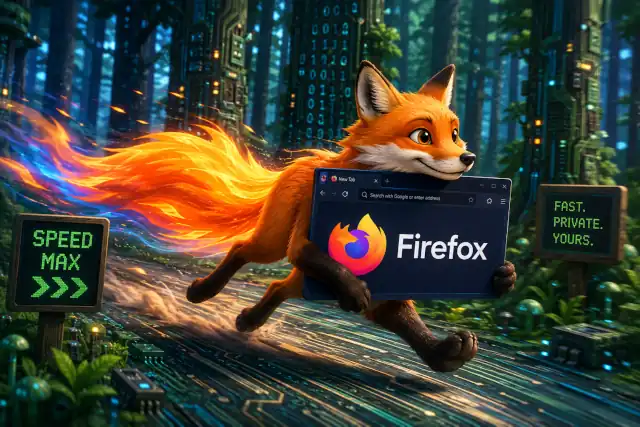
Firefox 153 Lands Vulkan Video Decoding on Linux — A Long-Awaited Win for NVIDIA Users
Mozilla Firefox is set to introduce initial Vulkan Video decoding support in version 153, scheduled for release on July 21, 2026. The change, tracked under Bug 2021722 and now marked resolved and fixed for the Firefox 153 branch, was led by NVIDIA engineer Tymur Boiko with review from Red Hat’s Martin Stransky. For Linux users — especially those on NVIDIA hardware — this represents one of the most meaningful browser video improvements in years.
What Is Video Decoding, and Why Does It Matter?
When you watch a video in a browser, the browser receives a compressed video stream — from YouTube, a streaming service, or another provider — and must decode it into individual frames for display. This process is called video decoding. When only the CPU handles this work, it raises power consumption, increases heat output, and places heavy load on the system. On laptops, this directly translates into shorter battery life and louder fans.
Hardware-accelerated video decoding offloads this work to the GPU’s dedicated video engine, which is designed specifically for the task. The result is smoother playback, lower CPU load, reduced heat, and better battery efficiency — particularly noticeable during high-resolution or long-duration video sessions.
The Linux Problem: VA-API Works Well — But Not for NVIDIA
Firefox on Linux has long relied on the Video Acceleration API (VA-API) as its pathway to hardware-accelerated video decoding. VA-API works reasonably well for Intel and AMD graphics hardware, which expose native VA-API support through their drivers. NVIDIA’s proprietary driver, however, does not provide native VA-API support in the same way, historically leaving NVIDIA Linux users with no direct route to GPU-accelerated browser video.
Workarounds have existed — notably the community-built nvidia-vaapi-driver project, which layers VA-API atop NVIDIA’s NVDEC interface. But such workarounds have a reputation for fragility, often breaking after driver or browser updates and leaving users back to CPU-only decoding with no warning.
What Firefox 153 Changes
The newly merged code adds a Vulkan Video-based decoding path inside Firefox’s FFmpegVideoDecoder. Rather than routing through VA-API, Firefox can now use Vulkan Video extensions — part of the broader Vulkan ecosystem — to hand off video decoding directly to the GPU. FFmpeg manages the decoding with Vulkan extensions enabled.
Critically, this is not a Linux-only change. Vulkan Video works on Linux (with both Mesa open-source drivers and NVIDIA’s proprietary driver), on Windows, and potentially on other platforms. It also opens a new door for Arm and embedded Linux devices that have historically lacked strong VA-API support.
For NVIDIA Linux users specifically, the expected benefits are lower CPU usage during video playback, smoother streaming under system load, better battery life on laptops, and less heat generated during long video sessions.
Not Enabled by Default — At Least Not Yet
The Vulkan Video decoding path will be available in Firefox 153, but it will not be switched on by default. This is a deliberate and understandable precaution. Mozilla can stage new features behind flags or limit them to specific hardware and driver combinations until stability is confirmed across the wide range of Linux configurations in the wild.
Users on Firefox Nightly builds can already test the new decoder today. Once the stable version ships in July, the hardware decoding settings panel will include the Vulkan option for supported systems. If the feature proves reliable across real-world deployments, enabling it by default in a future release is a natural next step.
Where Does Chrome/Chromium Stand?
At the time of writing, Chrome and Chromium on Linux do not support Vulkan Video decoding. This is not a negligible gap — it underscores how uneven hardware-accelerated video support remains across the Linux browser ecosystem. The situation is improving, but the path from “merged into Firefox Nightly” to “working reliably for mainstream Linux users” still requires driver maturity, distribution packaging, and user-facing configuration to align.
GPU Compatibility at a Glance
| GPU / Driver | VA-API (Firefox, existing) | Vulkan Video (Firefox 153) |
|---|---|---|
| Intel (Mesa) | ✓ Good | ◑ Supported |
| AMD (Mesa / AMDGPU) | ✓ Good | ◑ Supported |
| NVIDIA (Proprietary) | ✗ Workaround only | ✓ Direct support |
| Arm / Embedded | ✗ Largely unsupported | ◑ Improved path |
The Bigger Picture
The Firefox 153 Vulkan Video merge is a genuine milestone, but it also highlights how much ground the Linux desktop ecosystem still has to cover. VA-API has served as a reasonable standard for years, yet its inconsistent driver support has created a fragmented experience that is only now being addressed through a more broadly compatible API. The fact that a community workaround like nvidia-vaapi-driver existed and was necessary for years tells its own story.
Vulkan’s growing role as a cross-platform foundation — already dominant in Linux gaming through projects like DXVK and VKD3D — positions it well to smooth out these long-running inconsistencies in the media stack too. Firefox 153 is a significant step in that direction.