What is the different between Cellphone network 5G and 5.5G?
What is the different between Cellphone network 5G and 5.5G?
- 60% of MD5 Password Hashes Can Be Cracked in Under an Hour with a Single GPU
- Dirty Frag: Root Access on Every Major Linux Distribution — No Patch, No Warning
- Ubuntu 26.04 LTS (Resolute Raccoon): The Most Ambitious Ubuntu LTS in a Decade
- Proton Mail: Data Transferred to FBI Again!
- How Close Are Quantum Computers to Breaking RSA-2048?
- How to Prevent Ransomware Infection Risks?
- What is the best alternative to Microsoft Office?
What is the different between Cellphone network 5G and 5.5G?
For public, it will be more confusing-what is 5G-Advanced ? What is 5.5G? Why not 6G? What is the difference between 5.5G and 5G? …
In this article, we will try to use “simple words” to explain the ins and outs of 5.5G to everyone.
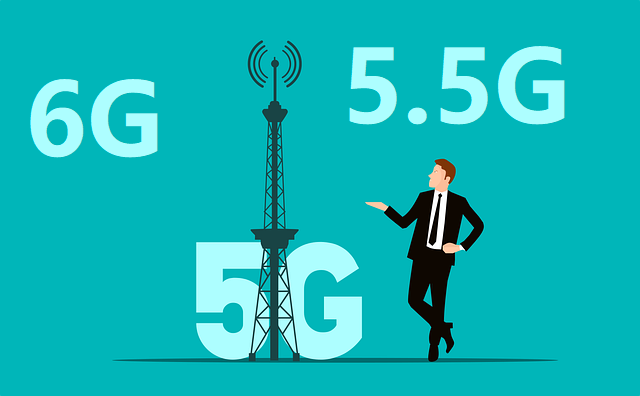
5.5G, as everyone should know, is actually the transitional stage between 5G and 6G .
As we all know, mobile communication technology is almost every decade generation.
However, because the technology is developing so fast, the technology difference between the integer generation and the integer generation is too great.
At this time, it is necessary to name the technology in the middle stage to show the difference from the previous and future generations.
This kind of gameplay started as early as 2/3G. GPRS used to be known as 2.5G, between 2G GSM and 3G UMTS.
Between 3G and 4G, there is a more outrageous 3.75G, which is EDGE.
When LTE appeared, it was also called 3.9G because the technical indicators did not meet the requirements of ITU for 4G.
Later, based on LTE, LTE-Advanced was developed, which is the real 4G.
Before 5G was born, there were names like 4.5G and pre5G in the industry, but the time was short and short-lived.
This time, based on the evolution of 5G, people followed the previous habits, so it was named 5.5G.
In fact, the essence of 5.5G is 5G-Advanced .
People who are familiar with the communication industry know that 3GPP, the international standard organization, promotes research on technological evolution by continuously releasing Releases (versions).
Each Release includes a bunch of technologies. Everyone held meetings desperately, discussed and finalized the technical details, and then voted to pass, even if the Release is frozen.
This Release is released almost every two years. However, the standard of communication network comes out every ten years or so. That means that each integer generation will go through about 5-6 Releases .
The emergence of 5.5G this time is actually taking R15-R17 as the first stage of the 5G standard, and R18-R20 as the second stage of the 5G standard for subdivision. After R20 is over, almost 6G will be on the scene (around 2028-2030).
Therefore, 5.5G (5G-Advanced) is the transition and connection between 5G and 6G, and it will last for more than 5 years.
5G-Advanced was officially identified as the name of 5G evolution in April 2021.
In December 2021, the 3GPP SA2 plenary meeting voted to determine 28 research topics for the R18 version, which is equivalent to determining the first wave of key technologies for 5G-Advanced .
Some experts extimate that the R18 freeze should be at the end of 2023, or even the first half of 2024 (considering the uncertainty of the epidemic).
Coupled with the version freeze, it will take at least a year for the industry to mature.
Therefore, when everyone actually sees 5G-Advanced landing, it will also be in the first half of 2025 . There are still three years to go, so don’t worry too much.
In fact, 5.5G is a transition, and it is impossible to have any disruptive changes. Even if it is 6G, there is no shadow of “shocking” black technology at present.
There are two main missions of 5.5G:
- One is to check for leaks and make up for gaps, to correct and strengthen the deficiencies of 5G.
- The second is to open a new copy , according to the development and changes of the industry, to check the hot spots and step on the thunder in advance for 6G.
The current development of 5G, frankly speaking, is divided into half and half.
After three years of commercial use, a lot of money was spent, and the network was basically built.
With more than 1.6 million stations, more than 400 million users, and 100% coverage in prefecture-level cities, the results can be described as outstanding. Looking at the world, they are unsurpassed.
However, in terms of C-end user experience, users did not report significant perceived differences. 5G did not get the expected praise, but it also took the blame for the speed limit of 4G.
On the side of B-end users, 5G is still in a state of anxious implementation. Although the number of industry application cases has reached more than 20,000, it is still dominated by the head users who focus on centralized resources.
A lot of construction funds also come from government investment. To put it bluntly, 5G is still “the swallow before Wang Xietang” and has not flown into the “home of ordinary people”.
The problem of 5G involves many factors such as chip cost, external macro environment, and enterprise’s own management.
5.5G, as a technological evolution of 5G, cannot solve the non-technical problems that plague the development of 5G.
Therefore, it can only choose to turn a blind eye, solve technical problems, and do something that can be done.
What can be done technically?
To put it bluntly, it is still the same old style of speed, delay, connection scale, and energy consumption. Continue to tap the potential in terms of technical indicators and continue to squeeze toothpaste.
On the basis of 5G ubiquitous Gigabit experience and 10 billion connections, 5.5G will further upgrade the indicators to: ubiquitous 10 Gigabit experience and 100 billion connections .
Specifically, 5G-Advanced will have to achieve a peak rate of 10Gbps downlink (10Gbps) and Gigabit uplink (1Gbps), as well as millisecond-level latency and low-cost hundreds of billions of things.
In order to meet the increasingly hot positioning requirements (especially indoor positioning), 5G-Advanced also emphasizes that it will have stronger terminal perception capabilities and high-precision positioning capabilities.
These capabilities mean that 5G is no longer limited to connection technology, but beyond the scope of communication.
In order to reflect the difference between 5.5G and 5G, experts and manufacturers have also upgraded the 5G traditional scene triangle to become a hexagon.
The new ones are UCBC (uplink ultra-broadband), RTBC (broadband real-time interaction) and HCS (communication perception fusion).
To be honest, apart from the fact that HCS communication-aware fusion is justified, UCBC and RTBC should actually be in the category of eMBB (ultra-large bandwidth) .
Key technologies of 5.5G.
Speed:
The speed is the first index of the communication network, and it is also the object that people focus on.
In the absence of breakthroughs in electromagnetic theory, all the speed advantages of 5G are actually obtained in exchange for spectral bandwidth.
Just like farming, with such a large field, no matter how carefully you take care of it, use pesticides, fertilizers, and miscellaneous rice, its output is limited.
The modulation methods have already been 256QAM and 1024QAM, and further, the requirements for channel conditions are too high, and the consumption of computing power algorithms is also very large.
Multiple access multiplexing, channel coding, and all that should be used have been used, basically approaching the Shannon limit, and there is really not much room for improvement.
The only thing left to do is to make a fuss about the spectrum.
Or, to engage in dynamic spectrum sharing is actually to “revitalize” the existing spectrum, and flexibly borrow the spectrum of 3G / 4G to 5G to enhance the bandwidth.
Or, engage in carrier aggregation and use co-construction and sharing to gather all the spectrum in everyone’s hands to achieve bandwidth improvement.
In order to grab the spectrum, 3GPP also put the idea on the Wi-Fi frequency band, intending to grab some spectrum for use in the free frequency bands of 2.4GHz and 5GHz. This is 5G NR-U (5G NewRadio in Unlicensed Spectrum).
The more coveted target of 5.5G is the 6GHz frequency band . Everyone wants this big piece of fat, including Wi-Fi 6E and Wi-Fi 7, so the competition is fierce.
If operators want to achieve the peak rate of 5.5G downlink 10 Gigabit, they must upgrade the current spectrum resources from the 100M Hz level to the Gigabit Hz level.
Judging from the fact that our country has always been biased towards cellular networks and advocates the dominance of state-owned enterprises, the probability of operators obtaining the domestic 6GHz frequency band is still very high.
In addition, we have very few available frequency band resources in this range (intermediate frequency). If operators do not grab the 6GHz frequency band, there will be no way out in the future.
In addition to downlink, another outstanding issue about speed is uplink.
With the emergence and explosion of demand for large uplink services such as video surveillance backhaul, high-definition video live broadcast backhaul, and 3D modeling cloud rendering, experts in the communications industry suddenly found that they underestimated their demand for 5G uplink and reserved bandwidth was not enough .
The frame structure design of 5G can be changed. However, generally speaking, the relationship between downlink and uplink is 8:2.
The frame is actually a carriage, 8 carriages are used to transport goods downwards, and 2 carriages are used to transport goods upwards.
This is based on the common data consumption habits of our mobile Internet . If you think about it, you will understand that we spend most of our time watching videos, browsing web pages, and playing games. Therefore, the demand for downlink data volume is obviously greater than that for uplink (upload).
In order to solve this problem, there are two ways: one is the uplink and downlink decoupling (link), which is to use a low frequency band with stronger coverage for uplink, and then use high frequency for downlink.
The other is to make a fuss about frame allocation, use more frames for uplink, and change the ratio of uplink and downlink.
It is worth mentioning that to solve the delay problem, it is also mainly a fuss about frames and time slots. If the frame becomes smaller and more flexible, which is equivalent to changing a car into a motorcycle, the delay value of the air interface can be reduced.
In order to more flexibly realize the uplink and downlink requirements, 3GPP is still on the basis of traditional FDD and TDD, and is engaged in flexible duplexing, tinkering with XDD, that is, FDD and TDD are used together.
For example, “frequency division for downlink and time division for uplink”, maximize flexibility and do whatever you want.
After “spectrum for bandwidth”, it is inevitable to encounter coverage problems.
The higher the frequency band, the shorter the wavelength, the poorer the diffraction ability, and the shorter the coverage distance. 2.6GHz, 3.5GHz, 4.9GHz, one is worse than the other, and the 6GHz they want to grab is even worse.
Therefore, to solve the coverage problem, a lot of articles have to be done.
At present, the main research and development direction is antenna technology .
Huawei‘s boss said that the 6GHz frequency band has 7 db more loss in the space propagation loss than the 2.6GHz frequency band .
To make up for this loss, it is necessary to build an ultra-ultra-ultra-large-scale antenna array that is more powerful than the current massive antenna array (Massive MIMO).
192/256 vibrators are not enough, directly dry to more than 700 or even 1000 vibrators. The number of channels will also soar, more than 192.
The more the number of vibrators, the stronger the beamforming will be, and the waves will be flattened, and the coverage distance will be enhanced.
There are really not many tricks that can be played with empty words. The core network indicators of 5.5G and even 6G basically rely on spectrum and frame structure, and the road ahead is bleak.
But having said that, we are still very skeptical about the number of ubiquitous 10G downlink scenarios. Last year, the cloud universe exploded, driving the XR industry. Even XR does not use 10 Gigabit.
There may be a demand for 10 gigabytes. The only thing we can think of is holographic communication. To be honest, we think this thing is still far away.
After talking about the wireless air interface, let’s look at other things.
Not to mention the bearer network. The transmission technology has always been played by itself. It has nothing to do with 3GPP, and 5.5G is not mentioned much. If you want to understand this part of knowledge, you can read my separate analysis of the evolution of transmission technology before.
Focus on the core network.
In 5.5G, the development direction of the core network is still the old-fashioned “cloud-network integration” and “cloud-network integration”.
Now the computing power network is very popular, and there are some subtle changes that drive the development trend of the 5G cloud core network.
5G has already realized the cloudification and virtualization of the core network.
The SBA architecture has already taken shape. From the effect point of view, the benefits are not very obvious. According to my personal opinion, it is actually pseudo-virtualization, and manufacturers are strongly bound.
What operators are doing is convergence. That is to say, the 2/3/4G core network is fully integrated into the 5G cloud core network to simplify the network architecture and reduce the burden of network operation and maintenance .
Under the general trend of cloud-network integration, operators have the urge to completely merge the telecom cloud with the Internet cloud, but the pace is a bit big, and they are not too daring to do so. After all, the telecommunications business is our foundation, and if something goes wrong, we cannot bear this responsibility.
On the basis of existing cloudification, operators are also considering further promoting cloud native, hoping to make their own cloud more flexible and more suitable for development and testing.
Another advantage of cloud native is that it can further improve the utilization of hardware resources through software optimization, that is, increase the return on investment (still to save money).
It is said that the deep cloudification of the core network is also a prerequisite for realizing the endogenous security of the network.
We don’t know much about endogenous security, but we always feel that this concept is rather vague.
We think all security should be based on computing power.
It is unimaginable that security can be achieved simply by improving the design of the architecture. (Talk about this topic another day.)
When it comes to cloud core network, edge computing has to be mentioned.
Edge computing is the sinking of cloud computing power, which opens the door to a whole new world for operators.
Operators suddenly discovered that computing power can be deployed on each node of their own network. As a result, many application scenarios have been hatched.
Especially in the direction of enterprise toB private networks, edge computing can meet the requirements of many low-latency, high-bandwidth scenarios, so it has broad development prospects.
Both Internet manufacturers and operators are eyeing the big cake of edge computing.
Operators have the Internet in their hands, and Internet manufacturers have cloud technology in their hands, so they have mutual offensive and defensive.
There is a technology that has been implemented in wireless access networks, bearer networks, and core networks, and is currently a hot research topic in the communications industry, that is AI artificial intelligence.
AI is a form of computing power.
The technology of each link in the field of communication, until the end, is mathematics and calculation.
For example, high-order modulation (above 1024QAM), such as wireless network optimization and simulation, such as path planning of bearer network SDN, and core network slice arrangement and resource scheduling.
In the 5.5G stage, various communication companies will continue to increase investment in AI.
Some are to implement stronger algorithms, improve network indicators, and improve user experience.
Some are for modeling, optimizing the network, realizing network self-management, autonomous fault recovery, and reducing network operation and maintenance costs.
Others are for energy saving, judging load changes, and dynamically adjusting power.
In the next few years, it is believed that there will be a large number of “AI + communication” cases, and the operation and maintenance mode of the network may undergo subversive changes.
In addition to enhancing its existing capabilities, 5.5G is also trying to explore more application areas.
Among them, high-precision positioning, ranging and perception enhancement are included.
This type of demand mainly comes from vehicle location management, logistics tracking and asset management.
The main application direction is indoor scenes that cannot be covered by satellites, and high-precision scenes that cannot be achieved by satellites and other technologies.
In the vision of experts, 5G is not only used for communication, but also can sense the environment like radar, capture and measure the distance, speed and shape of the target object. This is called “synaesthesia integration”.
Aerospace integration is also the focus of 5.5G research. Due to space limitations, let’s talk about it another day, dig a hole first.
The passive Internet of Things.
5.5G also needs to be used for hotspots, the metaverse needs to be used, and the passive Internet of Things should also be used.
In fact, to put it bluntly, the terminal does not have a power supply or battery.
Through the network, to “irradiate” the terminal, let the terminal sense the “irradiation” of the network, respond to it, and feed back data like the bus card RFID technology.
It has the advantages of low cost, zero power consumption, and easy deployment. In the future, all our retail products may be equipped with passive Internet of Things technology to realize the management of products by merchants.
This technology is not as simple as imagined. In addition to the need for a more concise protocol for the air interface, there is a lot of work to be done in terms of security authentication and network architecture optimization.
There are also many potential competitors for 5.5G. In terms of passive Internet of Things, it does not necessarily have an advantage.
Well, after talking so much, everyone should have some understanding of 5.5G. There are actually many key technologies, but we have basically mentioned the general direction.
The development idea of 5.5G is basically consistent with the predictions we made when we studied and judged 6G a few years ago.
In a nutshell, it is capability enhancement, introduction of AI, and functional integration.
Make yourself stronger, easier to maintain, more environmentally friendly, and save money and manpower, so that you can better exert the value of your connection power, serve computing power, and serve digital transformation.
R18 is currently on the road, let us wait and see where 5.5G will go.