Russia: Capable of Simultaneously Monitoring 500K Drones
Russia Unveils Latest Research Achievement: “Capable of Simultaneously Monitoring 500K Drones”
- 60% of MD5 Password Hashes Can Be Cracked in Under an Hour with a Single GPU
- Dirty Frag: Root Access on Every Major Linux Distribution — No Patch, No Warning
- Ubuntu 26.04 LTS (Resolute Raccoon): The Most Ambitious Ubuntu LTS in a Decade
- Proton Mail: Data Transferred to FBI Again!
- How Close Are Quantum Computers to Breaking RSA-2048?
- How to Prevent Ransomware Infection Risks?
- What is the best alternative to Microsoft Office?
Russia Unveils Latest Research Achievement: “Capable of Simultaneously Monitoring 500K Drones”
According to a report by the Russian news agency Sputnik on September 28th, the Russian National Technology Initiative office has announced that Russian scientists have developed an artificial intelligence-based technology capable of simultaneously tracking up to 500,000 drones in the sky.
The prototype of this system is planned to be operational by the end of 2023.
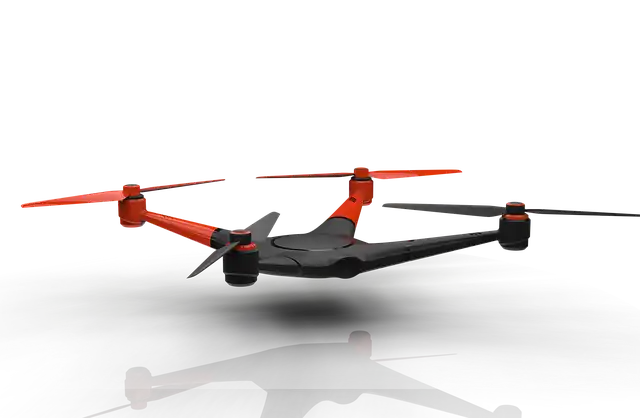
The report states, “Russian scientists at the Moscow State University of Geodesy and Cartography have developed an AI-based technology that can simultaneously track the positions and statuses of up to 500,000 drones in the sky. The trial prototype is set to be operational by the end of 2023, with testing scheduled for completion in 2024.”
The report further notes that before launching drones, coordination with multiple agencies is required to oversee the flight, and these agencies must inspect and monitor the entire process. Existing monitoring systems can handle the load when there are up to 100 drones in the airspace simultaneously, but difficulties arise when the number increases to thousands.
According to Russia’s drone development strategy, it is estimated that the number of drone systems sold in the Russian market will exceed 180,000 by 2030. Relevant departments will require a system capable of processing data from such a large number of drones, including quickly detecting deviations from agreed-upon flight missions, entry into restricted areas, and dangerous proximity between drones.
Oleg Gvozdyev, the project’s leader, stated, “The approach we have developed is entirely different from the dominant solutions on the market. Our development tools are not large, cumbersome, and resource-intensive software systems but rather products that can implement the most complex data processing procedures, adapt to state-of-the-art devices, and ultimately solve specific application problems at minimal cost.”
The report also indicates that the new research achievement will allow for the creation of monitoring systems with guaranteed response times down to the millisecond based on the object’s domain.