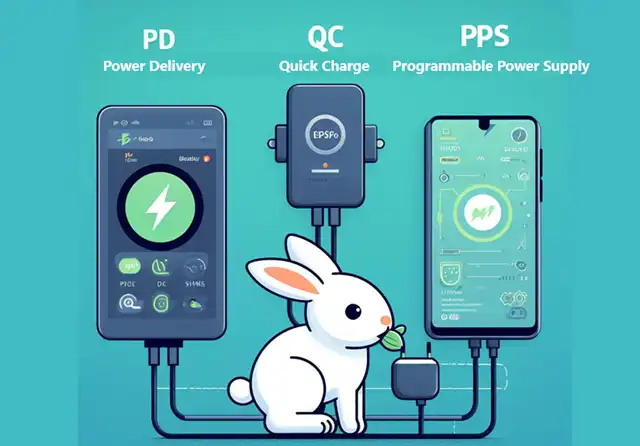
USB Power Delivery (USB PD) is a universal fast-charging standard developed by the USB Implementers Forum (USB-IF).
It is designed to provide a flexible and efficient method of delivering power to a wide range of devices over a USB connection, primarily using USB Type-C cables and connectors.
USB PD is not limited to a specific device type, making it suitable for charging smartphones, tablets, laptops, and other electronic devices.
Here are key features and aspects of USB PD:
-
Voltage and Current Levels:
- USB PD supports various voltage and current levels to accommodate different device power requirements. This includes 5V (standard USB power), 9V, 15V, and 20V. The higher voltage allows for more power to be delivered over the same USB cable.
-
Power Levels:
- USB PD can deliver power levels ranging from 5 watts (standard USB power) to 100 watts or more. This makes it suitable for charging a wide range of devices, from small gadgets to large laptops.
-
Bidirectional Power:
- USB PD allows for bidirectional power flow. Devices can both send and receive power. This feature is useful for applications such as charging a smartphone from a laptop or drawing power from a USB Type-C power bank.
-
Dynamic Power Negotiation:
- USB PD uses a negotiation process between the charger and the device to determine the optimal power delivery parameters. This negotiation occurs when a device is connected to a charger, allowing for dynamic adjustments based on the device’s power requirements.
-
Compatibility with USB Type-C:
- USB PD is commonly associated with USB Type-C connectors, which are reversible and can deliver higher power compared to previous USB standards. However, USB PD can also be implemented with other connector types.
-
Charging Profiles:
- USB PD defines specific charging profiles that devices and chargers must adhere to for compatibility. These profiles dictate the supported voltage and current combinations that can be used during the charging process.
-
Applications:
- USB PD is widely used in various applications, including smartphones, tablets, laptops, monitors, docking stations, and other electronic devices. It has become a common standard for high-power charging in many modern devices.
-
Safety Features:
- USB PD includes safety features such as overcurrent protection, overvoltage protection, and thermal protection to ensure safe charging practices.
USB PD is a significant advancement in USB charging technology, offering a standardized and versatile solution for delivering power across a wide range of devices.
Its flexibility, bidirectional power flow, and high power levels make it a crucial standard in the evolving landscape of electronic devices and their power requirements.