Memory Shortage Remains Unresolved:PC Industry Reverts to DDR4 Eraas Motherboard and Memory Production Resumes
- Linux Kernel Removes strncpy After Six Years and 362 Patches
- Linux Kernel Drops 40-Year-Old AppleTalk Protocol — AI-Generated Patch Flood Was the Last Straw
- Apple’s Native Linux Container Tool Has Arrived — But Can It Really Replace Docker?
- 60% of MD5 Password Hashes Can Be Cracked in Under an Hour with a Single GPU
- Dirty Frag: Root Access on Every Major Linux Distribution — No Patch, No Warning
Memory Shortage Remains Unresolved:
PC Industry Reverts to DDR4 Era
as Motherboard and Memory Production Resumes
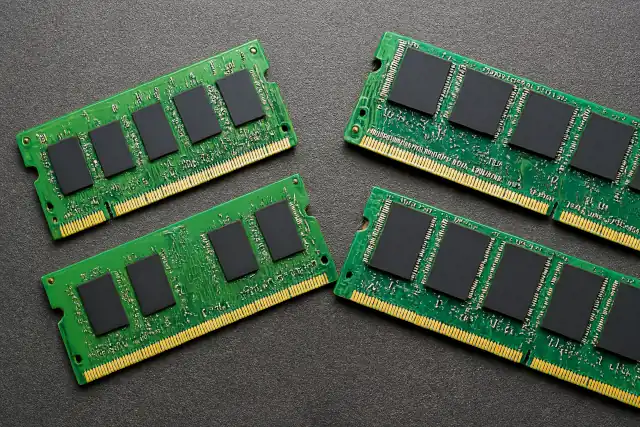
With DDR5 prices surging and supplies strained by AI data center demand, motherboard makers and module houses are reviving DDR4 production lines — a trend confirmed by over half a dozen sources at Computex 2026.
The PC industry is making a striking pivot: motherboard manufacturers and memory module houses are restarting DDR4 production lines, reversing a multi-year transition to DDR5 — driven by an unprecedented shortage and price surge that is pricing many consumers out of new builds entirely.
More than six independent sources confirmed to reporters at Computex 2026 in Taipei that this shift is real and accelerating. The root cause is structural: AI data centers are absorbing enormous quantities of High Bandwidth Memory (HBM) and DRAM wafer capacity, leaving far less for consumer-grade DDR5 production. Entry-level DDR5 32 GB kits have breached $300, and analysts warn the market may not stabilize until 2027 at the earliest.
Motherboard Market in Decline — DDR4 Demand Rebounds
Motherboard sales have collapsed across the industry, with some vendors reporting declines as steep as 37% year over year. At least two major manufacturers have formally confirmed to press that they are ramping up production of DDR4-compatible motherboards for the second half of 2026 and continuing into 2027.
Many of these DDR4 product lines were previously discontinued — production capacity had already been reallocated to newer platforms — and factories must now re-establish tooling and supply agreements to resume output. Despite this friction, one motherboard brand reported double-digit sales growth on its DDR4 platform last quarter, and other vendors confirmed sharply rising demand for DDR4-supporting boards. Among the products being increased are LGA 1700 motherboards supporting DDR4, which are gradually becoming scarce as remaining inventory is absorbed faster than expected.
Memory: DDR4-3600 Is the New Ceiling
On the memory side, the revival comes with real constraints. High-performance DDR4 dies — most notably Samsung’s celebrated B-die, long favored by overclockers — are no longer in production and will not be returning. As a result, the revived DDR4 kits will be capped at a maximum frequency of DDR4-3600 MT/s, a respectable but not spectacular ceiling that reflects the available die options.
DDR4’s key manufacturing advantage in the current climate is its lower production complexity. Unlike DDR5, it does not require advanced Power Management Integrated Circuit (PMIC) packaging, which is one of the bottlenecks that has constrained DDR5 supply. This makes DDR4 a practical pressure valve for the supply chain — even if not a permanent solution.
The primary bottleneck for DDR4 remains wafer allocation, a challenge shared across the entire DRAM industry. Intel has reportedly shifted wafer allocation toward data center products to meet unprecedented demand for server CPUs, further compressing supply available for consumer memory of any generation.
| Factor | DDR5 (Current) | DDR4 (Revived) |
|---|---|---|
| Max Consumer Frequency | DDR5-6400+ (standard) DDR5-8000+ (OC) |
DDR4-3600 (revived kits) |
| Entry-Level 32 GB Kit Price | $300+ (and rising) | Significantly lower |
| PMIC Requirement | Yes — supply bottleneck | No — simpler to produce |
| High-Perf Die Availability | Limited (AI priority) | Samsung B-die discontinued |
| Platform Support | AM5, LGA 1851 (new builds) | AM4, LGA 1700 (wide install base) |
AMD and Intel Position for the DDR4 Return
Both major CPU vendors are adapting their strategies to accommodate renewed DDR4 interest. AMD made a notable move at Computex 2026 by launching the Ryzen 7 5800X3D 10th Anniversary Edition for the AM4 platform — and explicitly confirmed it is not a limited release. The company stated it will continue selling the chip as long as it remains economically viable, and has adjusted the 5800X3D’s hybrid bonding process to support longer-term production. AM4 platform popularity has surged to nearly 40%, trading blows with AM5 in several markets.
Intel, meanwhile, continues to offer Raptor Lake and Raptor Lake Refresh processors, and has confirmed it “will continue to ensure products support older memory technologies” — a clear signal that LGA 1700 DDR4 support will not be abandoned in the near term.
Outlook: A Parallel Ecosystem, Not a Rollback
Industry analysts are quick to point out that this is not a full retreat from DDR5 — the newer standard remains the technology of choice for performance-focused and future-oriented builds. Rather, the DDR4 revival represents a parallel market developing in response to economic reality: a large installed base of DDR4 systems, surging prices on DDR5, and a supply chain that cannot resolve the shortage before late 2027 at the earliest.
For PC builders, the practical advice from manufacturers is increasingly pragmatic: those with existing DDR4 systems have little reason to upgrade platforms right now, and those entering the market on a budget are finding DDR4 builds meaningfully more accessible. The memory shortage that began as a DDR5 problem has now reshaped the entire PC component ecosystem — and the industry’s response is to step back before stepping forward.
Tom’s Hardware — “Production of DDR4 memory and motherboards is restarting amid unprecedented memory shortages” (June 4, 2026)
WccfTech — “Several Vendors Are Reportedly Increasing Production Of DDR4 Platforms” (June 4, 2026)
PCQuest — “AMD bets on older Ryzen and Radeon hardware at Computex 2026” (June 1, 2026)
TechTimes — “DDR5 RAM Hits $375 Floor for PC Builders” (June 4, 2026)