Earth’s Ozone Layer Recovery Accelerates: 2024 Data Shows Remarkable Progress
Earth’s Ozone Layer Recovery Accelerates: 2024 Data Shows Remarkable Progress
- 60% of MD5 Password Hashes Can Be Cracked in Under an Hour with a Single GPU
- Dirty Frag: Root Access on Every Major Linux Distribution — No Patch, No Warning
- Ubuntu 26.04 LTS (Resolute Raccoon): The Most Ambitious Ubuntu LTS in a Decade
- Proton Mail: Data Transferred to FBI Again!
- How Close Are Quantum Computers to Breaking RSA-2048?
- How to Prevent Ransomware Infection Risks?
- What is the best alternative to Microsoft Office?
Earth’s Ozone Layer Recovery Accelerates: 2024 Data Shows Remarkable Progress
September 16, 2024 – The World Meteorological Organization’s latest bulletin brings encouraging news for global environmental health: Earth’s ozone layer continues its steady recovery, with 2024 demonstrating significant improvements across multiple key metrics.
This progress represents decades of international cooperation finally bearing fruit in one of the most successful environmental restoration efforts in human history.
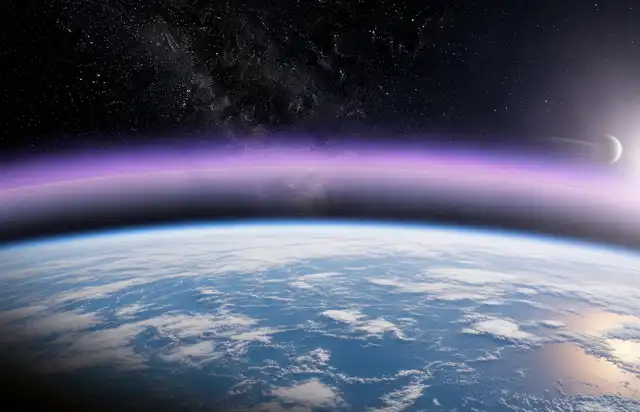
Concrete Evidence of Recovery: The Numbers Tell the Story
According to comprehensive satellite observations from NASA and NOAA, the 2024 Antarctic ozone hole ranks as the 7th-smallest since recovery began. The data reveals substantial improvements in both depth and coverage:
Key Measurements for 2024:
- Minimum ozone concentration: 109 Dobson Units recorded on October 5
- Historical context: This is significantly above the lowest value ever recorded of 92 Dobson Units in October 2006
- Pre-1980s baseline: 225 Dobson Units was typical of ozone cover above the Antarctic in 1979, showing recovery still has distance to cover
As NOAA Research Chemist Bryan Johnson notes, “This is well below the 225 Dobson Units that was typical of the ozone cover above the Antarctic in 1979, so there’s still a long way to go before atmospheric ozone is back to the levels before the advent of widespread CFC pollution.”
Global Recovery Timeline: Science-Based Projections
The latest UN-backed scientific assessment provides specific recovery timelines based on current trends and atmospheric chemistry models:
- Global recovery: The ozone layer is on track to recover within four decades
- Most regions: Recovery expected by approximately 2040
- Arctic regions: Full recovery projected by 2045
- Antarctic regions: Complete recovery anticipated by 2066
The Earth’s ozone layer is on track to recover within four decades, a UN-backed panel of experts said, representing one of the most successful international environmental interventions in history.
The Montreal Protocol: A Model of International Success
The recovery is directly attributed to the Montreal Protocol on Substances that Deplete the Ozone Layer, adopted on 16 September 1987 and now one of the rare treaties to achieve universal ratification. This landmark agreement has regulated nearly 100 man-made chemicals referred to as ozone depleting substances (ODS).
Montreal Protocol Impact:
- Action under the Montreal Protocol has contributed to climate change mitigation for almost 35 years
- The global phaseout of ozone-depleting chemicals already benefitting efforts to mitigate climate change
- Helping avoid global warming by 0.5°C through concurrent climate benefits
Scientific Foundation: Understanding Ozone’s Critical Role
The ozone layer functions as Earth’s primary defense against harmful ultraviolet radiation. The ozone layer is a layer in Earth’s atmosphere that absorbs most of the Sun’s UV radiation, making it essential for life on our planet.
Ozone Formation Process: The formation of ozone involves a complex atmospheric chemistry cycle:
- Initial breakdown: Intense solar ultraviolet radiation splits oxygen molecules (O₂) in the stratosphere
- Atom liberation: This process creates individual oxygen atoms (O)
- Recombination: Free oxygen atoms combine with existing oxygen molecules to form ozone (O₃)
- Continuous cycle: Ozone absorbs UV radiation, breaks down, and reforms in an ongoing protective process
This delicate balance, though representing only about one millionth of our atmosphere’s total composition, maintains the precise conditions necessary for life to thrive on Earth.
Current Status and Ongoing Monitoring
NASA’s comprehensive satellite monitoring system continues to track ozone levels globally. For the first time, direct satellite observations of the ozone hole have shown that ozone-destroying chlorine levels are declining, resulting in less ozone depletion.
The gradual improvement we’ve seen in the past two decades shows that international efforts that curbed ozone-destroying chemicals are working, providing concrete evidence that global environmental cooperation can produce measurable results.
Health and Environmental Implications
The continuing recovery of the ozone layer promises significant benefits for global health and ecosystem protection:
Direct Health Benefits:
- Reduced skin cancer rates from decreased UV exposure
- Lower incidence of cataracts and other UV-related eye conditions
- Protection of immune system function
Environmental Benefits:
- Preservation of marine ecosystems, particularly phytoplankton
- Protection of terrestrial plant life from UV damage
- Maintenance of agricultural productivity
Looking Forward: Sustained Global Commitment
While the 2024 data provides cause for optimism, scientists emphasize that continued vigilance is essential. The ozone layer hole over the Antarctic is expected to disappear by mid-century under current recovery trends, but this progress depends on maintaining international commitments to ozone protection.
The World Meteorological Organization’s September 2024 bulletin represents more than just positive environmental news—it demonstrates that coordinated international action can successfully address global atmospheric challenges. As we mark 35 years since the Montreal Protocol was adopted, the recovering ozone layer stands as proof that when the global community acts decisively on environmental threats, remarkable recovery is possible.
The ozone layer’s restoration serves as both an environmental success story and a template for addressing other global challenges, showing that scientific understanding, international cooperation, and sustained commitment can heal even planetary-scale damage.
Earth’s Ozone Layer Recovery Accelerates: 2024 Data Shows Remarkable Progress
Reference Sources:
Government and International Organizations
- World Meteorological Organization (WMO)
- National Aeronautics and Space Administration (NASA)
- Satellite observations of Antarctic ozone hole measurements
- Global ozone monitoring system data
- Historical ozone depletion records
- National Oceanic and Atmospheric Administration (NOAA)
- Antarctic ozone hole size and depth measurements
- Atmospheric chemistry research data
- Long-term ozone monitoring records
- United Nations Environment Programme (UNEP)
- Scientific Assessment Panel reports on ozone layer recovery
- Montreal Protocol implementation data
- Global recovery timeline projections
- U.S. Environmental Protection Agency (EPA)
- Montreal Protocol success metrics
- Ozone-depleting substances regulation data
Scientific Research and Data
- NOAA Research Laboratory
- Direct quotes from Research Chemist Bryan Johnson
- Dobson Unit measurements and analysis
- Satellite Monitoring Systems
- Direct satellite observations of ozone-destroying chlorine levels
- Real-time ozone hole tracking data
- Montreal Protocol Scientific Assessments
- Chemical regulation impact studies
- Climate change mitigation benefit calculations
- Recovery projection models
Key Data Points Referenced
- Current Measurements: 109 Dobson Units (October 5, 2024)
- Historical Baselines: 225 Dobson Units (1979), 92 Dobson Units (2006)
- Recovery Rankings: 7th-smallest ozone hole since recovery began
- Timeline Projections: 2040 (global), 2045 (Arctic), 2066 (Antarctic)
- Climate Benefits: 0.5°C global warming avoided through Montreal Protocol
International Treaties and Agreements
- Montreal Protocol on Substances that Deplete the Ozone Layer (1987)
- Universal ratification status
- Regulated chemical listings
- Implementation success metrics