Flagship Showdown: Snapdragon 8 Elite Gen 5 vs MediaTek Dimensity 9500
Flagship Showdown: Snapdragon 8 Elite Gen 5 vs MediaTek Dimensity 9500
- 60% of MD5 Password Hashes Can Be Cracked in Under an Hour with a Single GPU
- Dirty Frag: Root Access on Every Major Linux Distribution — No Patch, No Warning
- Ubuntu 26.04 LTS (Resolute Raccoon): The Most Ambitious Ubuntu LTS in a Decade
- Proton Mail: Data Transferred to FBI Again!
- How Close Are Quantum Computers to Breaking RSA-2048?
- How to Prevent Ransomware Infection Risks?
- What is the best alternative to Microsoft Office?
Flagship Showdown: Snapdragon 8 Elite Gen 5 vs MediaTek Dimensity 9500
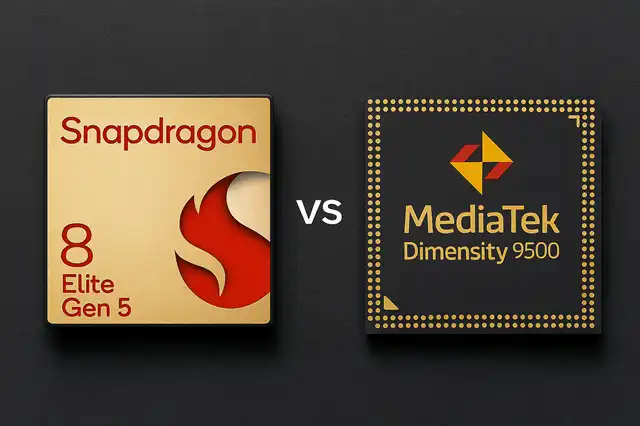
The mobile processor landscape has reached unprecedented levels of performance with the simultaneous launch of two powerhouse chipsets: Qualcomm’s Snapdragon 8 Elite Gen 5 and MediaTek’s Dimensity 9500.
Both announced within days of each other in September 2025, these processors represent the pinnacle of mobile computing technology.
Here’s a comprehensive technical comparison of these flagship SoCs.
Manufacturing Process & Architecture
Snapdragon 8 Elite Gen 5:
- Process Node: TSMC 3rd-generation 3nm N3P
- CPU Architecture: Qualcomm’s custom 3rd-generation Oryon cores
- Design Philosophy: All-big-core approach (no efficiency cores)
MediaTek Dimensity 9500:
- Process Node: TSMC 3rd-generation 3nm N3P
- CPU Architecture: ARM’s latest Cortex cores with custom optimizations
- Design Philosophy: Hybrid architecture with performance tiers
Both chipsets utilize the same cutting-edge TSMC 3nm N3P process, ensuring comparable power efficiency and transistor density. The key differentiator lies in their architectural approaches to core design.
CPU Performance Analysis
Snapdragon 8 Elite Gen 5:
- Configuration: 2 × Prime cores (4.6GHz) + 6 × Performance cores (3.62GHz)
- Cache: 24MB ultra-low-latency cache
- Benchmark Scores: 3,831 (single-core), 11,525 (multi-core) on Geekbench 6
- Performance Gain: Up to 35% improvement over previous generation
MediaTek Dimensity 9500:
- Configuration: 1 × C1-Ultra (4.21GHz) + 3 × C1-Premium (3.5GHz) + 4 × C1-Pro (2.7GHz)
- Alternative Configuration: 2 × Cortex-X930 (4.0GHz) + 6 × Cortex-A730 cores
- Benchmark Scores: 4,007 (single-core), 11,217 (multi-core) on Geekbench 6
- Performance Gain: 32% single-core, 17% multi-core improvement
CPU Performance Verdict:
The Dimensity 9500 edges out in single-core performance (4,007 vs 3,831), while the Snapdragon 8 Elite Gen 5 takes a slight lead in multi-core scenarios (11,525 vs 11,217). The difference is marginal, with both processors delivering flagship-level performance that’s virtually indistinguishable in real-world usage.
GPU Performance Comparison
Snapdragon 8 Elite Gen 5:
- GPU: Next-generation Adreno with slice-based architecture
- Clock Speed: Up to 1.2GHz
- Performance: 23% improvement over predecessor
- Power Efficiency: 20% reduction in power consumption
- Special Features: Dedicated High-Bandwidth Memory (HBM) support
MediaTek Dimensity 9500:
- GPU: ARM Mali G1-Ultra MC12
- Performance: 33% higher peak performance
- Power Efficiency: 42% improved power efficiency
- Gaming Features: 120FPS raytracing support, 119% faster raytracing performance
- Technology Support: Vulkan raytracing pipeline, Unreal Engine 5.5 compatibility
GPU Performance Verdict:
The Dimensity 9500 appears to have a significant advantage in graphics performance, offering superior raytracing capabilities and better power efficiency. MediaTek’s focus on gaming-centric features like 120FPS raytracing gives it an edge for mobile gaming enthusiasts.
Artificial Intelligence Capabilities
Snapdragon 8 Elite Gen 5:
- AI Engine: Hexagon NPU with 3rd-generation architecture
- Performance: 37% overall AI performance improvement
- Power Efficiency: Up to 16% power reduction
- Features: 64-bit memory virtualization, additional AI accelerators
- Specific Workloads: Up to 55% improvement in image segmentation and super-resolution
MediaTek Dimensity 9500:
- AI Engine: Dual-NPU setup
- Performance: Doubled AI computing power compared to predecessor
- Architecture: Enhanced AI processing units optimized for mobile workloads
- Integration: Seamless AI acceleration across camera, display, and system functions
AI Performance Verdict:
Both processors offer substantial AI improvements, with Qualcomm providing specific metrics (37% overall improvement) while MediaTek claims doubled AI performance. The actual performance difference will depend on specific AI workloads and optimization.
Memory and Storage
Snapdragon 8 Elite Gen 5:
- RAM Support: LPDDR5X
- Storage: UFS 4.0 support
- Special Feature: Dedicated High-Bandwidth Memory (HBM) integration
- Benefits: Improved bandwidth, reduced latency, up to 10% power savings
MediaTek Dimensity 9500:
- RAM Support: LPDDR5X
- Storage: UFS 4.0 support
- Memory Architecture: Optimized for high-bandwidth applications
- Cache Design: Dynamic cache architecture for improved efficiency
Connectivity and Modern Features
Both processors support:
- 5G Sub-6GHz and mmWave connectivity
- Wi-Fi 7 standard
- Bluetooth 5.4
- Advanced camera ISPs supporting 200MP+ sensors
- 4K 120fps video recording capabilities
Power Efficiency Analysis
Snapdragon 8 Elite Gen 5:
- Overall Efficiency: 16% power savings
- GPU Efficiency: 20% reduction in graphics power consumption
- AI Efficiency: 16% lower power consumption for AI tasks
MediaTek Dimensity 9500:
- GPU Efficiency: 42% improved power efficiency
- Overall Efficiency: Approximately 40% lower power consumption (claimed)
- Thermal Management: Enhanced thermal design for sustained performance
Market Positioning and Device Availability
Snapdragon 8 Elite Gen 5:
- First Devices: Xiaomi 17 series (launched September 25, 2025)
- Expected Partners: Samsung Galaxy S26 series, OnePlus flagship
- Market Focus: Premium flagship segment
MediaTek Dimensity 9500:
- First Devices: Vivo X300 series, Oppo Find X9 series (Q4 2025)
- Launch Partners: Strong partnerships with Chinese OEMs
- Market Strategy: Aggressive pricing for flagship performance
Technical Verdict: Which Processor Wins?
The comparison reveals two exceptionally capable processors with different strengths:
Snapdragon 8 Elite Gen 5 excels in:
- Multi-core CPU performance
- Advanced memory architecture with HBM support
- Proven track record and ecosystem support
- Comprehensive AI acceleration with specific metrics
MediaTek Dimensity 9500 excels in:
- Single-core CPU performance
- GPU performance and gaming features
- Power efficiency across all components
- Raytracing and advanced graphics capabilities
The Bottom Line:
Both processors represent the absolute pinnacle of mobile computing in 2025. The choice between them will likely come down to specific use cases: the Snapdragon 8 Elite Gen 5 for users prioritizing multi-tasking and AI workloads, while the Dimensity 9500 appeals to mobile gaming enthusiasts and users seeking maximum power efficiency.
In real-world usage, the performance difference between these two flagship processors will be minimal, with both delivering exceptional user experiences that push the boundaries of what’s possible on mobile devices. The true differentiator will be how device manufacturers optimize these processors and the specific features they choose to highlight in their flagship smartphones.
Snapdragon 8 Elite Gen 5: CPU Performance and AI Capabilities Surge Over 50%
MediaTek Dimensity 9500: Can the Smartphone CPU Beat Intel PC CPU N150?