Can you retract an email that was sent by mistake?
Can you retract an email that was sent by mistake?
- 60% of MD5 Password Hashes Can Be Cracked in Under an Hour with a Single GPU
- Dirty Frag: Root Access on Every Major Linux Distribution — No Patch, No Warning
- Ubuntu 26.04 LTS (Resolute Raccoon): The Most Ambitious Ubuntu LTS in a Decade
- Proton Mail: Data Transferred to FBI Again!
- How Close Are Quantum Computers to Breaking RSA-2048?
- How to Prevent Ransomware Infection Risks?
- What is the best alternative to Microsoft Office?
Can you retract an email that was sent by mistake?
Starting from late October, LINE added a new “cancel send function” that allows cancellation within one hour. How about email?
Technical Analysis: Email Recall Functionality and Its Limitations
Introduction
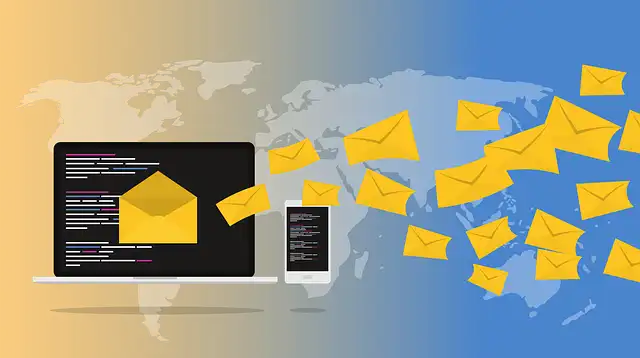
Email recall—the ability to retract or modify an email after sending—represents one of the most requested features in modern email communication. Despite decades of technological advancement, true email recall remains elusive for most users.
This article examines the technical, architectural, and practical reasons why email recall is fundamentally challenging, while exploring the limited solutions that do exist.
The Technical Architecture Problem
SMTP Protocol Limitations
The Simple Mail Transfer Protocol (SMTP), standardized in 1982, forms the backbone of modern email delivery. SMTP operates on a “fire-and-forget” principle where messages are immediately transferred from the sender’s server to intermediate mail transfer agents (MTAs) and ultimately to the recipient’s server. Once this handoff occurs, the sending server loses control over the message.
The protocol’s design reflects the Internet’s original philosophy of distributed, fault-tolerant communication. Messages are designed to be independent entities that can traverse multiple servers, networks, and administrative domains. This architecture makes centralized recall mechanisms inherently incompatible with the system’s foundational principles.
Message Propagation and Storage
When an email is sent, it typically follows this path:
- Client to Outgoing Server: The email client submits the message to the sender’s SMTP server
- Server-to-Server Transfer: The message is relayed through potentially multiple intermediate servers
- Final Delivery: The message arrives at the recipient’s mail server and is stored in their mailbox
- Client Retrieval: The recipient’s email client downloads the message via POP3, IMAP, or Exchange protocols
Each step involves independent systems, often operated by different organizations with varying policies, software versions, and security configurations. A recall mechanism would require coordination across this entire chain—a nearly impossible task in the decentralized email ecosystem.
Why Time-Limited Recall Fails
The Speed of Modern Email Delivery
Modern email systems deliver messages within seconds or milliseconds. By the time a user realizes they’ve made an error and attempts a recall, the message has likely already:
- Been delivered to the recipient’s server
- Been downloaded by their email client
- Been indexed by server-side search systems
- Been processed by automated systems (filters, forwarding rules, etc.)
- Potentially been read by the recipient
Caching and Synchronization Issues
Email clients maintain local caches and offline copies of messages. Even if a recall mechanism could remove a message from the server, copies might persist in:
- Local client databases
- Mobile device caches
- Desktop application stores
- Backup systems
- Search indexes
These distributed copies create a “hydra effect” where removing one instance doesn’t eliminate all traces of the message.
Existing Solutions and Their Limitations
Microsoft Exchange and Outlook Recall
Microsoft’s Exchange Server offers the most well-known email recall feature, but it operates under strict conditions:
Technical Requirements:
- Both sender and recipient must be on the same Exchange organization
- Recipient must be using Outlook as their email client
- The original message must not have been read, moved, or processed
- The recall request itself can alert recipients to the original message’s existence
Limitations:
- Only works within closed corporate environments
- Fails if recipients use mobile clients or web interfaces
- Success rates are notoriously low in practice
- Cannot recall messages sent to external email addresses
Gmail’s “Undo Send” Feature
Gmail implements a different approach—a delayed sending mechanism rather than true recall:
How It Works:
- Messages are held in a sending queue for 5-30 seconds
- During this window, users can cancel the send operation
- After the timeout, the message is delivered normally
Technical Implementation:
- The message isn’t actually sent during the delay period
- Cancellation removes the message from the outgoing queue
- No external servers or clients are involved in the process
This approach sidesteps the fundamental recall problem by preventing the message from entering the distributed email system in the first place.
IBM Notes/Domino Recall
IBM’s Notes platform offers recall functionality within its proprietary ecosystem:
- Operates only within Notes/Domino environments
- Requires specific client software and server configurations
- Cannot recall messages that have left the Notes ecosystem
- Limited adoption outside specific enterprise environments
Technical Alternatives and Workarounds
Encrypted Email Services
Some modern email services implement recall-like functionality through encryption and access control:
ProtonMail’s Approach:
- Messages remain encrypted on ProtonMail’s servers
- “Expiring messages” automatically delete after a set time
- Only works between ProtonMail users
- Recipients cannot save permanent copies
Technical Mechanism:
- Messages are stored as encrypted objects with access tokens
- Expiration is enforced server-side by revoking access
- Requires both parties to use the same service ecosystem
Message Expiration Systems
Several services implement time-based message destruction:
- Signal: Self-destructing messages in encrypted conversations
- Snapchat: Temporary message viewing
- Telegram: Secret chats with auto-delete timers
These systems work because they control the entire communication stack, unlike traditional email’s federated architecture.
Why Universal Email Recall Remains Impossible
Federated Nature of Email
Email’s greatest strength—its universal, interoperable nature—is also its greatest weakness for recall functionality. The system spans:
- Thousands of email service providers
- Multiple protocol implementations
- Diverse client software
- Various security and privacy policies
- Different legal jurisdictions
Creating a universal recall mechanism would require unprecedented cooperation and standardization across this entire ecosystem.
Security and Privacy Concerns
A universal recall system would create significant security vulnerabilities:
- Authentication Challenges: Verifying the legitimacy of recall requests
- Abuse Potential: Malicious actors could attempt to recall legitimate messages
- Privacy Implications: Recall mechanisms might require extensive logging and monitoring
- Denial of Service: Mass recall requests could overwhelm email infrastructure
Legal and Regulatory Obstacles
Email recall intersects with various legal frameworks:
- Evidence Preservation: Legal requirements to maintain communication records
- Regulatory Compliance: Financial and healthcare sectors must retain messages
- Cross-Border Issues: Different countries have varying data retention and privacy laws
- Authentication Requirements: Digital signatures and non-repudiation mechanisms
Future Possibilities and Emerging Technologies
Blockchain-Based Email Systems
Some experimental email systems explore blockchain technology for message control:
- Distributed ledgers could track message states across servers
- Smart contracts might enforce recall conditions
- Cryptographic proofs could verify message authenticity
However, these approaches face scalability and adoption challenges.
AI-Powered Prevention
Machine learning systems are being developed to prevent sending errors:
- Content analysis to detect potential mistakes
- Recipient verification warnings
- Sentiment analysis for emotional messages
- Context-aware sending delays
Next-Generation Protocols
Researchers are exploring new email protocols that build in recall functionality:
- Rich Communication Services (RCS): Includes message retraction features
- Matrix Protocol: Supports message editing and deletion
- Modern messaging standards: Designed with recall capabilities from the ground up
Conclusion
The inability to recall emails stems from fundamental architectural decisions made decades ago that prioritized reliability, interoperability, and simplicity over sender control. While limited solutions exist within closed ecosystems, true universal email recall remains technically unfeasible given the current email infrastructure.
The most practical approaches involve prevention rather than cure: delayed sending mechanisms, content analysis systems, and user interface improvements that reduce sending errors in the first place.
As communication patterns shift toward modern messaging platforms with built-in recall features, the email recall problem may eventually be solved not through technical innovation, but through the gradual migration to more advanced communication systems.
For now, the best advice remains the oldest: think before you send, double-check recipients, and remember that email, like words spoken aloud, cannot truly be taken back once released into the world.