Should You Limit Your iPhone 17 to 80% Charge?
Should You Limit Your iPhone 17 to 80% Charge?
- 60% of MD5 Password Hashes Can Be Cracked in Under an Hour with a Single GPU
- Dirty Frag: Root Access on Every Major Linux Distribution — No Patch, No Warning
- Ubuntu 26.04 LTS (Resolute Raccoon): The Most Ambitious Ubuntu LTS in a Decade
- Proton Mail: Data Transferred to FBI Again!
- How Close Are Quantum Computers to Breaking RSA-2048?
- How to Prevent Ransomware Infection Risks?
- What is the best alternative to Microsoft Office?
Should You Limit Your iPhone 17 to 80% Charge? The Battery Health Debate
The Promise of Extended Battery Life
With the recent launch of Apple’s iPhone 17 lineup, which boasts the longest battery life ever seen in an iPhone, many users are wondering whether enabling the 80% charge limit feature will help preserve their device’s battery health over time.
The question has become increasingly relevant as Apple continues to offer this charging optimization feature across its newer iPhone models.
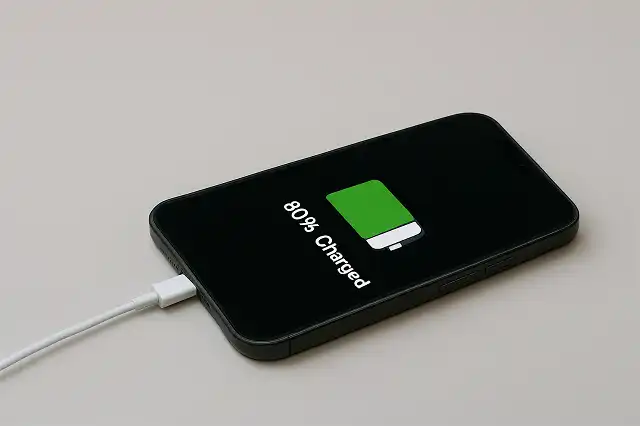
The theory behind limiting charging to 80% is rooted in battery chemistry. Lithium-ion batteries, which power all modern smartphones, experience more stress and degradation when kept at full charge for extended periods.
By capping the charge at 80%, users theoretically reduce this stress and extend the overall lifespan of their battery.
Real-World Testing Reveals Surprising Results
However, recent long-term testing suggests the benefits may be less significant than expected. A comprehensive year-long experiment tracking iPhone battery health with an 80% charge limit has produced underwhelming results that challenge conventional wisdom about battery preservation.
In the most recent test conducted with an iPhone 16 Pro Max, a device maintained at an 80% charge limit for 12 months showed a battery capacity of 94% after 299 charge cycles. Notably, this performance was nearly identical to a colleague’s device that charged to 100% regularly, which retained 96% capacity after 308 cycles. The difference was marginal at best, and arguably within the normal variation expected between individual devices.
This mirrors findings from a previous year’s testing with the iPhone 15 Pro Max, which also showed 94% capacity at the 12-month mark with the 80% limit enabled. After two years with the restriction in place, that device’s capacity dropped to 88% with 352 cycles, suggesting that while some degradation occurs over time, the 80% limit may not provide the dramatic protection many users hope for.
The Practical Drawbacks
Beyond the questionable battery health benefits, the 80% charge limit comes with genuine daily inconveniences. Users who tested the feature extensively reported frequent situations where the reduced battery capacity became problematic, particularly when using camera-intensive features or GPS navigation away from charging sources. The 20% reduction in available battery often meant needing to charge more frequently or carry additional power banks, which somewhat defeats the purpose of battery preservation.
The feature does include a smart calibration function where the iPhone occasionally charges to 100% to maintain accurate battery readings. While these surprise full-charge days provided welcome relief, they also highlight the fundamental trade-off users must accept when enabling the 80% limit.
Understanding Apple’s Battery Features
Apple offers three charging optimization options on recent iPhone models. The “Optimized Battery Charging” feature uses machine learning to understand daily charging patterns and delays charging past 80% until needed. The “80% Limit” option strictly caps charging at 80%, with periodic full charges for calibration. The “None” setting allows unrestricted charging to 100%.
Apple has designed these features with battery longevity in mind, and the company recommends keeping batteries between 20% and 80% for optimal performance. However, the real-world testing data suggests that strictly adhering to this recommendation may not provide the expected benefits for most users over typical upgrade cycles.
The Verdict for iPhone 17 Users
For iPhone 17 owners, the decision to enable the 80% charge limit should be based on individual usage patterns and priorities. The iPhone 17 Pro Max features significantly larger battery capacity and improved thermal management, which may influence how charging limits affect long-term battery health. However, based on available evidence from previous iPhone generations, the benefits appear modest at best over a typical one to two-year ownership period.
Users who keep their devices for three or more years might see more pronounced benefits from charging restrictions, though comprehensive long-term data is still limited. For most users who upgrade every one to two years, the practical inconveniences of the 80% limit likely outweigh the minimal battery health improvements observed in testing.
A more balanced approach might be to use the “Optimized Battery Charging” feature, which provides some protection without the constant inconvenience of a hard 80% cap. Alternatively, setting a 90% or 95% limit could offer a middle ground that reduces some battery stress while maintaining more usable capacity for daily needs.
Ultimately, the evidence suggests that users should prioritize enjoying their iPhone 17’s impressive battery capabilities rather than obsessing over charge limits that may provide only marginal benefits. Apple’s own battery management systems already work behind the scenes to minimize degradation, and the company’s devices are designed to handle regular charging to 100% throughout their intended lifespan.
Looking Forward
As battery technology continues to evolve and Apple refines its charging algorithms, future iPhone generations may see more significant benefits from charging restrictions. For now, iPhone 17 users can feel confident using their devices without strict charging limits, knowing that moderate battery degradation is a normal part of lithium-ion battery chemistry and that their devices are built to handle regular use patterns throughout their lifecycle.