Japan’s Long-Delayed Shift to “True 5G” Finally Gains Momentum
Japan’s Long-Delayed Shift to “True 5G” Finally Gains Momentum
- 60% of MD5 Password Hashes Can Be Cracked in Under an Hour with a Single GPU
- Dirty Frag: Root Access on Every Major Linux Distribution — No Patch, No Warning
- Ubuntu 26.04 LTS (Resolute Raccoon): The Most Ambitious Ubuntu LTS in a Decade
- Proton Mail: Data Transferred to FBI Again!
- How Close Are Quantum Computers to Breaking RSA-2048?
- How to Prevent Ransomware Infection Risks?
- What is the best alternative to Microsoft Office?
Japan’s Long-Delayed Shift to “True 5G” Finally Gains Momentum.
Why the transition to standalone 5G networks is becoming urgent as the 6G era approaches.
Five years after 5G services launched in Japan in 2020, the country is finally beginning to address a critical shortcoming: most users still aren’t experiencing true 5G capabilities.
While 5G subscriptions have surpassed 4G/LTE for the first time—reaching 115.71 million compared to 111.51 million 4G contracts according to September 2025 data from Japan’s Ministry of Internal Affairs and Communications—the majority of these connections rely on a compromised implementation that fails to deliver 5G’s full potential.
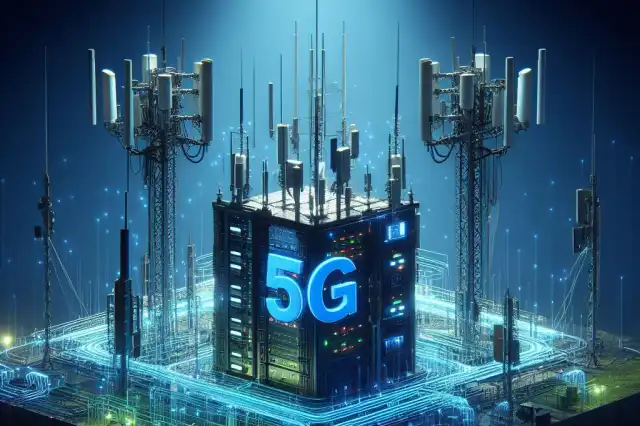
The NSA Problem: A Network Built on Compromise
The root of the issue lies in how 5G was initially deployed. Most Japanese carriers use Non-Standalone (NSA) architecture, which overlays 5G base stations onto existing 4G networks. While this approach enabled faster rollout and delivers high-speed data transmission, it comes with significant drawbacks.
NSA networks must connect to 4G infrastructure every time a device accesses 5G, creating complexity in both system design and operation. More problematically, this dependency places additional strain on 4G networks, which are already struggling with capacity. Industry experts increasingly point to NSA-based 5G usage as a contributing factor in degraded 4G service quality—a frustrating irony as 5G adoption grows.
The Promise of Standalone 5G
The solution is Standalone (SA) architecture—what many consider “true 5G.” In SA networks, all infrastructure is built specifically for 5G, creating complete separation from 4G systems. This separation not only improves overall network quality but also unlocks advanced capabilities impossible under NSA.
Chief among these is network slicing, a technology that virtually divides network resources to guarantee specific quality levels for particular users or applications—essentially creating dedicated lanes on the information highway. This capability is expected to enable entirely new service categories, particularly for enterprise applications that require reliable, guaranteed performance.
Why the Delay?
If SA offers such clear advantages, why has adoption been so slow? Two primary factors have hindered progress.
First, carriers have seen limited business incentive. Current 5G usage remains dominated by smartphone connectivity, with little traction in the enterprise applications and innovative use cases originally envisioned. Without clear revenue opportunities, the urgency to invest in SA infrastructure has been minimal.
Second, Japan’s carriers are operating under financial constraints. Government-mandated price reductions implemented between 2020 and 2021 significantly impacted carrier profitability just as 5G deployment ramped up. This unfortunate timing has made carriers reluctant to invest in SA transitions that don’t directly boost revenue.
This pattern isn’t unique to Japan. At Ericsson Forum 2025 held in September, the Swedish telecom giant noted that while 5G SA subscriptions have exceeded 50% globally, this is largely due to rapid adoption in populous countries like the United States, China, and India. Many other nations remain in early stages of SA deployment.
Momentum Builds in Japan
Recent months have shown signs of acceleration. Rakuten Mobile chairman Hiroshi Mikitani announced in late September 2025 that his company—the only major Japanese carrier not yet offering 5G SA—expects to complete the transition “within next year.”
KDDI has emerged as the domestic leader in SA deployment. Research firm Opensignal’s July 2025 study found KDDI delivering the highest 5G SA performance in Japan, surpassing SoftBank. At an earnings briefing the following day, KDDI President Koji Matsuda revealed the company had deployed 41,000 base stations in the Sub-6 frequency band (below 6GHz)—the most in Japan—with SA capability being rolled out across this entire footprint.
Sub-6 infrastructure is critical for SA success. Network slicing requires sufficient bandwidth to maintain high speeds even when dividing network resources, making the higher-capacity Sub-6 spectrum essential. The extent of Sub-6 coverage may ultimately determine the success of Japan’s SA transition.
The 6G Imperative
Two factors are now driving renewed urgency around SA adoption. First, carriers are recognizing operational benefits: improved network quality through 4G separation and simplified management systems that are easier to maintain.
But perhaps more significantly, the approaching 6G era is forcing carriers’ hands. The sixth-generation wireless standard promises ten times 5G’s capacity, native satellite communication integration, and dramatically reduced power consumption for both network equipment and devices. Standardization is progressing toward specifications finalized around late 2028, with commercial services expected around 2030—just five years away.
Crucially, transitioning from 5G to 6G requires first moving to 5G SA and breaking free from 4G legacy systems. Japan already lagged behind major nations in 5G deployment; avoiding a repeat failure with 6G makes SA transition not just beneficial but essential.
Clouds on the Horizon
As carriers accelerate SA deployment and 6G preparation through 2026 and beyond, concerns remain. Like 5G before it, 6G still lacks clearly defined use cases beyond faster smartphones—a potential obstacle to justifying massive infrastructure investments.
More troubling for Japan’s competitive position is an emerging shift in frequency band priorities. Japan has invested heavily in terahertz wave research for 6G, building on its strengths in high-frequency wireless technology. However, millimeter wave spectrum allocated for 5G (primarily above 30GHz) has proven disappointing—carriers deem it “unusable” due to limited coverage area, and deployment has stalled.
Consequently, global attention is shifting toward centimeter waves (7-20GHz)—lower frequency bands closer to Sub-6 than millimeter wave. This trend threatens to marginalize Japan’s technical strengths in higher frequencies, potentially undermining the nation’s competitive standing in international mobile communications.
As Japan finally begins its overdue transition to true 5G, the race is already on for 6G. Whether carriers can move quickly enough—and whether clear applications emerge to justify the investment—will determine if Japan can reclaim its position in global wireless leadership or fall further behind.