SoftBank Achieves Breakthrough in 5G Millimeter Wave Standalone FWA Technology
SoftBank Achieves Breakthrough in 5G Millimeter Wave Standalone FWA Technology
- 60% of MD5 Password Hashes Can Be Cracked in Under an Hour with a Single GPU
- Dirty Frag: Root Access on Every Major Linux Distribution — No Patch, No Warning
- Ubuntu 26.04 LTS (Resolute Raccoon): The Most Ambitious Ubuntu LTS in a Decade
- Proton Mail: Data Transferred to FBI Again!
- How Close Are Quantum Computers to Breaking RSA-2048?
- How to Prevent Ransomware Infection Risks?
- What is the best alternative to Microsoft Office?
SoftBank Achieves Breakthrough in 5G Millimeter Wave Standalone FWA Technology
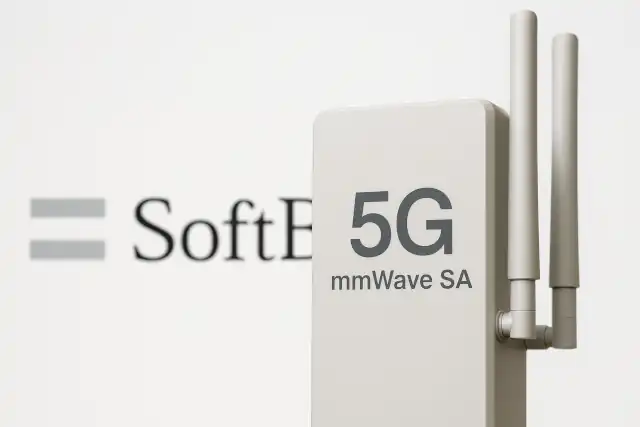
Tokyo — SoftBank Corporation has successfully demonstrated Fixed Wireless Access (FWA) communications using millimeter wave standalone (mmWave SA) technology in the 28GHz band, marking a significant advancement in 5G deployment capabilities.
The trial, conducted using the company’s commercial 5G network at an outdoor facility in Yokohama, achieved download speeds of up to 2.38 Gbps and upload speeds of 541 Mbps—approaching theoretical maximum performance.
Technical Breakthrough in Network Architecture
Unlike conventional millimeter wave deployments that rely on EN-DC (E-UTRAN New Radio – Dual Connectivity) or NR-DC (New Radio – Dual Connectivity) methods combining 4G or Sub-6GHz frequencies, SoftBank’s demonstration utilized mmWave frequencies independently for both uplink and downlink communications. This standalone configuration eliminates dependency on other frequency bands, addressing a longstanding challenge in mmWave network stability.
The trial demonstrated robust bidirectional communication even in multi-device environments, with no degradation in aggregate throughput.
A key technical achievement was the stable maintenance of high-order modulation (64QAM) and 2×2 MIMO through the combination of beamforming capabilities in the customer premises equipment (CPE) and multi-antenna combining reception functions at the base station.
This configuration significantly improved uplink communication stability while avoiding the quality fluctuations associated with 4G or Sub-6GHz bands in traditional architectures.
Global mmWave SA Deployment Landscape
While SoftBank’s achievement is notable, the global deployment of 5G mmWave SA remains limited and faces significant challenges. Currently, 163 operators across 65 countries are investing in public 5G SA networks, with 73 operators in 39 countries having launched services, but only 24 operators in 17 countries have launched 5G networks using mmWave spectrum.
United States: Testing Phase for mmWave SA
In the United States, T-Mobile conducted trials of mmWave on its standalone 5G network in December 2023, achieving download speeds of over 4.3 Gbps by aggregating eight channels of mmWave spectrum without relying on low-band or mid-band anchors. However, T-Mobile remains currently the only operator in the US to have fully deployed a SA 5G network, and commercial mmWave SA deployment remains limited.
Verizon has historically led mmWave deployment in the US but primarily uses it in congested areas and stadiums, while focusing recent investments on mid-band spectrum. Verizon users experience connection to mmWave 5G only about 0.8% of the time, highlighting the limited availability of this technology.
South Korea: Regulatory Challenges
South Korea’s mmWave deployment has faced significant setbacks. In 2018, South Korea’s three national operators each won 800MHz of 28GHz spectrum, but by November 2022, KT Corp and LG Uplus had failed to satisfy deployment requirements and lost their spectrum rights, while SK Telecom had its license reduced and eventually cancelled in 2023. A new operator, Stage X, was assigned 800MHz of 28GHz spectrum in January 2024 and plans to launch nationwide network services in the first half of 2025.
Europe and Other Regions
In the UK, operators including BT/EE, Vodafone, and Virgin Media O2 recently acquired mmWave spectrum licenses in the 26GHz and 40GHz bands and are preparing for future deployments. In Italy, operator Eolo is deploying mmWave SA 5G networks to bridge the country’s digital divide.
Huawei’s 5G mmWave SA Development
Huawei developed the Balong 5000 chipset, which was the world’s first chipset to support both standalone (SA) and non-standalone (NSA) network architectures for 5G, achieving speeds up to 6.5 Gbps on the mmWave band GSACounterpoint Research. This chipset supports a broad range of 5G products including smartphones, home broadband devices, vehicle-mounted devices, and 5G modules TelecomTV.
Huawei’s 5G CPE supports all main 5G frequency bands, including sub-6 GHz and mmWave, provides Gbps-level data downlink speeds, and supports both NSA and SA networking GSA. The company has deployed this technology in various trials and commercial networks globally.
Most recently, Huawei collaborated with Salam in Saudi Arabia to complete a groundbreaking mmWave 5G Advance trial, achieving peak throughput of 6.9 Gbps at short distance and 5 Gbps at 6 kilometers using Fixed Wireless Access connectivity TelecomLead.
ZTE’s 5G mmWave SA Development
ZTE has been even more active in recent mmWave SA trials and deployments:
ZTE partnered with AIS in Thailand to complete a successful trial of mmWave 5G standalone technology, achieving downlink speeds of 7.04 Gbps, uplink speeds of 2.12 Gbps, and end-to-end latency of less than 4 milliseconds Mobile World Live.
In China, ZTE achieved landmark results by completing the first connection using 5G NR standalone Dual-Connectivity with one 200 MHz carrier in the 26 GHz mmWave band along with one 100 MHz carrier in the 3.5 GHz band, achieving peak downlink speed of over 2.43 Gbps using a single device OpensignalT-Mobile.
ZTE recently signed a contract with Italian provider EOLO to develop a 5G Standalone mmWave network, with ZTE providing 5G mmWave radio access systems including RAN baseband, RAN radio, and FWA CPE terminals Light Reading. To date, ZTE has shipped more than four million 5G FWA and MBB terminal units worldwide Light Reading.
According to industry research, about 30 nations have at least one operator running a 5G SA network commercially, with some operators offering commercial services in mmWave n258 bands, though widespread mmWave SA deployment remains uncommon.
Real-World Applications of 5G mmWave SA
Emergency Response and Disaster Recovery
SoftBank envisions mmWave SA as a critical tool for rapidly establishing communication networks for disaster response centers and inter-governmental facility connections. During emergencies, the technology can provide high-capacity communication at evacuation shelters without requiring time-consuming fiber-optic cable installation. This rapid deployment capability is essential when traditional infrastructure is damaged or unavailable.
Educational Infrastructure
Schools and educational facilities can receive fiber-equivalent connectivity without extensive construction work, enabling advanced digital learning environments. The same infrastructure serves dual purposes by converting to emergency communication hubs during disasters, providing communities with resilient connectivity infrastructure.
Industrial and Commercial Applications
The technology addresses critical needs in industrial settings including factories and ports, where video surveillance, remote control systems, and IoT communications require low-latency, high-reliability connections. Event venues and stadiums can utilize mmWave SA for large-capacity offload communications, handling massive simultaneous data demands from thousands of attendees without network congestion.
Public Infrastructure Modernization
Municipal governments and public facilities can implement immediate-response communication infrastructure, establishing inter-office networks rapidly for improved administrative efficiency and public service delivery.
Key Advantages of mmWave SA Technology
The standalone millimeter wave approach offers several distinct benefits over traditional methods:
- Speed and Capacity: Achieving near-theoretical maximum speeds provides fiber-comparable performance wirelessly, with the bandwidth to support multiple high-demand applications simultaneously.
- Deployment Flexibility: Installation requires only CPE equipment in areas with existing mmWave base station coverage, dramatically reducing deployment time from months to days or weeks.
- Network Stability: By operating independently of 4G and Sub-6GHz bands, mmWave SA avoids performance degradation from congestion or quality issues in those frequencies, delivering more consistent service.
- Infrastructure Efficiency: Eliminates the need for costly and time-consuming fiber-optic cable installation, particularly valuable in challenging terrain, temporary installations, or areas where trenching is impractical.
- Scalability: The technology supports multiple simultaneous users without throughput degradation, making it suitable for high-density scenarios like stadiums, campuses, and industrial facilities.
Challenges Limiting Widespread Adoption
Despite technical achievements, mmWave deployment faces significant challenges, with considerable decrease in spending on mmWave spectrum since the end of 2020. The device mix remains a key bottleneck, as Apple iPhones lack mmWave support in most markets, and most Android devices omit mmWave capabilities.
The lack of compelling business use cases that justify deployment costs and challenges remains a significant barrier, as the benefits may not justify the significant investment required. Many operators have shifted focus to mid-band spectrum, which offers better balance between speed and coverage for widespread deployment.
SoftBank’s successful demonstration positions 5G mmWave SA as a technically viable alternative to traditional wired connectivity, with particular promise for applications requiring rapid deployment, disaster resilience, and fiber-equivalent performance. However, global adoption remains limited, and the technology’s future will depend on resolving cost challenges, expanding device support, and identifying compelling business cases that justify the infrastructure investment required for widespread deployment.