Firefox OS: An Unfinished Dream That Sparked the Mobile Future
Firefox OS: An Unfinished Dream That Sparked the Mobile Future
- 60% of MD5 Password Hashes Can Be Cracked in Under an Hour with a Single GPU
- Dirty Frag: Root Access on Every Major Linux Distribution — No Patch, No Warning
- Ubuntu 26.04 LTS (Resolute Raccoon): The Most Ambitious Ubuntu LTS in a Decade
- Proton Mail: Data Transferred to FBI Again!
- How Close Are Quantum Computers to Breaking RSA-2048?
- How to Prevent Ransomware Infection Risks?
- What is the best alternative to Microsoft Office?
Firefox OS: An Unfinished Dream That Sparked the Mobile Future
In 2013, the smartphone market was already firmly controlled by Apple’s iOS and Google’s Android. In this era of duopoly dominance, an unlikely challenger emerged—Firefox OS.
It didn’t come from a phone giant, but from Mozilla, a non-profit organization dedicated to the open web. Its vision was simple yet radical: build a mobile operating system entirely based on web technologies, returning the entire phone experience to the “open, free, installation-free” essence of the internet.
This was more than a product launch—it was a philosophical challenge to closed ecosystems. While this idealistic expedition ultimately failed to shake the mainstream market, the legacy it left behind continues to influence our understanding of “smart devices” today.
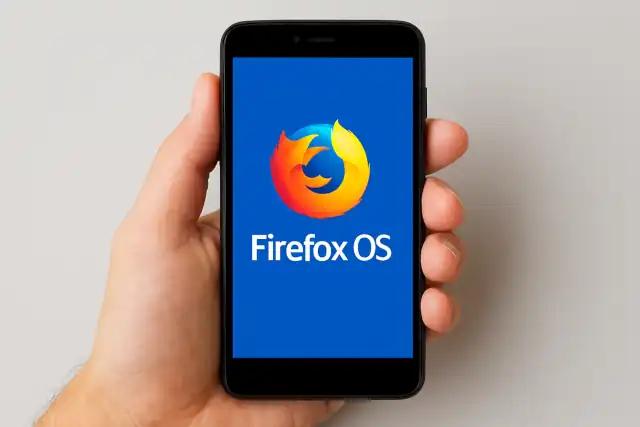
The Architecture: The Browser as Operating System
Firefox OS’s core philosophy was: “If modern browsers can already run complex applications, why can’t we use them to build an entire phone system?”
To achieve this, Mozilla built the entire operating system on the Gecko rendering engine (the core of the Firefox browser). The technical stack worked as follows:
- Bottom layer: A modified Linux kernel compatible with Android hardware.
- Middle layer: The Gecko engine, responsible for transforming web standards (HTML5, CSS3, JavaScript) into interactive interfaces.
- Top layer: All system applications (phone, messaging, camera, music, etc.) were written entirely in HTML, CSS, and JavaScript—essentially individual “websites.”
This meant developers could create “apps” using familiar frontend technologies, and users wouldn’t need to download or install anything—they could simply access them via URL. “Installing an app” was merely adding a webpage shortcut to the home screen, similar to a bookmark.
This design shared DNA with ChromeOS—the latter web-ified the desktop experience, while Firefox OS attempted to completely web-ify the mobile experience.
From Hope to Compromise: The Reality Check
Despite its advanced technical philosophy, Firefox OS faced multiple real-world challenges:
The Offline Problem:
Web pages depend on network connectivity, but smartphones need reliable offline functionality. To ensure basic usability at launch, Mozilla was forced to abandon the “pure web app” ideal and adopt “Packaged Apps”—web code packaged into something resembling native applications. This compromise marked the first collapse of its core philosophy.
The App Gap:
No WhatsApp, no mainstream social apps, no games—this was the key to Firefox phones’ failure in emerging markets. In India, Brazil, and elsewhere, users preferred cheap Android One phones over a device “that couldn’t chat.” Google keenly recognized this need and quickly captured the market with low-cost models supporting the complete Android ecosystem.
Hardware Dependence:
Mozilla couldn’t directly control chips and firmware, relying instead on partners like Qualcomm, ZTE, and Alcatel. This “indirect control” led to slow product iteration and difficulty responding quickly to market feedback.
Strategic Confusion:
Early on, Mozilla tried to compete head-to-head with Android, offering similar features and interfaces; later, they attempted to return to the “pure web” philosophy. This strategic wavering confused both developers and consumers, making the brand positioning increasingly unclear.
Betting on Emerging Markets, Losing to Infrastructure
Mozilla knew that challenging iOS and Android in global markets was nearly impossible. So they targeted emerging markets, launching ultra-low-cost phones at just $33, positioning them as “smart devices everyone can afford.”
However, this strategy overlooked critical issues:
- Mobile network infrastructure in these regions was weak, with 4G not yet widespread and web pages loading slowly or unreliably
- The “web-based” experience was nearly unusable with poor internet speeds
- Users didn’t need “openness”—they needed functionality, especially social tools like WhatsApp and Facebook
As a result, Firefox phones failed to gain traction even in these markets.
KaiOS: The Phoenix Rising
Though Mozilla officially terminated Firefox OS in 2016, its “DNA” didn’t die.
KaiOS Technologies forked Firefox OS’s open-source code and reshaped it into KaiOS—a smart operating system designed specifically for feature phones.
Unlike Firefox OS, KaiOS didn’t pursue “complete web-ification” but cleverly balanced performance with functionality:
- Supports 4G, Wi-Fi, GPS
- Features a lightweight browser
- Has an independent app store with pre-installed key applications like WhatsApp, YouTube, Google Assistant, and Google Maps
- Runs smoothly on devices with just 256MB of RAM
Today, KaiOS has become the world’s third-largest mobile operating system (after Android and iOS), widely used on devices like JioPhone and Nokia 8110 4G, with hundreds of millions of users across India, Africa, and Southeast Asia.
Ironically, although KaiOS originated from an open-source project, it is itself a closed, commercial system—contradicting Mozilla’s original “open web” philosophy.
Did Firefox OS Really Fail?
From a business perspective, Firefox OS failed: sales barely reached 5 million units, market share was negligible, and the project was ultimately cancelled.
But from a technical and philosophical perspective, it was a great experiment. It proved that:
- Web technologies were sufficient to support a complete mobile experience
- Lightweight operating systems could run smart features on low-spec devices
- Open platforms still had tremendous potential in specific scenarios
More importantly, it inspired subsequent technological developments:
- The Progressive Web Apps (PWA) philosophy closely resembles Firefox OS
- ChromeOS’s continued evolution benefited from Boot to Gecko project explorations
- Today’s “mini-programs” and “quick apps”—installation-free lightweight application models—are, in some ways, continuations of the Firefox OS philosophy
An Unfinished Dream
The story of Firefox OS is a classic case of idealism colliding with reality. It was born from faith in the open web and fell to the brutality of commercial ecosystems.
But as one developer said: “Maybe Firefox OS didn’t win, but it showed us another possibility.”
In a world dominated by closed app stores and data silos, Firefox OS reminds us: the essence of the internet is connection, not walls.
Perhaps one day, when web technologies are powerful enough, when 5G/6G is ubiquitous, when edge computing matures, we will finally return to that digital future of “everything accessible, nothing to install, freely flowing”—and that is precisely the vision Mozilla once painted.
Firefox OS may have closed its curtain, but its soul still awaits revival.