How to Keep Your Documents Readable 50 Years From Now?
How to Keep Your Documents Readable 50 Years From Now? The Document Foundation Advocates for Open ODF Format
- 60% of MD5 Password Hashes Can Be Cracked in Under an Hour with a Single GPU
- Dirty Frag: Root Access on Every Major Linux Distribution — No Patch, No Warning
- Ubuntu 26.04 LTS (Resolute Raccoon): The Most Ambitious Ubuntu LTS in a Decade
- Proton Mail: Data Transferred to FBI Again!
- How Close Are Quantum Computers to Breaking RSA-2048?
- How to Prevent Ransomware Infection Risks?
- What is the best alternative to Microsoft Office?
How to Keep Your Documents Readable 50 Years From Now? The Document Foundation Advocates for Open ODF Format
In an era where digital preservation has become increasingly critical, the Document Foundation (TDF), the organization behind LibreOffice, is once again emphasizing the importance of using open file formats for long-term document archiving.
What is the best alternative to Microsoft Office?
The Risk of Proprietary Formats
Italo Vignoli, co-founder of TDF, has issued a stark warning about the dangers of relying on proprietary document formats. According to Vignoli, important files saved in closed, vendor-specific formats may become unreadable within just a few years as software evolves and older versions become obsolete.
The concern is not merely theoretical. Many users have already encountered situations where documents created in older versions of proprietary office software can no longer be properly opened or rendered. This problem stems from what Vignoli describes as a deliberate strategy by software vendors to lock users into their specific ecosystems.
Austria’s Military Ditches Microsoft Office: A Neutral Nation’s Quest for Digital Sovereignty
ODF: A Solution for the Future
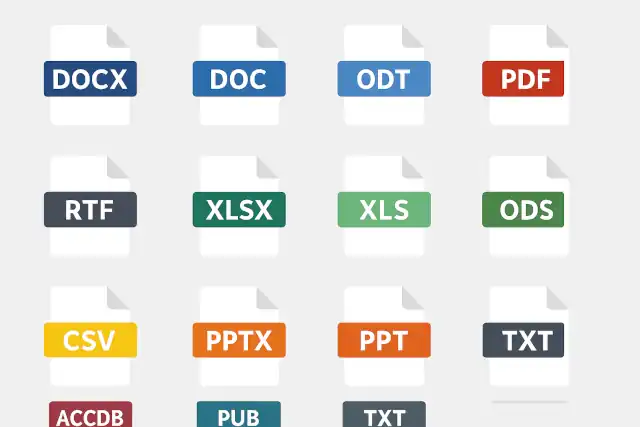
The Document Foundation champions the Open Document Format (ODF) as the gold standard for ensuring long-term document accessibility. ODF is an open standard managed by international standards organizations, with all specifications and development processes publicly available. This transparency is crucial for future-proofing documents.
LibreOffice, the open-source alternative to Microsoft Office, natively supports ODF format. The key advantage of ODF lies in its robust backward compatibility and transparent design. Because the format’s specifications are completely open, developers can create compatible software even decades after a document was created. For example, a file created using ODF 1.0 in 2005 can theoretically still be opened perfectly by ODF-compatible applications in 2025 and beyond.
Why German State Governments Are Abandoning Microsoft Office for Open-Source Solutions
The OOXML Controversy
While Microsoft has introduced Office Open XML (OOXML) as a standardized format in an apparent gesture toward openness, TDF remains skeptical. According to the foundation, OOXML’s internal metadata schema is intentionally designed with such complexity that competing software struggles to achieve full compatibility and proper parsing.
Vignoli characterizes OOXML as a “hidden lock-in tool,” arguing that this approach contradicts the simplification principles that XML was meant to embody. In essence, he suggests that OOXML represents merely a new variation of the vendor lock-in strategy rather than a genuine solution to the interoperability problem.
China Officially Replaces Microsoft Office with Domestic WPS Format in Government Documents
Practical Recommendations
For users concerned about preserving their digital legacy, Vignoli offers clear guidance: documents requiring long-term storage and future editing should be saved in ODF format. This ensures that regardless of which software applications survive or emerge in the coming decades, the documents will remain accessible and editable.
For finalized documents that no longer require editing, PDF format serves as an excellent archival option, providing reliable static document preservation.
Why Are US Allies Also Abandoning American Software?
The Broader Implications
The debate over document formats extends beyond mere technical considerations—it touches on issues of digital rights, data ownership, and information accessibility. As society becomes increasingly dependent on digital documentation for everything from personal records to business archives and historical documentation, the choice of file format carries long-term consequences.
The Document Foundation‘s advocacy for open formats represents a push toward greater digital autonomy and sustainability. By choosing open standards like ODF, users can protect themselves against the risk of being stranded by discontinued software or incompatible future systems.
As we continue to create and store ever-growing volumes of digital documents, the question of long-term accessibility becomes not just a technical challenge but a fundamental consideration for preserving our digital heritage for future generations.