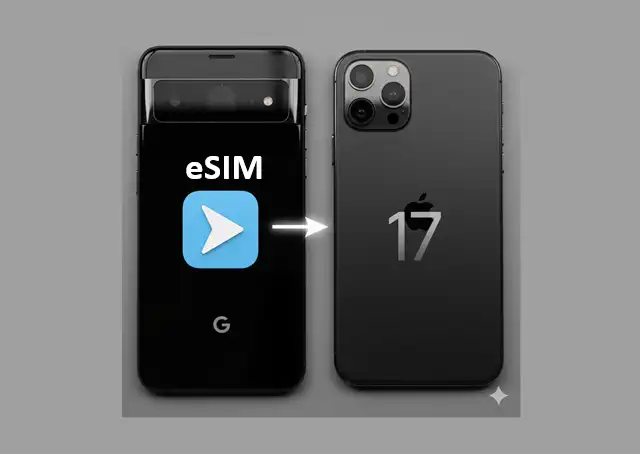
The Hidden Risk of eSIM: When Your Phone Fails, Connectivity Can Too
The Hidden Risk of eSIM: When Your Phone Fails, Connectivity Can Too
- Apple’s Native Linux Container Tool Has Arrived — But Can It Really Replace Docker?
- 60% of MD5 Password Hashes Can Be Cracked in Under an Hour with a Single GPU
- Dirty Frag: Root Access on Every Major Linux Distribution — No Patch, No Warning
- Proton Mail: Data Transferred to FBI Again!
- How Close Are Quantum Computers to Breaking RSA-2048?
- What is the best alternative to Microsoft Office?
The Hidden Risk of eSIM: When Your Phone Fails, Connectivity Can Too
Consumers Must Understand eSIM Limitations Before Abandoning Physical SIM Cards
December 29, 2025 — As smartphone manufacturers increasingly embrace eSIM technology, touting its convenience and modern appeal, a critical vulnerability often goes unmentioned: when your phone malfunctions or breaks, you cannot simply swap your connectivity to a backup device the way you could with a traditional physical SIM card.
Recent consumer reports and technical forums reveal a troubling pattern. Users who experience phone damage, software failures, or hardware malfunctions discover they face extended periods without mobile connectivity—sometimes days—while they navigate carrier bureaucracy to obtain new eSIM activation codes.
The Most Windows-Friendly Linux Distributions for General Consumers: A Complete Guide
The Promise Versus the Reality
eSIM technology has been marketed as a revolutionary step forward. The digital SIM eliminates the need for physical cards, allows for easier carrier switching, and provides additional security since it cannot be physically removed from a stolen device. Apple has led this transition aggressively, with iPhone 14 and newer models sold in the United States containing no physical SIM card slot whatsoever.
However, the convenience narrative overlooks a fundamental problem: eSIMs are tied to functioning devices. When a phone’s screen shatters beyond usability, when an iOS update renders the device unable to boot, or when hardware failure strikes, users cannot extract their connectivity and insert it into another phone within minutes, as they could with physical SIM cards.
Windows Software Alternatives in Linux OS
Real-World Consequences
One carrier explicitly warns customers that if a phone becomes completely damaged or will not turn on, users cannot swap an eSIM from the damaged device to a new one. This creates a catch-22: the very device needed to initiate an eSIM transfer becomes unavailable precisely when the transfer is most urgently needed.
Consider the traveler whose phone breaks while abroad, or the professional whose device fails during a critical business period, or the parent whose phone malfunctions during a family emergency. In all these scenarios, the inability to quickly restore connectivity by moving a SIM card to a backup phone can have serious consequences.
One user reported being unable to make an emergency call while stuck in traffic after discovering neither SIM could function properly, highlighting how technical issues can create genuine safety concerns.
What is the best alternative to Microsoft Office?
The Technical Barriers
The eSIM transfer process requires multiple working components:
Device functionality: Both the old and new devices typically need to be operational for most carrier-supported transfer methods. Screen damage that renders a device unusable can make eSIM transfer impossible without carrier intervention.
Carrier cooperation: Users must contact their carrier to request new eSIM activation, often requiring identity verification through methods that assume access to the registered phone number—the very thing they’ve lost access to.
QR codes and setup processes: Activating a new eSIM typically requires scanning QR codes or entering activation details, processes that can take hours or days depending on carrier responsiveness. Some carriers charge fees approaching $40 to issue a new eSIM.
Internet connectivity: The process demands stable Wi-Fi or data connection, which may not be available in emergency situations.
GIMP vs. Krita: Which is the Best Open-Source Alternative to Photoshop?
Transfer Failures Are Common
Technical forums are filled with frustrated users reporting eSIM transfer failures. One iPhone user made four phone calls and visited carrier stores twice, with the issue never resolved despite promises of IT support callbacks within 24 hours.
The problems stem from various sources: carrier systems that don’t support seamless transfers, incompatibility between device models, outdated software, or simply technical glitches in the activation process.
Unlike physical SIMs, which either work or don’t when inserted, eSIM activation involves complex backend provisioning that can fail in numerous ways.
The Best Free Adobe Acrobat Alternatives for Linux
The Backup Phone Advantage Lost
The traditional physical SIM card provided a crucial safety net: keep an old phone as a backup. If your primary device broke, you could immediately restore voice calling and texting capabilities by inserting your SIM into the backup device. This could be accomplished in seconds, anywhere, without internet access, carrier approval, or technical expertise.
With eSIM-only devices, this simple failsafe disappears. Users cannot remove an eSIM and insert it into another device as they would with a traditional SIM card, potentially leading to extended periods without connectivity.
Industry Response and Consumer Awareness
Smartphone manufacturers and carriers emphasize eSIM benefits while providing minimal education about its limitations. Apple’s support documentation addresses transfer procedures but doesn’t prominently warn users about scenarios where transfer becomes impossible.
Users have noted that eSIM transfer between devices requires both phones to be working, making the feature not viable if a phone is broken and non-functional. This represents a fundamental regression in emergency preparedness compared to physical SIM technology.
What is the best alternative to Microsoft Office?
Recommendations for Consumers
Before transitioning to eSIM-only devices, consumers should consider:
-
Maintain carrier contact alternatives: Ensure you can reach your carrier without relying on your primary phone number, such as through email or alternative phone lines.
-
Document activation codes: Keep eSIM QR codes and activation information accessible outside your phone.
-
Understand your carrier’s policies: Research how your specific carrier handles eSIM replacement for damaged devices, including timeframes and costs.
-
Consider dual-SIM devices: Where available, devices supporting both physical and eSIM provide flexibility and backup options.
-
Evaluate your risk tolerance: Those who travel frequently, work in critical industries, or have safety concerns may want to reconsider eSIM-only devices.
Free Project Management Software Alternatives to MS Project for Linux
Looking Forward
As the industry continues its march toward eSIM standardization, these practical concerns deserve greater attention. Technology should enhance rather than diminish our ability to maintain connectivity during emergencies. Until carriers develop instant eSIM transfer systems that function regardless of device condition—perhaps through cloud-based instant provisioning—the convenience of eSIM comes with hidden costs that consumers should understand before abandoning the reliability of physical SIM cards.
The evolution toward eSIM technology may be inevitable, but it need not be blind. Consumers deserve transparent information about what they’re losing alongside what they’re gaining, particularly when those losses affect their ability to communicate during the moments when connectivity matters most.
As the telecommunications industry embraces digital transformation, the challenge remains: how can we preserve the practical advantages of older technology while embracing innovation? Until that question is satisfactorily answered, the humble physical SIM card retains advantages that no amount of digital convenience can fully replace.