Samsung Exynos 2700 Set for Mass Production in Second Half of 2026
Samsung Exynos 2700 Set for Mass Production in Second Half of 2026: Chip Share to Double in Galaxy S27 Series
- 60% of MD5 Password Hashes Can Be Cracked in Under an Hour with a Single GPU
- Dirty Frag: Root Access on Every Major Linux Distribution — No Patch, No Warning
- Ubuntu 26.04 LTS (Resolute Raccoon): The Most Ambitious Ubuntu LTS in a Decade
- Proton Mail: Data Transferred to FBI Again!
- How Close Are Quantum Computers to Breaking RSA-2048?
- How to Prevent Ransomware Infection Risks?
- What is the best alternative to Microsoft Office?
Samsung Exynos 2700 Set for Mass Production in Second Half of 2026: Chip Share to Double in Galaxy S27 Series
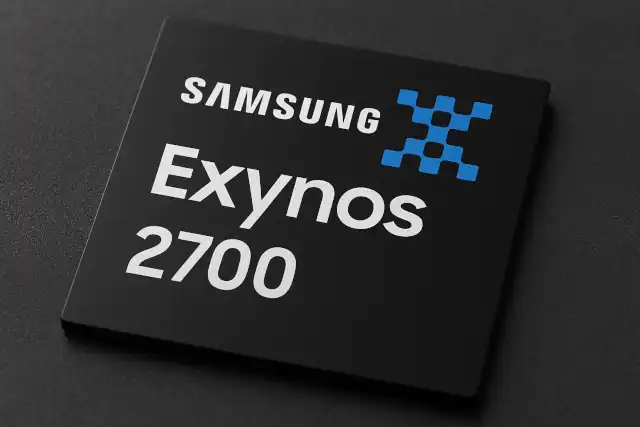
February 10, 2026 — Samsung is preparing a significant push into in-house chip production with its next-generation Exynos 2700 processor, which analysts predict will power approximately 50% of the Galaxy S27 series when it launches in early 2027.
This represents a dramatic increase from the current Galaxy S26 lineup, where the Exynos 2600 accounts for only about 25% of units, with Qualcomm’s Snapdragon 8 Elite Gen 5 comprising the remaining 75%.
Production Timeline and Manufacturing Process
According to analyst Park Yoo-ak from Kiwoom Securities, the Exynos 2700 is expected to enter mass production in the second half of 2026. The chip will be manufactured using Samsung Foundry’s second-generation 2nm Gate-All-Around (GAA) process, known as SF2P, which offers significant improvements over the first-generation SF2 node used for the Exynos 2600.
Recent reports indicate that Samsung’s 2nm GAA process yields have reached approximately 50-60%, a substantial improvement from the 37% yields reported in late 2025. Some industry sources suggest that the SF2P process has achieved yields as high as 70%, positioning Samsung competitively against TSMC’s manufacturing capabilities.
Technical Specifications
Early benchmark listings have revealed intriguing details about the Exynos 2700’s architecture:
CPU Configuration: The chip features an unconventional 10-core (deca-core) design with a unique 4+1+4+1 cluster arrangement:
- 1 core at 2.30GHz
- 4 cores at 2.40GHz
- 1 core at 2.78GHz
- 4 cores at 2.88GHz
This four-cluster design represents a departure from traditional layouts, spreading workloads more evenly rather than relying on a single oversized prime core for peak performance. Industry experts believe this architecture prioritizes sustained performance over burst speeds.
Graphics: The Exynos 2700 will feature Samsung’s Xclipse 970 GPU, the third iteration of Samsung’s AMD RDNA-based graphics solution. This follows the Xclipse 960 used in the Exynos 2600.
Memory and Storage Support: The chip is expected to support next-generation LPDDR6 RAM and UFS 5.0 storage, ensuring compatibility with future AI applications and high-bandwidth workloads.
Advanced Features: Samsung may incorporate its Heat Path Block (HPB) cooling solution to improve thermal management, addressing one of the historical weaknesses of Exynos processors under sustained workloads.
Strategic Implications for Samsung
The increased Exynos 2700 deployment in the Galaxy S27 series reflects Samsung’s ambitious strategy to reduce dependence on Qualcomm and achieve profitability in its foundry business. Samsung has set a goal of achieving positive net cash flow in its foundry division by 2027.
To support this initiative, Samsung is targeting a 130% increase in chip orders for 2026, driven by improved manufacturing yields and growing customer confidence in its 2nm technology. Beyond Tesla’s $16.5 billion contract for AI chips, Samsung is reportedly in discussions with major U.S. and Chinese customers for additional 2nm orders.
The company has also completed guidelines for Design Solution Partners to actively promote the SF2P process, signaling Samsung’s commitment to this second-generation 2nm node over its predecessor.
The Competition: Snapdragon 8 Elite Gen 6
The Exynos 2700 will compete directly with Qualcomm’s Snapdragon 8 Elite Gen 6, which is also scheduled for production in late 2026. Qualcomm is expected to offer two variants:
Snapdragon 8 Elite Gen 6 (Standard): Built on TSMC’s N2P (second-generation 2nm) process, featuring LPDDR5X memory support.
Snapdragon 8 Elite Gen 6 Pro: A premium variant with exclusive LPDDR6 RAM support, UFS 5.0 storage, enhanced GPU configuration, and more complete cache architecture. This version is expected to be reserved for ultra-premium devices like the Galaxy S27 Ultra.
Recent leaks suggest the standard Snapdragon 8 Elite Gen 6 will be deployed in devices like the Galaxy S27, while the Pro variant will power top-tier models. Both chips will use Qualcomm’s third-generation self-developed Oryon CPU cores in a 2+3+3 configuration.
Market Impact and Device Distribution
If Samsung achieves its 50% Exynos 2700 share in the Galaxy S27 series, this would represent a fundamental shift in the company’s chip strategy. Traditionally, markets like the United States, Canada, and China receive Snapdragon-exclusive variants, while regions such as Europe and South Korea get Exynos models.
With the increased Exynos share, speculation has emerged that even the Galaxy S27 Ultra might receive the Exynos 2700 in select markets like South Korea, although this remains unconfirmed. The final distribution will likely depend on how the Exynos 2700’s performance and power efficiency compare to the Snapdragon 8 Elite Gen 6 in real-world testing.
Development Status and Cautionary Notes
While early Geekbench listings have surfaced showing the Exynos 2700 running on test devices with Android 16 and 12GB of RAM, the benchmark scores remain low compared to current-generation chips. This is typical for engineering samples with unoptimized firmware and conservative clock speeds.
Samsung completed the base design of the Exynos 2700 in 2025, but significant optimization work continues. The chip won’t appear in consumer devices until the Galaxy S27 series launches in early 2027, giving Samsung over a year to refine performance, power efficiency, and thermal characteristics.
Industry Context: The Battle for 2nm Leadership
Samsung’s aggressive push with the Exynos 2700 comes at a critical juncture in the semiconductor industry. TSMC currently dominates the advanced node market, but supply constraints and prioritization of major clients like Apple and NVIDIA have created opportunities for Samsung to position itself as a viable alternative.
The success of the Exynos 2700 and Samsung’s SF2P process could reshape the foundry landscape, potentially attracting major customers like Qualcomm and AMD who seek to diversify away from single-source dependencies. However, Samsung must demonstrate not only competitive yields but also sustained performance and reliability to win these high-stakes contracts.
Looking Ahead
The Galaxy S26 series, set to launch in late February 2026, will serve as a crucial proof point for Samsung’s 2nm technology. If the Exynos 2600 delivers competitive performance and efficiency in real-world usage, it will build confidence for the more ambitious Exynos 2700 deployment in 2027.
Samsung is also looking beyond SF2P, with development already underway on the SF2Z node (featuring Backside Power Delivery Network technology) for 2027 and the 1.4nm process targeting mass production in 2029.
For consumers, the increasing Exynos share could mean more competitive pricing and potentially exclusive features tailored to Samsung’s vertical integration capabilities. However, the ultimate verdict will depend on whether the Exynos 2700 can match or exceed the Snapdragon 8 Elite Gen 6 in the metrics that matter most to users: performance, battery life, camera processing, and thermal management.
Note: Some details about the Exynos 2700 remain subject to change as the chip is still in development. Final specifications, performance characteristics, and device distribution will be confirmed closer to the Galaxy S27 series launch in early 2027.