Global DRAM Crisis Intensifies: Winbond Capacity Sold Out Through 2027 as AI Demand Reshapes Memory Market
- Linux Kernel Removes strncpy After Six Years and 362 Patches
- Linux Kernel Drops 40-Year-Old AppleTalk Protocol — AI-Generated Patch Flood Was the Last Straw
- Apple’s Native Linux Container Tool Has Arrived — But Can It Really Replace Docker?
- 60% of MD5 Password Hashes Can Be Cracked in Under an Hour with a Single GPU
- Dirty Frag: Root Access on Every Major Linux Distribution — No Patch, No Warning
Global DRAM Crisis Intensifies: Winbond Capacity Sold Out Through 2027 as AI Demand Reshapes Memory Market
Global DRAM Crisis Intensifies: Winbond Capacity Sold Out Through 2027 as AI Demand Reshapes Memory Market
February 10, 2026 — The global memory shortage continues to tighten its grip on the semiconductor industry, with Taiwanese memory chip manufacturer Winbond Electronics confirming that its production capacity is fully booked through 2027, underscoring a structural supply crisis driven by surging artificial intelligence infrastructure demands.
Winbond’s Soaring Performance Amid Industry-Wide Shortage
Winbond Electronics has emerged as a major beneficiary of the unprecedented DRAM shortage. According to the company’s latest financial reports, consolidated revenue through November 2025 reached NT$79.636 billion (approximately $2.52 billion USD), representing a 5.85% year-over-year increase. This follows strong third-quarter results showing NT$21.771 billion ($690 million USD) in consolidated revenue, up 2.1% compared to the same period in 2024.
The company’s strategic focus on specialty DRAM and legacy DDR4 products has positioned it uniquely in a market where larger competitors have abandoned these segments to pursue higher-margin AI memory solutions.
Dramatic Price Increases Reflect Supply-Demand Imbalance
Industry reports indicate that Winbond implemented cumulative price increases of 80-90% from Q2 to Q4 2025, with contract prices effectively doubling year-over-year. The company expects DRAM price increases that began in Q4 2025 to continue through at least Q2 2026, marking three consecutive quarters of growth.
General Manager Pei-Ming Chen emphasized the severity of the shortage during recent investor discussions, noting that the company’s production capacity for both 2026 and 2027 is already fully committed to existing customers. To manage risk, Winbond now prefers quarterly price negotiations and is reluctant to accept long-term orders exceeding three months.
DDR4 Shortage: A Perfect Storm
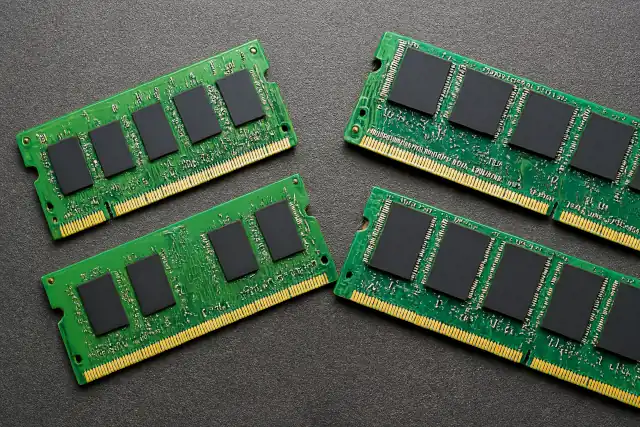
The DDR4 shortage has become particularly acute as major manufacturers—Samsung, SK Hynix, and Micron—have redirected their production capacity toward high-bandwidth memory (HBM) and DDR5 for AI applications. Industry forecasts suggest DDR4 production could fall to approximately 20% of 2025 levels by 2026, with spot prices for DDR4 modules reportedly doubling year-over-year.
Chen described the DDR4 gap as one “so large it’s impossible to fill,” even with Winbond’s aggressive capacity expansion plans. The company recently announced its new 8Gb DDR4 DRAM built on an advanced 16nm process technology, designed to serve industrial and embedded applications that continue to rely on DDR4’s proven stability.
AI’s Voracious Appetite for Memory
The root cause of the shortage lies in an unprecedented reallocation of semiconductor manufacturing capacity. According to recent industry analysis, AI infrastructure is projected to consume nearly 20% of global DRAM wafer capacity in 2026, with that figure expected to rise as AI deployment scales.
Each gigabyte of HBM—the preferred memory type for AI accelerators like Nvidia’s GPUs—consumes roughly three times the wafer capacity of DDR5 production. This creates a zero-sum game: every wafer allocated to HBM for AI applications is a wafer denied to conventional DRAM for smartphones, PCs, and consumer electronics.
The International Data Corporation (IDC) projects that 2026 DRAM supply growth will remain below historical norms at just 16% year-over-year, far below the estimated 35% demand growth driven by AI infrastructure buildout.
Market Impact: Winners and Losers
The shortage is creating stark divergences across the technology sector:
Consumer Electronics: PC and smartphone manufacturers face 15-20% price increases in Q1 2026, with mid-range devices particularly vulnerable. Memory components can represent 15-20% of total bill of materials for mid-range smartphones and 10-15% for flagship devices.
Enterprise and Cloud: Hyperscalers like Microsoft, Google, Meta, and Amazon have secured long-term DRAM contracts, effectively crowding out smaller buyers. Samsung recently raised contract prices between 30% and 60% compared to September 2025 levels.
Automotive and Industrial: These sectors face mounting concerns as they rely heavily on DDR4 and legacy DRAM products. Some analysts warn of potential production disruptions by 2027-2028 if supply constraints persist.
SLC NAND Supply Even Tighter
Chen revealed that SLC NAND flash memory is experiencing even more severe supply constraints than DRAM, with actual price increases exceeding those of DRAM. This comprehensive shortage across the memory market reflects the industry’s strategic pivot toward AI applications.
Winbond’s Expansion Strategy
Despite the sold-out capacity, Winbond continues to invest in expansion. The company is advancing its 16nm manufacturing platform and has announced plans for additional products including CUBE, 8Gb LPDDR4, and 16Gb DDR4, all based on the same 16nm process node.
Winbond maintains its position as the world’s number one NOR flash supplier while expanding its customized memory solutions business, which now accounts for approximately 24-27% of quarterly revenue, with an increasing contribution from 20nm products.
Long-Term Outlook: No Quick Resolution
Industry experts warn that meaningful relief is unlikely before 2027-2028. While major manufacturers including Samsung, SK Hynix, and Micron have announced new fabrication facilities, these will not reach volume production for several years. Samsung’s planned 50% HBM capacity increase in 2026 and Micron’s $200 billion U.S. investment commitment will primarily target AI memory products rather than conventional DRAM.
Chen believes that “before AI infrastructure fully matures, related storage demand and prices will remain high for some time,” suggesting the current shortage represents a structural shift in the memory market rather than a temporary cyclical imbalance.
Financial Conversion Notes
Exchange rate reference: 1 USD = approximately NT$31.54 (as of February 10, 2026). All conversions are approximate and based on recent exchange rates averaging NT$30.9-31.7 per USD over the past six months.
About Winbond Electronics Corporation
Headquartered in Taichung, Taiwan, Winbond Electronics Corporation (TWSE: 2344) is a leading global supplier of semiconductor memory solutions, specializing in DRAM, flash memory, and logic IC products. The company serves automotive, industrial, consumer electronics, communication, and computer peripheral markets worldwide.
Market Data: As of market close February 10, 2026, Winbond stock traded at NT$95.50, with a market capitalization of NT$429.75 billion (approximately $13.6 billion USD).