Microsoft Announces Windows 11 Version 26H1: A Special Release Exclusively for Snapdragon X2 Devices
Microsoft Announces Windows 11 Version 26H1: A Special Release Exclusively for Snapdragon X2 Devices
- Linux Kernel Removes strncpy After Six Years and 362 Patches
- Linux Kernel Drops 40-Year-Old AppleTalk Protocol — AI-Generated Patch Flood Was the Last Straw
- Apple’s Native Linux Container Tool Has Arrived — But Can It Really Replace Docker?
- 60% of MD5 Password Hashes Can Be Cracked in Under an Hour with a Single GPU
- Dirty Frag: Root Access on Every Major Linux Distribution — No Patch, No Warning
Microsoft Announces Windows 11 Version 26H1: A Special Release Exclusively for Snapdragon X2 Devices
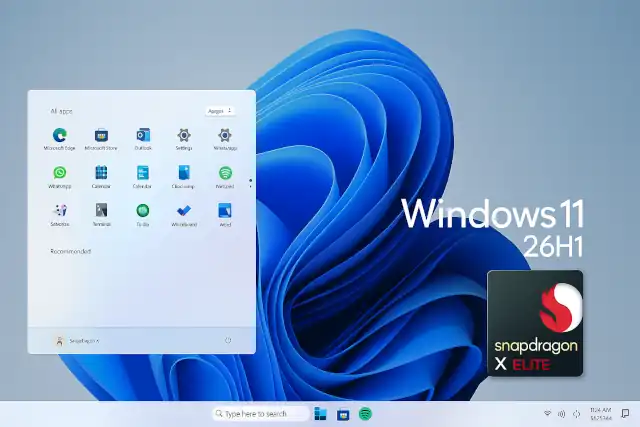
February 12, 2026 — Microsoft has officially announced Windows 11 version 26H1, marking a significant departure from the company’s traditional update strategy.
In a blog post published on February 10th, the tech giant revealed that this new version will only be available on devices powered by Qualcomm’s latest Snapdragon X2 processors, and will not roll out as a standard update to existing Windows 11 users.
A Different Operating System Core
Version 26H1 is based on a different Windows core than Windows 11 versions 24H2 and 25H2, the currently recommended releases for general deployment. Built on a new platform codenamed “Bromine” with build number 28000, this represents a fundamental architectural shift from the “Germanium” platform that powers versions 24H2 (build 26100) and 25H2 (build 26200).
This architectural difference means version 26H1 is not being made available through broad channels but is only intended for those who purchase new devices with Qualcomm Snapdragon X2 Series processors. The first devices featuring version 26H1 are expected to ship this spring.
No Upgrade Path for Existing Users
Microsoft has made it clear that there is no benefit to waiting or deferring plans based on version 26H1, unless you are specifically targeting adoption of devices with silicon that requires such. Users running Windows 11 versions 24H2 or 25H2 will not receive 26H1 through Windows Update, and organizations should continue to purchase, deploy, and manage devices running broadly released versions of Windows 11 with confidence.
Even more notably, devices running Windows 11 version 26H1 will not be able to update to the next annual feature update in the second half of 2026, which will be designated for 24H2 and 25H2 users. Instead, Snapdragon X2 devices will receive a path to update in a future Windows release, likely not until 2027.
Learning from Past Challenges
The decision to separate version 26H1 appears to be a strategic response to the significant stability issues that plagued Windows 11 version 24H2. The bug affects the fundamental way the operating system displays its user interface, rendering essential tools like the File Explorer, the Start Menu, and the Settings app unusable for many users.
By maintaining separate development branches, Microsoft aims to support new ARM-based hardware innovations while protecting the stability that existing commercial customers rely on. This approach allows the company to introduce necessary platform changes for Snapdragon X2 functionality without risking widespread disruption across its entire user base.
What This Means for Users and IT Administrators
For most Windows 11 users, nothing changes. Windows 11 versions 24H2 and 25H2 remain the recommended releases for enterprise deployment at this time, and Microsoft will continue its annual feature update cycle in the second half of each calendar year.
Key points for IT administrators:
- No deployment changes needed: Organizations can continue their current Windows 11 rollout plans without interruption
- Security updates continue: Windows 11 version 26H1 security updates will be manageable through typical tooling – Windows Autopatch, Microsoft Intune, Microsoft Configuration Manager
- No hotpatch support: Windows 11 version 26H1 does not support hotpatch updates, meaning patches will require system restarts
- Selective evaluation: Early adopters interested in new ARM hardware platforms may evaluate version 26H1 selectively without disrupting their existing infrastructure
Support Timeline
Windows 11 version 26H1 will receive standard security and quality updates through Microsoft’s regular monthly update cycle.
Support is scheduled to continue until March 14, 2028 for Home and Pro editions, and March 13, 2029 for Enterprise and Education editions.
The Broader Context: Windows and ARM
This announcement represents Microsoft’s continued push toward ARM-based Windows PCs. The Snapdragon X2 processor features enhanced performance, improved battery life, and greater artificial intelligence capabilities compared to previous generations, making it attractive for thin and lightweight notebook designs.
While Microsoft has only officially confirmed support for Qualcomm’s Snapdragon X2, industry speculation suggests other ARM processors, potentially including NVIDIA’s rumored N1X chip, may eventually support version 26H1, though no official announcements have been made.
Looking Ahead
Microsoft’s dual-branch strategy for Windows 11 signals a new approach to balancing innovation with stability. By isolating new hardware requirements to a separate release track, the company aims to avoid repeating the widespread compatibility issues that affected version 24H2 while still enabling cutting-edge device capabilities.
For the vast majority of Windows 11 users, the message is simple: carry on as usual. Version 26H1 is a specialized release designed to support specific new hardware, not a mandatory upgrade or a replacement for existing versions. Microsoft has promised to communicate clearly whenever a Windows release requires changes to deployment planning or management practices, with sufficient advance notice.
As the Windows ecosystem continues to evolve, this bifurcated approach may become a template for how Microsoft manages the transition to new processor architectures while maintaining the predictability and reliability that enterprise customers demand.
For more information about Windows 11 version 26H1, IT professionals can visit the Windows IT Pro Blog or check the official update history documentation.