The Sanctions That Backfired: How U.S. Chip Restrictions Accelerated China’s Semiconductor Ambitions?
The Sanctions That Backfired: How U.S. Chip Restrictions Accelerated China’s Semiconductor Ambitions?
- Linux Kernel Drops 40-Year-Old AppleTalk Protocol — AI-Generated Patch Flood Was the Last Straw
- Apple’s Native Linux Container Tool Has Arrived — But Can It Really Replace Docker?
- 60% of MD5 Password Hashes Can Be Cracked in Under an Hour with a Single GPU
- Dirty Frag: Root Access on Every Major Linux Distribution — No Patch, No Warning
- How Close Are Quantum Computers to Breaking RSA-2048?
- What is the best alternative to Microsoft Office?
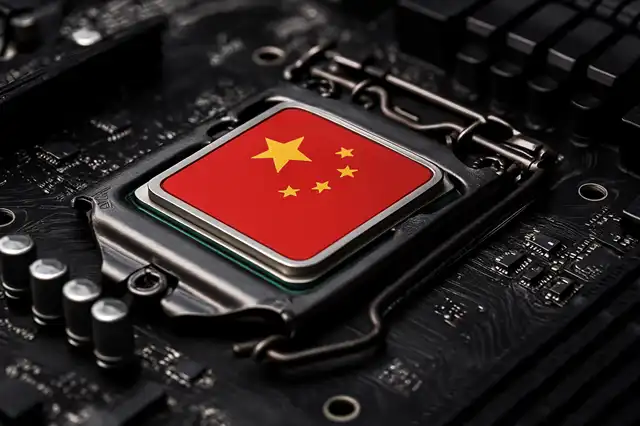
The Sanctions That Backfired: How U.S. Chip Restrictions Accelerated China’s Semiconductor Ambitions?
When the Biden administration rolled out sweeping semiconductor export controls in October 2022, U.S. officials declared a new era of technological statecraft.
The stated goal was clear: cut China off from the advanced chips and manufacturing tools needed to power next-generation artificial intelligence and military systems, thereby preserving America’s edge for decades to come.
More than three years on, the verdict is deeply uncomfortable for Washington policymakers. Not only have the sanctions failed to stop China’s chip development — in many respects, they appear to have accelerated it.
This is not a story of American failure alone. It is a story of how technological pressure, applied to a nation with the resources, political will, and engineering talent of China, can produce outcomes exactly opposite to those intended.
The Architecture of the Sanctions
The U.S. export control regime targeting China’s chip sector has been built layer by layer since 2018, when Huawei was first placed on the Commerce Department’s Entity List. The pivotal escalation came in October 2022, when the Bureau of Industry and Security (BIS) imposed sweeping restrictions on the export of advanced chips, semiconductor manufacturing equipment, and the services of U.S. persons working in Chinese chip fabs. The rules targeted chips above specific performance thresholds — initially focused on Nvidia’s A100 and H100 GPUs — and the extreme ultraviolet (EUV) lithography machines made exclusively by the Dutch firm ASML.
The Trump administration, returning to office in January 2025, initially tightened these controls further, adding 42 Chinese entities to the restricted list in March 2025 and banning the sale of Nvidia’s H20 chip — a model specifically engineered to comply with earlier controls — in April of the same year. BIS also declared in May 2025 that Huawei had developed its Ascend AI chips in violation of existing controls, warning global companies against using them.
The controls were reinforced by allied coordination: the Netherlands restricted ASML’s shipments of EUV and certain deep ultraviolet (DUV) tools to China, and Japan tightened related manufacturing equipment rules. The theory of victory was elegant: without access to leading-edge chips or the tools to make them, China’s AI and defense ambitions would stall.
The Unintended Consequence: A Forced Sprint to Self-Reliance
The sanctions did disrupt China’s semiconductor ecosystem — but not fatally. Price spikes, workforce dislocations, and supply chain confusion followed the initial 2022 announcements. Yet within months, the Chinese government responded with what analysts have described as an “all-out, government-backed effort” to achieve self-sufficiency across every layer of the semiconductor supply chain.
The results have been startling. In January 2025, a little-known Chinese startup named DeepSeek released an open-source AI model — R1 — that matched the capabilities of leading models from OpenAI, Google, and Anthropic. It was trained for a claimed cost of just $5.6 million, using approximately 2,000 Nvidia H800 GPUs, a fraction of the compute Western rivals employed. The model briefly pushed DeepSeek’s app to the top of Apple’s U.S. App Store. Nvidia lost over $600 billion in market capitalization in a single day.
DeepSeek’s breakthrough was not achieved by circumventing the sanctions — it was achieved by innovating around them. Forced to work with constrained hardware, Chinese researchers developed algorithmic and architectural efficiencies that Western labs, flush with compute, had little incentive to discover. As one analyst summarized it: sanctions had “paradoxically spurred China to develop more efficient and capable AI systems.”
Huawei’s Rise: Building the Stack Under Sanctions
Nowhere is the paradox more visible than in Huawei’s Ascend chip program. Blacklisted by the U.S. in 2019, Huawei lost access to TSMC’s advanced fabrication processes and to Nvidia’s hardware. It responded by building its own. By 2025, Huawei’s Ascend 910C chip — manufactured by SMIC using a 7-nanometer class process without EUV — was delivering an estimated 60% of Nvidia’s H100 performance on inference workloads, according to testing by DeepSeek researchers.
By May 2025, Huawei had attracted over 6.65 million third-party developers and more than 8,800 partners globally for its Ascend and Kunpeng chip ecosystem, with over 23,900 industry solutions certified. More than 100 partners had launched AI solutions integrating DeepSeek’s open-source models on Ascend hardware. China’s major technology companies — Baidu, Alibaba, ByteDance, and Tencent — placed mass Ascend chip orders.
A report from the Center for Strategic and International Studies (CSIS) estimated that Huawei may have had enough stockpiled components to manufacture approximately 750,000 to one million Ascend 910C chips, after SMIC acquired key deposition tools that enabled it to scale 7-nanometer fabrication. The same report warned that “all the margin for sloppy implementation of export controls or tolerance of large-scale chip smuggling has already been consumed” — meaning the window for tightening controls further may have already closed.
Huawei is also pressing on the lithography frontier. According to a December 2025 report from Reuters, a prototype EUV machine was completed in a high-security laboratory in Shenzhen and is now undergoing initial testing. The machine, developed with a national-level research team, represents China’s most serious attempt yet to break ASML’s monopoly on the technology that enables the world’s most advanced chips.
Scientific Leapfrogging: A New Front Opens
Perhaps more troubling for Washington than incremental chip progress is the possibility that China may be trying to skip the silicon roadmap entirely. In March 2025, scientists from Peking University disclosed the world’s first carbon nanotube-based chip capable of running AI tasks using a ternary logic system — an architecture that does not depend on silicon or the standard manufacturing processes that U.S. controls target. The research team claimed the chip could outperform silicon in speed, efficiency, and scalability.
A separate team from Peking University, led by chemistry professor Peng Hailin, announced that it had used new two-dimensional materials to produce a transistor that could operate 40% faster than TSMC’s 3-nanometer devices while consuming 10% less energy. These developments do not represent commercial production capabilities today, but they illustrate that China’s response to sanctions has not merely been imitation — it has included genuine scientific innovation aimed at changing the terms of the competition.
A 2025 analysis from the Centre for Strategic and International Studies concluded: “These accomplishments highlight the need to monitor and assess the progress of China’s industry… the scale, duration, and diversity of China’s efforts in this critical technology are not fully appreciated by U.S. policymakers.”
Where the Sanctions Have Worked — And Where They Haven’t
It would be inaccurate to declare the sanctions a total failure. They have succeeded in denying China access to the most leading-edge chips for the most demanding training workloads. DeepSeek itself struggled significantly when the Chinese government encouraged it to train its next-generation R2 model on Huawei’s Ascend chips rather than Nvidia hardware in mid-2025. Despite a team of Huawei engineers working onsite to assist, the startup encountered persistent technical failures and ultimately returned to using stockpiled Nvidia chips for training — though it did use Ascend chips for inference. Huawei’s founder, Ren Zhengfei, acknowledged in June 2025 that the company’s chips remained a generation behind U.S. processors.
The controls have also largely held on legacy chip manufacturing at scale. While SMIC has made significant progress, it cannot match Taiwan’s TSMC either in yield rates or in volume at leading nodes. The gap in the most advanced manufacturing — chips at 3 nanometers and below — remains substantial.
However, the sanctions have done essentially nothing to limit China’s production of “legacy chips” — semiconductors built on process nodes of 28 nanometers or larger. These chips are widely used in automobiles, consumer electronics, renewable energy equipment, and military systems. China has heavily subsidized this sector and is rapidly expanding its domestic capacity, raising concerns among U.S. allies about a potential Chinese flood of cheap legacy chips onto global markets.
A Policy in Contradiction: The Trump Reversal
Adding to the complexity, the Trump administration’s approach to chip controls has been notably inconsistent. After tightening restrictions in early 2025 — including banning the H20 chip — Washington reversed course by July 2025, approving licenses for Nvidia to sell H20 chips to China again, along with AMD’s MI308. The administration also rescinded the Biden-era “AI Diffusion Rule” which had established global performance thresholds for chip exports.
The reversals reflected intense lobbying from Nvidia, whose CEO Jensen Huang repeatedly argued that restricting Chinese sales was harming American companies without meaningfully slowing China’s AI development. China represents roughly 13% of Nvidia’s revenue and is home to approximately half of the world’s AI developers.
The policy whiplash illustrated a fundamental tension at the heart of the U.S. approach: semiconductor export controls impose real economic costs on American firms, while their effectiveness in actually slowing China diminishes as Chinese domestic alternatives improve. This tension is not easily resolved, and it grows more acute with each passing year.
China’s Counter-Move: Import Controls as Leverage
China has not remained passive. In a strategic shift that analysts describe as a new phase of technological statecraft, Beijing has deployed import controls, antitrust enforcement, and regulatory pressure as mirror-image responses to U.S. export restrictions. China’s cybersecurity regulator instructed major Chinese technology companies to halt purchases of Nvidia’s RTX Pro 6000D processors. Beijing’s antimonopoly regulator launched investigations into Nvidia’s compliance with Chinese competition law. Chinese customs officials were instructed to block certain H200 imports.
These actions represent more than tit-for-tat retaliation. They signal that China is willing to use its position as the world’s largest semiconductor consumer market as a weapon — threatening to close off that market to American companies as leverage in broader technology negotiations. As one policy analyst wrote in early 2026, “the era of export controls as the dominant paradigm may be ending. Welcome to the era of import controls.”
Conclusion: A Race That Cannot Be Won by Denial Alone
The evidence accumulated since 2022 points to a hard strategic truth: export controls can slow an adversary, but they cannot stop one with China’s resources, talent pool, and state commitment. The sanctions imposed since 2022 have delayed China’s access to the most advanced chip nodes and created real friction in its AI development pipeline. But they have simultaneously catalyzed a domestic semiconductor industry that may, over time, prove more resilient and self-sufficient than it would have been without the pressure.
DeepSeek’s algorithmic innovations, Huawei’s Ascend ecosystem, SMIC’s 7-nanometer progress, and China’s carbon nanotube and 2D transistor research all emerged in the shadow of sanctions. None of these would likely have developed as quickly — or with as much national urgency and funding — in a world where Chinese companies retained unfettered access to American technology.
China’s 2017 national AI strategy set a goal: by 2025, achieve world-leading AI capabilities. That target has been substantially met. The 2030 goal — a world-leading semiconductor industry across the entire supply chain — now appears more plausible than it did when it was first announced. Whether the United States can maintain its technological edge through a combination of export controls, domestic investment via the CHIPS Act, and allied coordination remains an open question. But the answer will not be found in denial alone.
Sources: Center for Strategic and International Studies (CSIS); Congressional Research Service; Reuters; South China Morning Post; World Economic Forum; Tom’s Hardware; Fortune; SiliconAngle; Center for European Policy Analysis (CEPA). All claims reflect publicly available reporting and analysis as of March 2026.