South Korea’s Chip Bonus Boom Puts the Bank of Korea on Inflation Alert
- Linux Kernel Drops 40-Year-Old AppleTalk Protocol — AI-Generated Patch Flood Was the Last Straw
- Apple’s Native Linux Container Tool Has Arrived — But Can It Really Replace Docker?
- 60% of MD5 Password Hashes Can Be Cracked in Under an Hour with a Single GPU
- Dirty Frag: Root Access on Every Major Linux Distribution — No Patch, No Warning
- How Close Are Quantum Computers to Breaking RSA-2048?
- What is the best alternative to Microsoft Office?
Monetary Policy · South Korea
South Korea’s Chip Bonus Boom Puts the Bank of Korea on Inflation Alert
Massive performance bonuses at Samsung Electronics and SK Hynix are fueling a luxury spending surge in semiconductor communities — and now the central bank fears the ripple effects could push inflation well above target.
South Korea’s central bank is sounding an unusual alarm: the multimillion-dollar performance bonuses being handed to chip workers at Samsung Electronics and SK Hynix may be doing something that monetary policy textbooks rarely anticipate — stoking national inflation from the factory floor up.
In a price-stability report released on June 17, the Bank of Korea warned that outsized performance payouts in the information technology sector, driven by a historic memory chip supercycle fueled by artificial intelligence demand, could spread wage pressure across the broader economy and push consumer prices significantly higher than its 2% target.
South Korea’s consumer inflation climbed to 3.1% year-on-year in May, the highest reading since early 2024. The Bank of Korea now projects full-year inflation at around 2.7%, well above its stated 2% policy target. Governor Shin Hyun-song said at the June 17 briefing that he expects headline inflation to remain near 3% through the second half of 2026, with core inflation in the mid-to-upper 2% range — even if Middle East conflict, which had driven up global oil prices, begins to subside.
The central bank held its benchmark interest rate unchanged at 2.50% for an eighth consecutive meeting on May 28. However, two of the seven members of the Monetary Policy Committee voted to raise rates, signaling that the BOK’s July and September meetings have become critical windows for a potential rate hike.
Why Chip Bonuses Are Alarming a Central Bank
Ordinarily, bonuses do not register as a major inflationary force. Because they are one-time payments rather than permanent salary increases, they tend not to generate sustained demand pressure. But the Bank of Korea’s analysis found that what is happening in South Korea’s semiconductor sector is anything but ordinary.
Special bonuses in the IT sector jumped 60.6% year-on-year in the first quarter of 2026, while wage growth in other parts of the economy ran at just 2.1%. The BOK’s own modeling suggests that an increase in the share of top-decile bonus payers lifts consumer inflation by 0.05 percentage points about five months later. The central bank warned that IT bonuses’ contribution to overall wage growth will likely reach unprecedented levels — exceeding the top 1% of historical observations — in early 2027.
“Given the recent exceptionally large scale of performance bonuses distributed in the IT industry, the possibility that their actual impact may be greater than expected cannot be ruled out.”
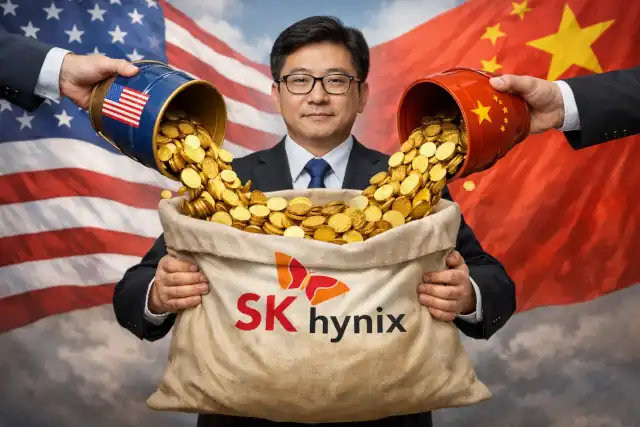
The scale of payouts explains the concern. SK Hynix agreed last September to allocate 10% of its operating profit to employee bonuses. Samsung Electronics, after its union threatened an 18-day strike in May, committed 10.5% of its semiconductor division’s operating profit to special bonuses. If SK Hynix achieves projected annual operating profit of around 250 trillion won, its employees could receive average bonuses exceeding 700 million won (approximately US$454,000) each. A Samsung memory chip worker with a base salary of 80 million won could collect a total bonus of around 626 million won (approximately US$410,000) this year.
The BOK warned that if those payouts prompt wage-hike demands across other sectors — a dynamic already visible in minimum wage negotiations, where labor groups have cited the semiconductor bonuses as a benchmark — both supply-side and demand-side inflationary pressures could intensify significantly.
The Semiconductor Belt: A Luxury Spending Hotspot
The spending effects are already clearly visible on the ground. The Bank of Korea noted that credit card spending in Gyeonggi Province, home to Samsung Electronics and SK Hynix’s major manufacturing complexes, has grown substantially faster this year than in other parts of the country.
At a Shinsegae Department Store branch in Gyeonggi Province near the semiconductor clusters, overall luxury sales rose 53.6% year-on-year in May. Within that, luxury jewelry surged 146.3% and luxury watches rose 85.3%. Department stores in what analysts have taken to calling the “semicon belt” — including branches in Dongtan, Yongin, and Pangyo — raised their second-quarter earnings outlooks as the bonus windfall trickled into foot traffic and basket sizes.
Bank of Korea Deputy Governor Lee Jiho noted at a June 17 press conference that consumption growth had been particularly visible in areas like Suwon and luxury counters at department stores. “This trend is likely to gradually spread,” he said.
Investors Bet on Department Stores as the Memory Chip Play
South Korea’s financial markets have swiftly incorporated the semiconductor spending boom into equity valuations — including, unusually, the country’s major department store operators. Investors have begun treating retailers in the semicon belt as direct beneficiaries of the chip supercycle, triggering sharp re-ratings across the sector.
Shinsegae’s share price has risen close to 190% year-to-date. Lotte Shopping, the retail arm of the Lotte Group, has surged approximately 148% in the same period, with roughly 67% of those gains occurring in just the past three months. Hyundai Department Store has climbed around 119% year-to-date. Korean brokerages including Kiwoom Securities have successively raised price targets for all three, citing the wealth effect from the domestic stock market rally and the direct boost from semiconductor-area consumption.
The KOSPI benchmark index itself has been a participant in this dynamic. A semiconductor-led rally driven by global AI demand has pushed the index up nearly 90% this year, approaching the 9,000-point level for the first time, and broadening the wealth effect beyond chip workers to a wider class of equity investors.
What Comes Next
The Bank of Korea faces a genuinely novel challenge: the same AI-driven chip boom that is boosting South Korea’s exports and tax revenues is simultaneously generating a localized wage-and-spending shock that could push inflation durably above target. The central bank has explicitly noted that the current wave of bonuses appears set to continue at least into next year, given that new memory chip manufacturing capacity is not expected to come online until the end of 2027 at the earliest.
With two committee members already voting to tighten in May, and the governor signaling a sustained period of elevated inflation, financial markets are closely watching the BOK’s next policy meeting. For now, the people who make the world’s memory chips are spending like it — and South Korea’s central bank is watching every transaction.