Quantum Computers and the Coming “Q-Day”: Google Sets 2029 Deadline as Security Industry Sounds the Alarm
- 60% of MD5 Password Hashes Can Be Cracked in Under an Hour with a Single GPU
- Dirty Frag: Root Access on Every Major Linux Distribution — No Patch, No Warning
- Ubuntu 26.04 LTS (Resolute Raccoon): The Most Ambitious Ubuntu LTS in a Decade
- Proton Mail: Data Transferred to FBI Again!
- How Close Are Quantum Computers to Breaking RSA-2048?
- How to Prevent Ransomware Infection Risks?
- What is the best alternative to Microsoft Office?
Quantum Computers and the Coming “Q-Day”: Google Sets 2029 Deadline as Security Industry Sounds the Alarm
Google has dramatically accelerated its timeline for securing digital infrastructure against quantum threats, setting a 2029 internal deadline — years ahead of most government targets. Security firms and independent researchers warn the window to act is closing faster than anyone anticipated.
A landmark shift is underway in the world of cybersecurity. For decades, the prospect of quantum computers powerful enough to shatter modern encryption was treated as a distant, theoretical concern. That assumption is now eroding rapidly — and some of the world’s most prominent technology and security organizations are treating the threat as urgent and immediate.
At the center of this shift is Google, which in late March 2026 publicly set 2029 as its hard deadline to migrate its entire digital infrastructure to post-quantum cryptography (PQC) — covering Chrome, Android, Google Cloud, Gmail, APIs, certificates, and software signing. The announcement, authored by Heather Adkins, Google’s Vice President of Security Engineering, and senior cryptography engineer Sophie Schmieg, represents the company’s clearest public signal yet that “Q-Day” may arrive far sooner than the security community had modeled.
What Is Q-Day?
Q-Day refers to the moment when a quantum computer becomes powerful and stable enough to break the public-key cryptographic systems that underpin virtually all modern digital security. The two most widely used systems — RSA and Elliptic Curve Cryptography (ECC) — rely on mathematical problems that classical computers cannot solve in a practical timeframe. A sufficiently capable quantum computer, running algorithms like Shor’s, could crack these in hours.
If Q-Day arrives without adequate preparation, the consequences would be sweeping: encrypted communications, personal data, financial records, medical information, location data, and government and trade secrets could all be exposed. The vulnerability would extend across virtually every layer of digital infrastructure, from banking and healthcare to national defense.
Google’s 2029 Deadline: A Concrete Milestone
Google’s announcement is notable for its specificity. Rather than vague warnings about future preparedness, the company has committed to a year: 2029. That target reflects accelerating progress on three fronts — quantum computing hardware, quantum error correction, and new research suggesting that breaking a 2048-bit RSA key may require significantly fewer quantum resources than earlier estimates suggested.
The 2029 deadline is also more aggressive than most government timelines. The U.S. National Security Agency has set a PQC transition deadline of 2033, while NIST will require post-quantum cryptography for new systems by 2030. Google’s self-imposed target sits a year ahead of the NIST mandate and four years ahead of the NSA’s.
As a concrete first step, Google announced that Android 17 will incorporate ML-DSA — the Module-Lattice-Based Digital Signature Algorithm, standardized by NIST — directly into the Android Verified Boot system, the Android Keystore, and Remote Attestation. This makes Android 17 the first mobile operating system to deploy comprehensive quantum-resistant encryption across its full security stack. The ML-DSA-65 and ML-DSA-87 variants will be accessible to developers through the standard KeyPairGenerator API, eliminating the need to implement custom cryptographic code.
Attackers Are Not Waiting for Q-Day
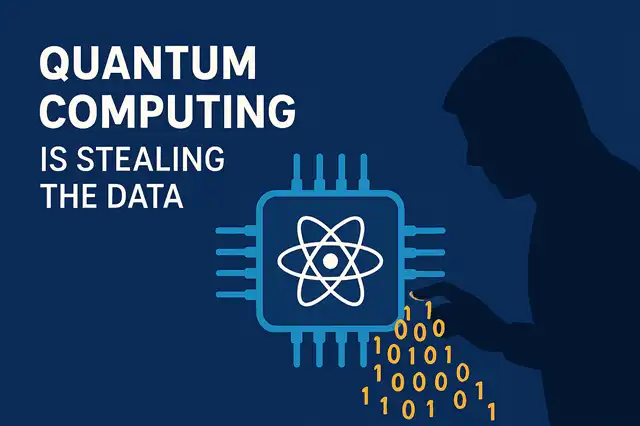
While there is no consensus on exactly when Q-Day will arrive, the security industry warns that organizations cannot afford to wait. The reason is a threat model known as “harvest now, decrypt later” — or, more formally, “store now, decrypt later.”
Under this approach, adversaries are already collecting vast quantities of encrypted data today, banking on the expectation that quantum computers will eventually be capable of decrypting it. This means that even data currently protected by strong encryption may be at risk if it has long-term sensitivity — including government records, defense secrets, financial records, medical information, and commercial intellectual property.
U.S. security firm Palo Alto Networks has emphasized this point publicly, stressing that PQC compliance must begin immediately — long before a cryptographically relevant quantum computer actually exists. Google echoed the urgency, calling on industries worldwide to accelerate their own transitions to post-quantum cryptography standards.
The Timeline Is Accelerating
Independent analysis supports the view that Q-Day may arrive sooner than previously predicted. The Global Risk Institute, working with Canadian quantum security firm evolutionQ, published the “Quantum Threat Timeline Report 2025” in March 2026. The report, based on input from 26 international experts, found that the probability of a cryptographically relevant quantum computer emerging within the next decade has reached its highest level in the seven-year history of the survey.
The 10-year CRQC probability — between 28% and 49% — is the highest the survey has recorded, reflecting a marked acceleration from prior years. Experts surveyed noted that quantum hardware improvements, growing investment from both public and private sectors, and advances in error correction are all compressing the expected timeline.
“Quantum computers will eventually acquire the performance and stability to break the encryption that forms the core of modern cybersecurity protocols,” the report concluded, adding that “given that this is happening sooner than expected, organizations need to take immediate action to address significant cyber risks.”
Notable independently, renowned computer scientist Scott Aaronson — a figure known for years of correcting overstated quantum computing claims — stated in May 2026 that “some of the most reputable people in quantum hardware and quantum error correction now tell me that a fault-tolerant quantum computer able to break deployed crypto systems ought to be possible by around 2029.” His endorsement of this timeline is widely considered a significant signal by the research community.
What Organizations Should Do Now
The convergence of Google’s 2029 deadline, the Global Risk Institute’s updated probability estimates, and mounting expert consensus has produced a clear message for organizations across both the public and private sectors: migration to post-quantum cryptography cannot be deferred.
NIST finalized its first PQC standards in August 2024, providing the algorithmic foundation for quantum-safe transitions: FIPS 203 (ML-KEM for key encapsulation), FIPS 204 (ML-DSA for digital signatures), and FIPS 205 (SLH-DSA for hash-based signatures). These standards are available today, and leading technology companies including Google, Microsoft, and others have already begun incorporating them into their platforms.
The most urgent priority, security experts agree, is addressing data with long shelf lives — classified communications, financial records, medical histories, and intellectual property that would still be sensitive years from now. If such data is being transmitted or stored under current encryption, it may already be a target for harvest-now, decrypt-later collection.
As Google’s security team put it in their public announcement: “It’s our responsibility to lead by example and share an ambitious timeline. We hope that by doing this, we can make things clearer and more urgent so that digital transformations happen faster — not just for Google, but for the whole industry.”