Can an Upcoming Budget Laptop with 8GB RAM Run Windows 11 Smoothly?
- 60% of MD5 Password Hashes Can Be Cracked in Under an Hour with a Single GPU
- Dirty Frag: Root Access on Every Major Linux Distribution — No Patch, No Warning
- Ubuntu 26.04 LTS (Resolute Raccoon): The Most Ambitious Ubuntu LTS in a Decade
- Proton Mail: Data Transferred to FBI Again!
- How Close Are Quantum Computers to Breaking RSA-2048?
- How to Prevent Ransomware Infection Risks?
- What is the best alternative to Microsoft Office?
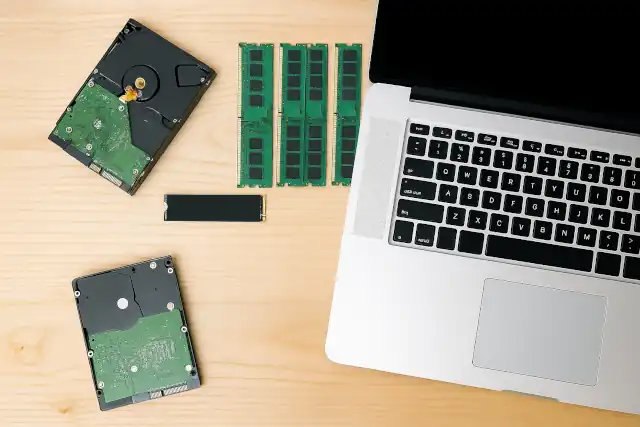
The RAM Crisis Is Here: Can an Upcoming Budget Laptop with 8GB RAM Run Windows 11 Smoothly?
Soaring DDR5 prices, fuelled by AI data centres’ insatiable appetite for memory, are forcing Dell, Acer, Lenovo, and Microsoft to quietly downgrade mid-range laptops from 16 GB back to 8 GB — a reversal that analysts say could last until 2028.
For a brief, hopeful window between 2024 and 2025, it seemed as though the PC industry had finally settled on 16 GB of RAM as the sensible baseline for any laptop worth buying. Microsoft codified that figure into its Copilot+ PC certification requirements. Apple quietly upgraded the entry-level MacBook Air M4 to 16 GB — an acknowledgment that the era of 8 GB as “enough” was over. Then came the AI boom, and with it, a memory crunch that is turning the clock back in the most inconvenient way possible.
According to research consultants at TrendForce, contract prices for 16 Gb DDR5 chips surged roughly 300 percent in just three months — climbing from approximately $6.84 per chip in September 2025 to $27.20 by December. The culprit is straightforward: chipmakers like Samsung and SK Hynix have pivoted their fab capacity toward high-bandwidth memory (HBM), the specialised variant demanded by AI accelerators, which commands dramatically higher margins than standard consumer DRAM. Both companies have confirmed their entire 2026 HBM allocation is already spoken for.
Who Is Cutting RAM — and When
The impact is already visible on retail shelves. At Computex 2026 this week, Tom’s Hardware confirmed that Dell, Acer, Microsoft Surface, and budget brand Chuwi have all unveiled or quietly listed models that revert to 8 GB configurations at price points that previously guaranteed 16 GB. Lenovo, too, has been reducing its memory offerings in the mid-range ThinkBook and IdeaPad lines. The brands have been largely silent about the downgrades in their marketing materials, burying the specification change in product detail pages.
| Segment | Standard in 2025 | Expected in 2026 | Change |
|---|---|---|---|
| Budget (under $500) | 8 GB | 8 GB (held) | Stable |
| Mid-Range ($500–$900) | 16 GB | 8 GB | ▼ Downgrade |
| Premium ($900–$1,400) | 16–32 GB | 16 GB (capped) | ▼ Downgrade |
| High-End ($1,400+) | 32–64 GB | 16–32 GB | ▼ Downgrade |
| Budget Smartphones | 6–8 GB | 4 GB | ▼ Downgrade |
The Painful Double Squeeze for Consumers
What makes this crisis particularly frustrating for buyers is its double-edged nature. Not only are memory capacities being reduced in many configurations — the remaining models that retain 16 GB or more are simultaneously getting more expensive. Consumer Reports summarised the situation bluntly: a $600 laptop in 2026 may look identical to its 2025 equivalent on the shelf, yet contain 8 GB of RAM instead of 16 GB. You either pay more for the same memory, or pay the same and get less.
That $600 laptop you buy in 2026 might look identical to the 2025 model, but under the hood it may have 8 GB of RAM instead of 16 GB. This pay-more-or-get-less reality is hitting smartphones just as hard.
— Consumer Reports, December 2025The smartphone market is facing an equivalent reckoning. TrendForce forecasts that entry-level handsets — once reliably equipped with 6 GB or 8 GB — are likely to drop back to 4 GB in 2026. Mid-tier phones could be capped at 6 GB or 8 GB rather than the 12 GB configurations common in current flagship-adjacent models. Even Apple, with its considerably wider margins, is expected to raise iPhone prices materially in response to the elevated cost of the 12 GB LPDDR5X chips used in its Pro line, which have more than doubled in price since early 2025.
What 8 GB Actually Means for Windows 11 Users
The timing could hardly be worse. Windows 11 is considerably heavier than Windows 10, and Microsoft’s own additions — the Copilot sidebar, AI-driven widgets, background telemetry, Windows Security, and related services — routinely consume between 3.5 GB and 5 GB at idle. That leaves as little as 3 GB for the user’s actual work. A single browser session with a dozen tabs in Chrome or Edge can consume that remainder entirely, triggering aggressive paging to storage even on solid-state drives.
Light use (documents, email, a few browser tabs) — manageable, with occasional slowdowns.
Moderate multitasking (multiple apps + browser) — noticeable lag, frequent disk paging.
Creative / development work (Photoshop, IDEs, video editing, VMs) — will struggle significantly; Adobe lists 16 GB as recommended for Photoshop.
Gaming — most modern AAA titles require 16 GB; lightweight and older games remain viable.
SlashGear noted in February 2026 that the industry had been moving toward 16 GB as the new minimum — precisely because of the demands of local AI features — just as the RAM shortage threatens to reverse that progress. The irony is not lost on observers: the same AI boom that necessitated the memory upgrade standard is also what is preventing manufacturers from meeting it.
Is Linux the Answer?
For technically inclined users willing to make the switch, Linux distributions offer a compelling alternative on memory-constrained hardware. The contrast in baseline RAM consumption is striking: where Windows 11 idles at 3.5–5 GB, a lightweight Linux environment — such as Linux Mint with the XFCE desktop or Xubuntu — idles at under 600 MB, leaving nearly the entire 8 GB available for applications. Even more polished distributions like Linux Mint Cinnamon or Ubuntu GNOME consume only 700 MB to 2 GB at idle.
The caveat, as always with Linux, is software compatibility. Users dependent on Adobe Creative Suite, specific Windows-only enterprise tools, or the latest DirectX-reliant games will find the trade-off less compelling. However, for students, writers, developers, and general productivity users, the performance headroom afforded by Linux on an 8 GB machine can meaningfully exceed what Windows 11 provides on the same hardware.
No Quick Fix on the Horizon
Industry analysts are not optimistic about a swift resolution. IDC projects the DRAM shortage will persist into 2027. Some manufacturers, speaking on background to trade publications, have indicated internal planning assumes constrained supply through 2028. With Samsung and SK Hynix already reporting sold-out HBM allocations for 2026 and AI infrastructure spending showing no signs of deceleration, the economic incentives that redirected fab capacity away from consumer DRAM remain firmly intact.
For consumers shopping for a new laptop or smartphone in the coming months, the practical advice is consistent across analysts: scrutinise the memory specification carefully, be aware that mid-range price points no longer guarantee 16 GB, and factor in whether the device’s RAM is user-upgradeable — a feature increasingly absent in thin-and-light designs. In a market where 8 GB has quietly become the new normal, the burden of due diligence falls squarely on the buyer.
Sources & Further Reading
- PCWorld — “Memory crunch: Mid-range laptops may slide back to 8GB RAM” (Dec 2025)
- Tom’s Hardware — “8GB of RAM is back on laptops” (Jun 2026)
- BGR — “Laptops Might Completely Change For The Worse In 2026” (Dec 2025)
- Consumer Reports — “AI Data Centers Scooping up RAM” (Dec 2025)
- SlashGear — “Is 8GB Of RAM Enough In 2026?” (Feb 2026)
- Club386 — “8GB laptops may become the new norm” (Dec 2025)
- TrendForce Market Analysis — DRAM Price Forecast Q1–Q2 2026
-
The Most Windows-Friendly Linux Distributions for General Consumers: A Complete Guide
-
What is the best alternative to Microsoft Office?
-
Replacing Microsoft Outlook on Linux: The Best Email Clients Compared
-
The Best Free Adobe Acrobat Alternatives for Linux