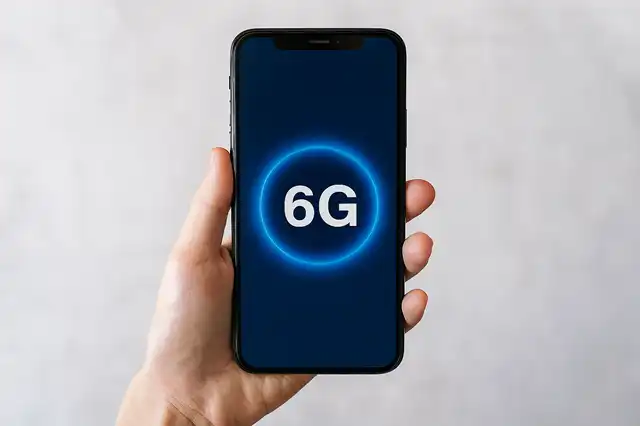
Can Nokia Win the 6G Race as the US Tightens the Net on Huawei?
- Linux Kernel Drops 40-Year-Old AppleTalk Protocol — AI-Generated Patch Flood Was the Last Straw
- Apple’s Native Linux Container Tool Has Arrived — But Can It Really Replace Docker?
- 60% of MD5 Password Hashes Can Be Cracked in Under an Hour with a Single GPU
- Dirty Frag: Root Access on Every Major Linux Distribution — No Patch, No Warning
- How Close Are Quantum Computers to Breaking RSA-2048?
- What is the best alternative to Microsoft Office?
Can Nokia Win the 6G Race as the US Tightens the Net on Huawei?
Washington has spent seven years trying to wall Huawei out of the world’s networks. As 6G standardization approaches, Nokia is repositioning around AI-native radio and a $1 billion Nvidia alliance — but patent filings suggest China, not the West, may already be setting the technical agenda.
For nearly a decade, US policy toward Huawei has followed a single instinct: contain it. Export bans, Entity List restrictions, chip embargoes, and diplomatic pressure on allies have all aimed to keep the Chinese equipment giant out of Western telecom infrastructure. As the industry’s attention shifts from 5G to 6G, that containment strategy is entering a new phase — one now paired with an offensive push to secure American leadership in next-generation wireless. The question is whether either effort does much to help Nokia, the Finnish vendor most often cast as Huawei’s Western counterweight.
Washington’s two-track approach: block Huawei, build America
The US government’s posture toward Huawei has hardened steadily since 2018, when American agencies were first barred from buying its equipment. That year Washington also blocked the use of federal grants and loans for Huawei products, and the following year the Department of Commerce placed the company on its Entity List, requiring a license for any firm wishing to export goods to it. By 2020, the Commerce Department had tightened export rules further, cutting Huawei off from foreign-made semiconductors built with US technology, while Congress allocated funding to strip Huawei equipment out of American networks.
That campaign has had real costs for Huawei, but research from the Information Technology and Innovation Foundation argues it has also reshaped the company in ways Washington may not have intended. Cut off from US suppliers, Huawei built its own operating system, designed its own chips, and turned to alternative equipment sources — emerging, by some assessments, more self-sufficient than before the pressure campaign began. The criminal case against the company, tied to fraud and sanctions-evasion allegations first brought in 2019, is still working through the US court system.
Rather than relying only on restriction, the Trump administration has paired its Huawei containment with an explicit plan to win the 6G race outright. In December 2025, the White House signed a presidential memorandum directing the clearing of the 7.125–7.4 GHz spectrum band for full-power commercial 6G use, giving federal agencies twelve months to submit relocation plans that protect national security functions. The memorandum also ordered studies into freeing additional spectrum in the 2.69–2.9 GHz and 4.4–4.94 GHz bands, and tasked the State Department with using diplomacy to advance American positions in international standards bodies.
The memorandum frames 6G as foundational to national security, foreign policy, and economic prosperity, and ties American leadership to building coalitions ahead of the International Telecommunication Union’s 2027 World Radiocommunication Conference. Industry reaction has split along familiar lines: wireless carriers welcomed the clarity on licensed spectrum, while cable and Wi-Fi advocates argued the decision favored mobile carriers at the expense of unlicensed bands that already carry the bulk of mobile data traffic.
The patent math doesn’t favor the West yet
Spectrum policy and export controls address infrastructure and supply chains, but standards — the technical rulebook that determines how 6G networks actually work — are decided largely through patents declared to international standards bodies. On that front, China’s position looks formidable.
An industry report found that as of June 2025, China held just over 40 percent of global 6G patents — more than any other country — and the government has set up an IMT-2030 promotion group to coordinate the push toward commercialization by 2030. Within that national total, Huawei alone accounts for roughly 15 percent of the global 6G patent share, putting it first in both the Chinese and worldwide rankings for the technology.
Huawei’s position is reinforced by scale of investment rather than a single breakthrough. The company has been spending more than $20 billion annually on R&D efforts that increasingly center on 6G, working alongside a Chinese research ecosystem that spans more than 40 universities and institutes coordinated through national science funding programs. That combination of state coordination, university research, and corporate patent filing gives Chinese firms outsized influence over which technical approaches eventually become the global standard — even if Western governments restrict where Huawei’s equipment can physically be deployed.
This dynamic is not unprecedented. Light Reading’s review of the 5G patent landscape noted that the pattern is a repeat of the previous generation’s standards fight. Huawei topped most rankings of 5G patent holders even as Qualcomm was judged to hold the more commercially valuable portfolio — a split between patent quantity and patent value that is shaping up similarly for 6G. The more consequential risk for the industry, the analysis suggested, may not be which company “wins” on paper but whether the mobile standard itself fragments along geopolitical lines.
Nokia’s pivot: from radios to AI-native networks
Nokia enters this period from a position of technical credibility but commercial caution. The company has reorganized its business around a narrower set of priorities for 2026 and beyond. Under the new structure — effective from January 1, 2026 — Nokia consolidated from four primary business segments into two, while setting a target of €2.7 billion to €3.2 billion in comparable operating profit by 2028. The restructuring is explicitly built around monetizing what the company calls the “AI supercycle” across fixed and mobile networks, with one of five strategic priorities devoted to leading the next era of mobile through AI-native networks and 6G.
The centerpiece of that strategy is an increasingly deep alliance with Nvidia. At Mobile World Congress 2026 in Barcelona, Nokia laid out a vision built entirely around AI radio access networks, betting that the unpredictable, machine-driven traffic patterns of generative and physical AI will replace the steadier data flows that defined the 4G and 5G eras. Backed by a $1 billion investment from Nvidia, Nokia has adopted a distributed GPU architecture intended to handle that new traffic profile, merging conventional cellular network functions with AI processing on shared high-speed computing hardware.
The partnership has already moved beyond announcements into deployment work with operators including BT, Elisa, NTT DOCOMO, and Vodafone, alongside a GPU-accelerated workload project with T-Mobile US at an AI-RAN innovation center in Seattle. Nvidia, for its part, has assembled a broader coalition — including Cisco, Ericsson, Deutsche Telekom, SoftBank, and SK Telecom alongside Nokia — committed to building what the companies describe as AI-native, open, and trustworthy wireless platforms.
Beyond AI-RAN, Nokia is also pursuing integrated sensing and communication, in which ordinary cellular signals double as radar-like tools capable of detecting drones or tracking movement — a capability with as much relevance to defense and public-safety customers as to consumer connectivity.
- Patents: China holds roughly 40% of global 6G patent filings; Huawei alone accounts for about 15%.
- Nokia’s bet: AI-native radio access networks, built on a $1B Nvidia partnership and early deployments with T-Mobile US, BT, and Vodafone.
- US policy: Spectrum reallocation memorandum (Dec. 2025) plus continued Entity List restrictions and diplomatic pressure against Huawei.
- Open question: Whether restricting Huawei’s market access changes who actually writes the 6G technical standard.
Why containment alone may not be enough
The core tension in Washington’s approach is that restricting Huawei’s access to Western markets and US technology does not, on its own, transfer technical leadership to Nokia or any other Western vendor. Patents are declared and standards are negotiated inside bodies like 3GPP, where participation — not market access — determines influence. China’s 2021 National Standardization Development Outline treats standards work as critical national infrastructure and directs state support to help Chinese companies offset the cost of participating in those bodies, encouraging early and frequent patent declarations.
The United States has historically taken a lighter-touch approach, leaving standards engagement to private industry, though that is starting to shift. The US Patent and Trademark Office has formed a standards-essential-patent working group and launched a pilot program aimed at drawing smaller companies and universities into the process — an acknowledgment that winning the patent fight requires more than restricting a rival’s market access.
There is also a legal dimension working in China’s favor. As Chinese firms have accumulated a larger share of standards-essential patents, Chinese courts have taken a more assertive role in setting global licensing rates — exemplified by a 2023 case in Chongqing that set worldwide royalty terms for Nokia’s own patents using a zone-based model, with the same court since handling a separate dispute between ZTE and Samsung. That dynamic illustrates a broader irony: even as US policy works to exclude Huawei from Western networks, Chinese legal and standards infrastructure increasingly shapes the commercial terms under which Western vendors like Nokia license their own technology.
Allied governments are not standing still on the access question, even if the patent landscape remains harder to influence directly. Germany’s move to bar Huawei from its 6G networks on national security grounds reflects a broader pattern among Western governments prioritizing digital sovereignty, even as China pursues international interoperability through bodies like Europe’s 6G-IA and South Korea’s 6G Forum.
What this means for Nokia’s odds
Nokia’s realistic path to relevance in 6G looks less like outright “winning” a race against Huawei and more like consolidating a defensible position in markets where Huawei is excluded by policy, while using the Nvidia partnership to differentiate technically rather than simply compete on patent volume. The company’s restructuring — trimming to two core segments and targeting disciplined profit growth rather than aggressive market-share expansion — reflects that more modest ambition.
That said, the US spectrum memorandum and diplomatic push do create real tailwinds. Clearer spectrum allocation gives operators and vendors — including Nokia — the certainty needed to plan network buildouts, and coordinated diplomatic engagement ahead of the 2027 World Radiocommunication Conference could help align allied nations around standards that don’t simply ratify whatever Chinese patent holders have already filed. Technology agreements the US signed with Japan and South Korea to promote secure, trusted 6G networks suggest Washington is trying to build exactly that kind of coalition.
But coalition-building and spectrum policy operate on a different axis than the patent and R&D race, where China currently holds a substantial lead. Unless Nokia, its Western peers, and allied governments translate policy support into a comparable surge in standards-essential patent filings and 3GPP participation, the structural advantage China built during the 5G era looks likely to carry into 6G — regardless of how thoroughly Huawei is contained in Western markets.