Apple’s Urgent Warning: Mercenary Spyware Are Attacking on Your iPhone
Apple’s Urgent Warning: Mercenary Spyware Are Attacking on Your iPhone
- Apple’s Native Linux Container Tool Has Arrived — But Can It Really Replace Docker?
- 60% of MD5 Password Hashes Can Be Cracked in Under an Hour with a Single GPU
- Dirty Frag: Root Access on Every Major Linux Distribution — No Patch, No Warning
- Proton Mail: Data Transferred to FBI Again!
- How Close Are Quantum Computers to Breaking RSA-2048?
- What is the best alternative to Microsoft Office?
Apple’s Urgent Warning: Mercenary Spyware Are Attacking on Your iPhone
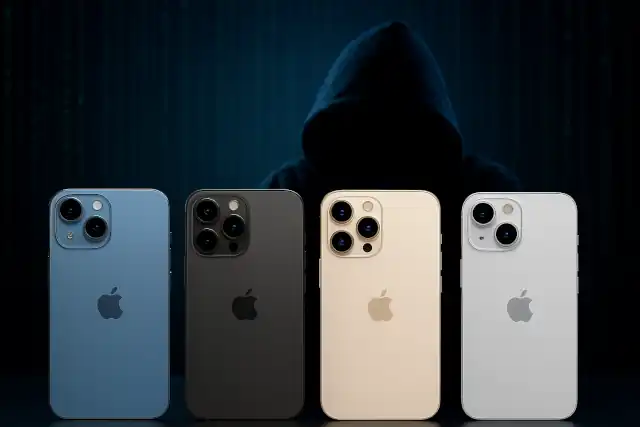
In December 2025, Apple issued a critical warning to iPhone users globally, highlighting a surge in sophisticated “mercenary spyware” attacks.
These highly targeted threats, often backed by nation-states or specialized private companies, exploit critical vulnerabilities to gain complete control over your device.
Coming just before the holiday season, Apple released emergency security updates (iOS 26.2 and iOS 18.7.3) to patch two zero-day vulnerabilities (CVE-2025-43529 and CVE-2025-14174) that were actively being exploited. Despite the urgency, data three weeks later revealed that most iPhone users had not yet updated to the latest secure versions, leaving them exposed.
What is Mercenary Spyware?
Mercenary spyware, also known as commercial spyware or state-sponsored spyware, is a category of highly advanced malicious software designed to secretly monitor and extract data from mobile devices without the user’s knowledge. Unlike common malware aimed at a broad audience, mercenary spyware is characterized by its:
-
Extreme Sophistication: It utilizes “zero-day” vulnerabilities – flaws in software that the vendor is unaware of or has not yet patched – making it incredibly difficult to detect and defend against.
-
Targeted Nature: These attacks are not random. They are specifically aimed at high-value targets such as journalists, activists, lawyers, political dissidents, government officials, and business executives.
-
Stealth and Persistence: Once installed, it operates covertly, often mimicking legitimate system processes to avoid detection. It can persist even after factory resets in some advanced cases.
-
Extensive Data Collection: This spyware can access virtually all data on your phone, including messages, calls, photos, videos, contacts, precise location data, microphone recordings, and even turn on your camera remotely.
-
Commercial Origin: It’s often developed and sold by private companies (like the notorious NSO Group and its Pegasus spyware) to governments and other clients, rather than being developed by the attackers themselves.
In essence, mercenary spyware turns your iPhone into a personal surveillance device for the attacker.
Why Can’t Criminals “Ghost Tap” Your iPhone or Android Wallet?
How Does Mercenary Spyware Attack Your iPhone?
Mercenary spyware primarily exploits zero-click or one-click vulnerabilities:
-
Zero-Click Exploits (Most Dangerous): These are the most insidious. They allow attackers to compromise your iPhone without any interaction from you. This can happen simply by receiving a specially crafted message (SMS, iMessage, WhatsApp), email, or even by visiting a malicious website. The vulnerabilities patched by Apple in December 2025 (CVE-2025-43529 and CVE-2025-14174) were precisely these types of WebKit (Safari engine) flaws, allowing remote code execution just by interacting with malicious web content.
-
One-Click Exploits: These require a single interaction from the user, such as clicking on a malicious link in a text message or email. The link then redirects the user to a compromised website that exploits a vulnerability in the browser or operating system to install the spyware.
Once the exploit is successful, the spyware establishes a persistent presence on the device, allowing the attacker to continuously extract data and maintain control.
Google Quick Share and AirDrop Integration: Breaking Down the Walls Between Android and iPhone
Which iPhone Models Were Affected?
The emergency security updates (iOS 26.2 and iOS 18.7.3) were critical because the vulnerabilities they fixed affected a wide range of devices, including:
-
iPhone 11 and later models: These devices were targeted by exploits patched in iOS 26.2. This includes the iPhone 12, 13, 14, 15, and any subsequent models running iOS 26.
-
iPhone XS, iPhone XS Max, and iPhone XR: Older devices that could not update to iOS 26 but were still supported received patches in iOS 18.7.3.
Essentially, any iPhone capable of running iOS 18.7.3 or iOS 26.2 was potentially vulnerable if it had not been updated. This means a vast majority of active iPhones in late 2025 were at risk if not updated.
Lost iPhone “Found” Notification Scam: How to Avoid Falling for Fake Apple Alerts
What Should iPhone Users Do Next?
Given the severity and ongoing threat, here are the crucial steps every iPhone user should take:
-
UPDATE YOUR IPHONE IMMEDIATELY: This is the single most important action.
-
Go to Settings > General > Software Update.
-
If you see an update available for iOS 26.2 (for iPhone 11 and newer) or iOS 18.7.3 (for iPhone XS, XS Max, XR), download and install it without delay. These updates contain the critical fixes for the exploited zero-day vulnerabilities.
-
Do not delay this update. Waiting leaves your device exposed to known attacks.
-
-
Enable Lockdown Mode (If Applicable):
-
For users with iOS 16 or later (and certainly iOS 26.2), Apple introduced “Lockdown Mode.” This extreme protection mode significantly hardens your device’s defenses by limiting certain functionalities (e.g., blocking message attachment previews, disabling complex web features) to reduce the attack surface.
-
If you believe you are a high-risk individual (journalist, activist, government official, etc.), consider enabling Lockdown Mode by going to Settings > Privacy & Security > Lockdown Mode.
-
-
Practice Good Digital Hygiene:
-
Be Skeptical of Links: Do not click on suspicious links in messages, emails, or social media posts, even if they appear to be from someone you know. Verify the source independently.
-
Keep Apps Updated: Ensure all your apps are updated to their latest versions to benefit from security patches.
-
Use Strong, Unique Passwords: Utilize strong, unique passwords for all your online accounts and enable Two-Factor Authentication (2FA) wherever possible.
-
Review App Permissions: Regularly check the permissions granted to your apps in Settings > Privacy & Security. Revoke permissions you don’t believe an app needs.
-
Restart Your Device Regularly: While not a guaranteed defense, regularly restarting your iPhone can sometimes disrupt the persistence mechanisms of less sophisticated spyware.
-
-
Monitor for Suspicious Activity (Though Difficult with Spyware):
-
Look for unexplained battery drain, unusual device heat, or unexpected data usage. While these can have other causes, they might indicate compromise.
-
Be aware of any unusual messages or notifications.
-
-
Seek Expert Help (If You Suspect Compromise):
-
If you have a strong reason to believe your device has been compromised by mercenary spyware, contact a cybersecurity expert or an organization specializing in digital security for high-risk individuals (e.g., Access Now, Citizen Lab). They have tools and expertise to conduct forensic analysis.
-
By understanding the threat of mercenary spyware and taking proactive steps, particularly by keeping your software updated, you can significantly enhance your iPhone’s security against these advanced and dangerous attacks.