Arm’s Data Center Business Set to Become Its Largest Revenue Engine
Arm’s Data Center Business Set to Become Its Largest Revenue Engine
- Linux Kernel Drops 40-Year-Old AppleTalk Protocol — AI-Generated Patch Flood Was the Last Straw
- Apple’s Native Linux Container Tool Has Arrived — But Can It Really Replace Docker?
- 60% of MD5 Password Hashes Can Be Cracked in Under an Hour with a Single GPU
- Dirty Frag: Root Access on Every Major Linux Distribution — No Patch, No Warning
- How Close Are Quantum Computers to Breaking RSA-2048?
- What is the best alternative to Microsoft Office?
Arm’s Data Center Business Set to Become Its Largest Revenue Engine
Record earnings, a debut chip with doubled demand, and a bold $25 billion forecast by 2031 — Arm is staking its future on the AI data center.
Chip design company Arm Holdings has declared that its data center business will soon overtake every other segment to become its single largest source of revenue — a striking assertion from a company that built its reputation on low-power processor designs for mobile devices and embedded systems, but now finds itself at the center of the global AI infrastructure boom.
The announcement came during Arm’s Q4 fiscal year 2026 earnings call on May 6, 2026, in which CEO Rene Haas delivered record results alongside an ambitious strategic outlook. The company posted quarterly revenue of $1.49 billion, a 20% year-over-year increase, beating analyst expectations of approximately $1.47 billion. Full-year revenue reached a record $4.92 billion, up 23% from the prior fiscal year.
The AGI CPU: Arm’s First In-House Chip in Decades
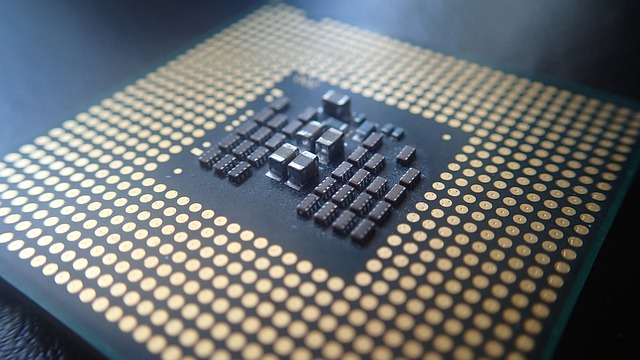
The defining development of the earnings call was the explosive early reception of the Arm AGI CPU, unveiled on March 24, 2026, at the company’s “Arm Everywhere” event in San Francisco. Designed specifically for agentic AI workloads — AI systems that autonomously perform tasks and orchestrate other models — it marks Arm’s first production-ready chip sold directly to customers in over three decades. The chip features 136 Neoverse V3 cores on TSMC’s 3nm process, a 300-watt thermal envelope, and 96 lanes of PCIe Gen 6 with CXL 3 connectivity.
Soon, data centers will become Arm’s largest business segment. This path is very clear — customers want Arm at the heart of the AI data center.
— Rene Haas, CEO, Arm HoldingsHaas revealed that just six weeks after launch, customer demand for the AGI CPU had surpassed $2 billion across fiscal years 2027 and 2028 — more than double what the company had forecast at the time of launch. He attributed the surge in orders partly to customers anticipating that a large number of AI agents will require dedicated CPU cores for orchestration, scheduling, and memory management tasks that GPUs are not optimized for. Haas described a future data center architecture of “dedicated racks of CPUs doing agentic orchestration and scheduling” sitting alongside rows of GPU racks.
He also acknowledged a significant challenge: Arm is still working to secure sufficient manufacturing supply to fulfill all $2 billion of that demand. “We are refining our supply chain,” Haas stated, describing this work as actively underway. The company expects meaningful cash flows from AGI chip sales to begin materializing in fiscal year 2027/28.
Data Center Royalties More Than Double
Even before the AGI CPU generates revenue, Arm’s data center momentum is already showing up in its royalty line. Data center royalty revenue more than doubled year-over-year in Q4 FY2026, for the second consecutive quarter — driven by hyperscaler adoption of Arm-based custom silicon. Amazon Web Services, Google Cloud, and Microsoft Azure have all built their own data center chips on Arm’s architecture. Arm-based CPUs now account for approximately 50% of compute capacity among the top hyperscalers, according to CFO Jason Child.
Key Hyperscaler Arm Deployments
- AWS Graviton 5 (5th-generation, built on Neoverse CSS V3, featuring 192 cores)
- Microsoft Cobalt (Azure’s custom Arm-based CPU)
- Google Axion CPUs (delivering 80% performance improvement over x86 in tests)
- Nvidia Vera CPU (88 Arm-based cores, successor to the Grace CPU)
Child provided a longer-term forecast: by fiscal year 2031, Arm’s annual revenue from licensing its intellectual property is expected to double to $10 billion, with the majority of that increase attributable to data center-related products. Combined with the $15 billion target for the AGI CPU chip business, the company is targeting total revenue of roughly $25 billion by the end of the decade — implying earnings per share exceeding $9.
Haas made his ambitions for CPU market share explicit: “I’m confident that by the end of the decade, the largest market share by CPU type will be Arm.” He also noted that the 136-core AGI CPU is only the beginning — future iterations with 256 or even 512 cores are within realistic expectations, and at very high core counts, Arm’s energy efficiency per core becomes an especially decisive competitive advantage.
Market Reaction: A Selloff Despite Records
Despite the record-breaking results, Arm’s stock fell approximately 6–7% in after-hours trading following the earnings release. The primary reason, as reported by Reuters, was management’s admission that supply had not yet been fully secured to meet all AGI CPU demand — a manufacturing risk that tempered investor enthusiasm. Separately, executives warned that smartphone unit growth could turn negative in the near term due to a memory chip shortage, adding further pressure.
The sell-off was notable given that Arm shares had already surged approximately 84% year-to-date heading into the earnings report, suggesting the market had priced in considerable optimism. The stock’s decline reflected investors digesting the gap between extraordinary demand signals and the supply-chain realities of Arm’s first foray into direct chip manufacturing.
Editorial Note on Circulating Reports
Some summaries of this earnings call have incorrectly described the stock as initially surging ~10% before falling back to $222. Based on multiple financial news sources, the actual after-hours reaction was a decline of approximately 6–7%, driven by supply chain uncertainty around the AGI CPU and smartphone headwinds. The $15 billion target cited in this article refers to the AGI CPU business specifically, not total company revenue guidance for FY2027.
Looking ahead, Arm’s first-quarter FY2027 revenue guidance of approximately $1.25–1.26 billion represents roughly 20% year-over-year growth, maintaining the trajectory that has characterized the past three fiscal years. The company’s rising share in data centers, agentic AI deployments, and hyperscaler infrastructure positions it as a structural beneficiary of the ongoing AI capital expenditure cycle — even as it navigates the steep learning curve of becoming a chip manufacturer in its own right.