CATL Launches Industry’s First Mass-Production Sodium-Ion Battery for Commercial Vehicles
CATL Launches Industry’s First Mass-Production Sodium-Ion Battery for Commercial Vehicles: A Game-Changing Breakthrough
- Linux Kernel Removes strncpy After Six Years and 362 Patches
- Linux Kernel Drops 40-Year-Old AppleTalk Protocol — AI-Generated Patch Flood Was the Last Straw
- Apple’s Native Linux Container Tool Has Arrived — But Can It Really Replace Docker?
- 60% of MD5 Password Hashes Can Be Cracked in Under an Hour with a Single GPU
- Dirty Frag: Root Access on Every Major Linux Distribution — No Patch, No Warning
CATL Launches Industry’s First Mass-Production Sodium-Ion Battery for Commercial Vehicles: A Game-Changing Breakthrough
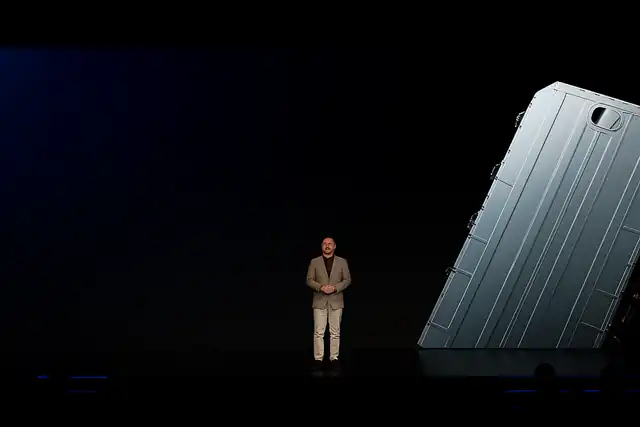
January 22, 2026 — In a major development for the electric vehicle industry, Contemporary Amperex Technology Co., Limited (CATL), the world’s largest battery manufacturer, unveiled the industry’s first mass-production sodium-ion battery for light commercial vehicles at its Tianxing II launch event in Guangzhou, China.
This announcement marks a pivotal moment in battery technology, as CATL’s sodium-ion battery achieves energy density levels previously thought impossible for sodium-based chemistry while maintaining superior safety and extreme temperature performance.
The Breakthrough: 175Wh/kg Energy Density
CATL’s new sodium-ion battery, branded as “NaXin”, delivers an impressive energy density of 175Wh/kg at the cell level.
This achievement is particularly significant because it brings sodium-ion technology to parity with mainstream lithium iron phosphate (LFP) batteries, which typically range from 140-160Wh/kg.
The 45kWh capacity battery pack is specifically designed for light commercial vehicles and represents the culmination of years of research into sodium-ion chemistry.
What makes this even more remarkable is that CATL has become the world’s first battery manufacturer to receive GB 38031-2025 certification for a sodium-ion battery, passing China’s latest and most stringent safety standards.
Key Performance Specifications
CATL’s sodium-ion battery delivers performance metrics that rival and in some cases exceed lithium-ion alternatives:
Energy and Power:
- Energy density: 175Wh/kg (cell level)
- Peak charging rate: 5C
- Pure electric range: Over 500km (passenger vehicles)
- Hybrid range: Over 200km
Extreme Temperature Performance:
- At -20°C: Retains over 92% usable capacity
- At -30°C: Can charge immediately even when completely frozen
- At -40°C: Maintains 90% available capacity
- This dramatically outperforms LFP batteries, which typically see 40% efficiency loss at -10°C
Durability and Safety:
- Cycle life: Over 10,000 cycles
- Safety testing: Passes drill penetration, cell sawing tests without fire or explosion
- Thermal stability: Superior to conventional lithium-ion chemistries
How Does This Compare to Ternary Lithium Batteries?
To understand the significance of CATL’s achievement, it’s essential to compare sodium-ion batteries with ternary lithium batteries (NCM/NCA), which have long been considered the gold standard for energy density in electric vehicles.
Energy Density Comparison
Ternary Lithium Batteries (NCM/NCA):
- Standard energy density: 220-300Wh/kg (cell level)
- System-level energy density: 180-225Wh/kg
- High-nickel variants: Can reach 250-293Wh/kg
- Current mainstream production: ~240-250Wh/kg
CATL Sodium-Ion Battery:
- Energy density: 175Wh/kg (cell level)
- Gap to ternary lithium: Approximately 25-40% lower than standard ternary, 30-50% lower than high-nickel variants
Lithium Iron Phosphate (LFP) Batteries:
- Energy density: 140-160Wh/kg (cell level)
- System-level: 120-160Wh/kg
What’s striking is that while sodium-ion still trails ternary lithium in pure energy density, it has achieved parity with LFP batteries, which currently dominate the Chinese EV market with over 81% market share as of 2025.
Performance Trade-offs
While ternary lithium batteries maintain an energy density advantage, CATL’s sodium-ion batteries offer compelling benefits in several critical areas:
1. Low-Temperature Performance
This is perhaps the most significant advantage of sodium-ion technology. At -20°C, sodium-ion batteries maintain 92% capacity retention, while ternary lithium batteries typically maintain 70-80%, and LFP batteries see even more dramatic degradation.
According to CATL Chief Technology Officer Gao Huan, “At -20°C, sodium battery cell energy retention can reach over 92%, while lithium battery cells retain around 80%. This means sodium batteries essentially don’t need additional cell heating, allowing more power to be used for driving the vehicle.”
2. Safety Profile
Sodium-ion batteries demonstrate exceptional safety characteristics:
- No fire or explosion in extreme tests including drill penetration and cell sawing
- More stable chemistry than ternary lithium, which has a thermal runaway temperature around 200°C
- Comparable to LFP batteries, which are considered the safest lithium-ion chemistry (thermal stability up to 800°C)
Ternary lithium batteries, while safe when properly managed, require sophisticated thermal management systems and are more prone to thermal runaway events. The majority of EV battery fires involve ternary lithium batteries.
3. Charging Performance
CATL’s sodium-ion batteries support 5C peak charging rates with minimal temperature rise (under 5°C), eliminating the need for complex cooling systems during fast charging. This high-rate discharge performance is comparable to or better than ternary lithium batteries while being simpler to manage thermally.
4. Cycle Life
With over 10,000 cycles, sodium-ion batteries significantly exceed ternary lithium batteries, which typically achieve 800-1,000 cycles. They approach the cycle life of LFP batteries (2,000-6,000 cycles), making them particularly attractive for commercial vehicles and fleet applications where longevity is crucial.
Cost Considerations
One of the most compelling arguments for sodium-ion technology is cost. Sodium is:
- Abundantly available (23,000 times more abundant in Earth’s crust than lithium)
- Cheaper to extract and process
- Not subject to the same geopolitical supply constraints as lithium and cobalt
Morgan Stanley predicts that when sodium-ion production reaches 100GWh scale, costs could be 30% lower than LFP batteries. This cost advantage could be transformative for mass-market EVs.
In contrast, ternary lithium batteries require expensive materials:
- Nickel (price volatile, supply concerns)
- Cobalt (expensive, ethically problematic sourcing)
- Lithium (subject to extreme price volatility, recently peaked at ¥500,000/ton)
Current estimates suggest ternary lithium battery costs are 1.4-2.1 million yuan higher per 70kWh battery pack compared to LFP batteries, and the gap with sodium-ion is expected to be even larger.
Market Implications and Production Timeline
CATL has announced an aggressive commercialization timeline:
- June 2026: Mass production of NaXin 24V heavy truck batteries
- July 2026: Batch production for JAC light trucks and medium vans (both charging and battery swap versions)
- December 2026: Mass production of NaXin passenger vehicle batteries
- Q2 2026: Expected launch in GAC Aion vehicles
This rapid deployment strategy suggests CATL is confident in the technology’s readiness and sees significant market demand.
Industry data supports this optimism:
- 2023-2025: Sodium-ion battery production capacity: 19GWh, 25GWh, 60GWh
- 2025 shipments: Expected to reach 20GWh
- 2030 projection: Over 200GWh
The Technology Evolution Path
CATL’s trajectory with sodium-ion batteries mirrors the early development of lithium-ion technology, but with potentially faster advancement. The company first announced sodium-ion batteries in July 2021, during a period when lithium carbonate prices soared from ¥50,000/ton to over ¥500,000/ton, making alternative chemistries economically attractive.
The April 2025 launch of the NaXin brand marked the technology’s maturation, with energy density reaching 175Wh/kg. Gao Huan stated that CATL plans to reach LFP battery energy density levels within three years and believes sodium batteries will follow a similar or even steeper development curve than lithium batteries.
“We believe that sodium batteries are still in the early stages of development, but the development path will be the same as lithium batteries, and may even have a faster curve and steeper slope,” Gao said. “In extremely cold environments, reliable startup capability and no fire or explosion under harsh testing conditions—these performance characteristics form the differentiation point for sodium batteries.”
The Bigger Picture: Battery Technology Landscape in 2026
CATL’s sodium-ion breakthrough comes at a time when the battery industry is experiencing rapid technological evolution across multiple fronts:
Semi-Solid State Batteries:
- Energy density: 300-450Wh/kg (cell level)
- Companies like NIO and WeLion are beginning small-scale production
- Expected to enter mass production 2026-2027
Full Solid-State Batteries:
- Energy density potential: 400-500Wh/kg
- Still primarily in R&D phase
- Companies like QuantumScape and Toyota targeting late 2020s deployment
Silicon-Based Anodes:
- Can increase lithium battery energy density to 350Wh/kg
- CATL investing heavily in silicon-carbon anode technology
- Expected to be the dominant path for achieving 350Wh/kg and below
In this competitive landscape, sodium-ion batteries are not positioned to replace high-performance ternary lithium batteries in premium EVs. Instead, they target specific use cases where cost, safety, temperature performance, and longevity matter more than maximum energy density.
Applications and Market Positioning
CATL has identified four key application areas for sodium-ion batteries:
- Battery Swapping: Where standardized battery packs and fast replacement are prioritized
- Passenger Vehicles: Particularly in cold-climate regions and cost-sensitive segments
- Commercial Vehicles: Light trucks, vans, and delivery vehicles where the 500km+ range is sufficient
- Energy Storage: Stationary applications where cost per kWh and cycle life are paramount
This strategic positioning is smart: rather than competing head-to-head with ternary lithium in premium EVs, sodium-ion targets markets where its unique advantages create clear value propositions.
Challenges and Future Outlook
Despite the impressive progress, sodium-ion batteries still face challenges:
Energy Density Gap: While 175Wh/kg is remarkable for sodium-ion, it’s still significantly behind ternary lithium’s 220-300Wh/kg. For applications requiring maximum range in minimal space (such as premium sedans and long-haul trucks), ternary lithium maintains an advantage.
Manufacturing Scale: Current sodium-ion production capacity is tiny compared to lithium-ion (measured in GWh versus TWh). Scaling manufacturing will be critical to achieving the promised cost advantages.
Ecosystem Development: The entire supply chain for sodium-ion—from raw materials to recycling—is less mature than lithium-ion’s well-established ecosystem.
Technology Maturation: While promising, sodium-ion has not yet proven itself in real-world, long-term field deployment at scale.
Conclusion: A New Chapter in Battery Technology
CATL’s achievement of 175Wh/kg energy density in a mass-production sodium-ion battery represents more than an incremental improvement—it signals the arrival of a genuinely viable alternative to lithium-ion for significant market segments.
While sodium-ion batteries won’t displace ternary lithium in applications where maximum energy density is paramount, they offer a compelling package for cold-climate operation, cost-sensitive markets, and applications where safety and longevity are prioritized.
The real significance may be in diversification: as the EV industry matures, we’re moving from a one-size-fits-all approach to a portfolio of battery technologies, each optimized for specific use cases. Ternary lithium batteries will continue to power premium EVs requiring maximum range. LFP batteries will serve mainstream vehicles where cost and safety matter most. And now, sodium-ion batteries are carving out a niche where extreme temperature performance, safety, and cost combine.
As CATL Chief Technology Officer Gao Huan noted, “In severe cold environments that can reliably start, face harsh tests without fire or explosion—these performance characteristics constitute the differentiation point of sodium batteries.”
For the commercial vehicle sector in particular, where vehicles operate in extreme conditions and downtime is expensive, sodium-ion’s combination of cold-weather performance, safety, 10,000-cycle longevity, and lower cost could prove transformative.
The launch of CATL’s NaXin brand in January 2026 may well be remembered as the moment sodium-ion batteries transitioned from laboratory curiosity to commercial reality—the first serious challenge to lithium-ion’s dominance in over three decades.