China Bans Hidden Door Handles on Electric Vehicles: Sparking Global Safety Reckoning
China Bans Hidden Door Handles on Electric Vehicles: Sparking Global Safety Reckoning
- Linux Kernel Removes strncpy After Six Years and 362 Patches
- Linux Kernel Drops 40-Year-Old AppleTalk Protocol — AI-Generated Patch Flood Was the Last Straw
- Apple’s Native Linux Container Tool Has Arrived — But Can It Really Replace Docker?
- 60% of MD5 Password Hashes Can Be Cracked in Under an Hour with a Single GPU
- Dirty Frag: Root Access on Every Major Linux Distribution — No Patch, No Warning
China Bans Hidden Door Handles on Electric Vehicles: Sparking Global Safety Reckoning
New mandatory standards to take effect in 2027 as regulators worldwide scrutinize electronic door designs following fatal accidents
China has finalized regulations banning fully concealed door handles on electric vehicles, marking the first major regulatory action worldwide to address growing safety concerns about electronic door release systems that have been linked to multiple fatalities.
The New Requirements
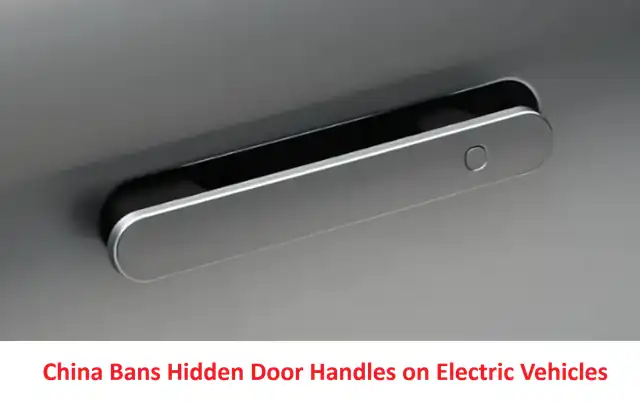
The Chinese Ministry of Industry and Information Technology (MIIT) has issued mandatory national standards titled “Safety Technical Requirements for Automotive Door Handles,” which prohibit fully hidden exterior door handles and require all vehicle doors to be equipped with mechanical release mechanisms.
The regulations stipulate that:
- Implementation begins January 1, 2027, with new vehicle models required to comply by July 1, 2027
- Existing approved models must be retrofitted by July 1, 2028
- Exterior door handles must provide a minimum hand operating space of 60mm × 20mm × 25mm relative to the vehicle body surface
- Mechanical backup systems must be accessible and clearly marked for emergency use
- Both interior and exterior emergency release mechanisms are mandatory
The standards explicitly target the flush-mounted, electronically operated door handles that have become popular on electric vehicles for their sleek aesthetics and minor aerodynamic benefits.
Safety Crisis Behind the Ban
The Chinese regulations emerge against a backdrop of fatal accidents involving electric vehicles with electronic door systems. While multiple incidents involving various EV manufacturers have raised concerns, the policy addresses a broader industry-wide safety issue rather than targeting any single brand.
According to safety research, vehicles equipped with electronic door handles have shown a door opening success rate of only 67% following side-impact collisions, compared to 98% for traditional mechanical handles. Recent fire incidents involving electric vehicles have highlighted the critical danger: when battery power is lost in a crash, electronic door systems can fail completely, trapping occupants inside—sometimes with fatal consequences.
The fundamental problem lies in the design philosophy of many modern EVs. Electronic door handles often lack intuitive mechanical backup systems, or when such systems exist, they are frequently hidden, unlabeled, and difficult to locate during emergencies. In post-crash situations where vehicles catch fire, seconds can mean the difference between life and death.
Global Regulatory Response
China’s decisive action has catalyzed regulatory scrutiny worldwide, with authorities in the United States and Europe launching their own investigations and considering similar measures.
United States
The National Highway Traffic Safety Administration (NHTSA) has opened multiple investigations into electronic door handle safety:
- In September 2025, NHTSA launched an investigation into Tesla Model Y door handles after reports of children trapped inside vehicles when the 12-volt battery failed
- In December 2025, a separate probe was initiated into Tesla Model 3 emergency door releases, covering approximately 180,000 vehicles from the 2022 model year
- The investigations followed a Bloomberg report documenting at least 15 deaths over the past decade in incidents where occupants or rescuers were unable to open doors after crashes involving fires
Congresswoman Robin Kelly of Illinois has introduced the Securing Accessible Functional Emergency (SAFE) Exit Act, which would establish federal door safety standards requiring:
- Visible and clearly labeled door release mechanisms
- Mechanical redundancies allowing operation without power
- Accessibility for both occupants and first responders
Europe
European authorities have declared door handle safety a “key priority,” with multiple regulatory bodies coordinating action:
The Netherlands Vehicle Authority (RDW), which certifies vehicles for sale in the European Union, confirmed that new regulations are under development. According to an RDW spokesperson, “Doors must always be operable—from the inside by occupants and from the outside by emergency responders—even in the event of a power failure.”
European interest intensified following a September 2025 incident in Schwerte, Germany, where three Tesla occupants died after their vehicle crashed and caught fire. Reports indicated the victims were unable to open their doors, and firefighters could not operate the electronic door handles to rescue them.
Euro NCAP, Europe’s independent vehicle safety testing organization, and the United Nations Economic Commission for Europe (UNECE) have both prioritized addressing electronic door handle safety in their upcoming regulatory frameworks.
Industry Impact and Response
The regulations will affect not only Tesla—the pioneer of flush-mounted electronic door handles—but also numerous manufacturers who have adopted similar designs, including Rivian, Mercedes-Benz, BYD, Xiaomi, and others.
Tesla’s Chief Designer Franz von Holzhausen acknowledged the safety concerns in late 2025, stating the company was working on redesigning door handles to merge electronic and mechanical systems into a single, more intuitive interface. “The idea of combining the electronic one and the manual one together into one button makes a lot of sense,” von Holzhausen told media outlets. “That’s something that we’re working on.”
Volkswagen CEO Thomas Schäfer noted that customer feedback has already influenced his company’s design decisions, stating that VW customers don’t want flush-mounted electronic door handles and the company has no plans to adopt them.
Aerodynamic Benefits Questioned
While manufacturers have justified electronic flush door handles partly on aerodynamic grounds, research suggests the actual benefits are minimal. Studies indicate these designs reduce the coefficient of drag by only 0.005 to 0.01—far less than the 0.03 improvement often claimed by manufacturers.
Global Implications
China’s move carries significant weight in the global automotive industry. As the world’s largest electric vehicle market, Chinese regulations often influence international design standards. Automakers seeking to sell vehicles in China must now redesign their door systems, and many are likely to implement these changes globally rather than maintaining separate designs for different markets.
The convergence of regulatory action across China, the United States, and Europe creates a scenario where maintaining current electronic door handle designs is no longer viable—legally or ethically. Industry observers expect the next generation of electric vehicles to feature door handles that prioritize emergency accessibility alongside aesthetics.
As one European safety official stated: “This is not a theoretical problem—people are dying because they cannot get out of vehicles when every second counts.” The global regulatory response suggests that era of purely electronic, hidden door handles on electric vehicles may be coming to an end.
The final Chinese regulations are expected to be published in early 2026, with full implementation by mid-2028 for all vehicles sold in China.