Google: Chrome Browser Saves Users Ten Thousand Years of Waiting
Google: Chrome Browser Saves Users Ten Thousand Years of Waiting for Web Pages to Load
- Linux Kernel Removes strncpy After Six Years and 362 Patches
- Linux Kernel Drops 40-Year-Old AppleTalk Protocol — AI-Generated Patch Flood Was the Last Straw
- Apple’s Native Linux Container Tool Has Arrived — But Can It Really Replace Docker?
- 60% of MD5 Password Hashes Can Be Cracked in Under an Hour with a Single GPU
- Dirty Frag: Root Access on Every Major Linux Distribution — No Patch, No Warning
Google: Chrome Browser Saves Users Ten Thousand Years of Waiting for Web Pages to Load
November 8th, Google, a prominent player in the browser industry, has consistently strived to enhance the performance of its Chrome browser.
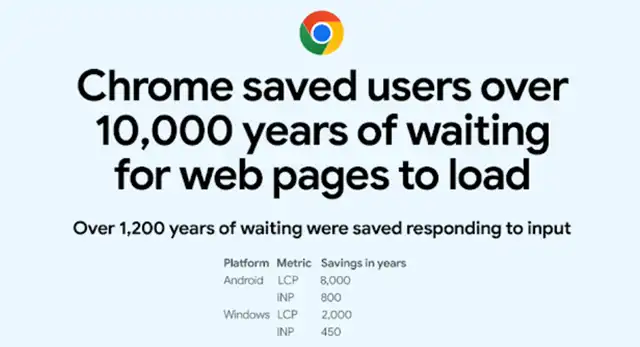
In a recent official blog post, Google proudly declared that Chrome browser, both desktop and Android versions, has saved users ten thousand years of waiting for web pages to load.

In the blog, Google delved into the optimization of Core Web Vitals (CWV), website performance metrics. The company examined millions of pages to establish a common standard for fast and user-friendly web pages.
Furthermore, in August 2021, Google updated its search ranking algorithm, considering factors such as whether a page met the speed and usability standards defined by CWV.
Following these changes, Google states that the average page load speed of Chrome is now 166 milliseconds faster. This may seem like a minor improvement, but small changes can accumulate and have a significant impact on the internet. By the year 2023, this initiative has saved users over ten thousand years of waiting for web pages to load and over twelve hundred years of waiting for web pages to respond to user input.
According to the blog, Google also tracks the number of page transitions that meet CWV requirements. Currently, mobile devices have a satisfaction rate of 64.45% (previously 64%), while desktop devices have a satisfaction rate of 68.39% (previously 67%). The Chrome data team anticipates that by the end of this year, the satisfaction rate will reach 69%.