Inside Coruna & DarkSword: How Elite iPhone Exploit Kits Went Commercial
Inside Coruna & DarkSword: How Elite iPhone Exploit Kits Went Commercial
- 60% of MD5 Password Hashes Can Be Cracked in Under an Hour with a Single GPU
- Dirty Frag: Root Access on Every Major Linux Distribution — No Patch, No Warning
- Ubuntu 26.04 LTS (Resolute Raccoon): The Most Ambitious Ubuntu LTS in a Decade
- Proton Mail: Data Transferred to FBI Again!
- How Close Are Quantum Computers to Breaking RSA-2048?
- How to Prevent Ransomware Infection Risks?
- What is the best alternative to Microsoft Office?
Inside Coruna & DarkSword:
How Elite iPhone Exploit Kits Went Commercial
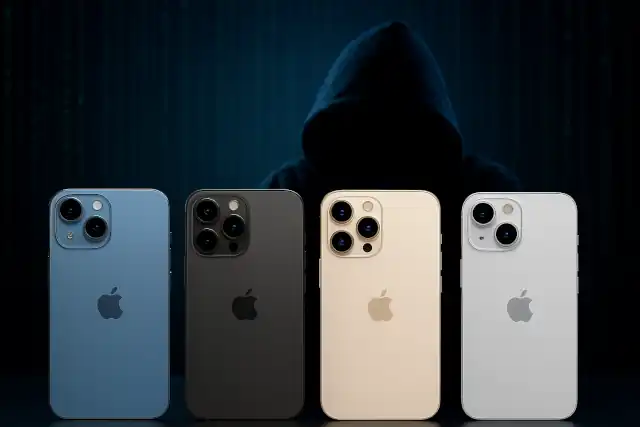
Google’s threat intelligence team has spent the past year tracking two sophisticated iOS exploit kits as they migrated from surveillance-vendor exclusives to tools of state-sponsored hackers and financially motivated criminal gangs — a troubling new chapter in the commoditization of mobile zero-days.
For most of 2025, an iOS exploit kit of unusual sophistication moved quietly through the global threat landscape — shifting hands from a commercial surveillance vendor to a suspected Russian intelligence group, and then to a financially motivated criminal operation targeting cryptocurrency users. Google’s Threat Intelligence Group (GTIG) has now publicly documented the entire trail, offering a rare and unsettling window into how elite mobile attack capabilities filter down from intelligence agencies to common cybercriminals.
The kit, named Coruna after an internal code name accidentally exposed in a debug deployment, contains 23 distinct exploits spanning five complete attack chains. It targets iPhones running iOS 13.0 through iOS 17.2.1 — a range covering devices released from September 2019 through December 2023. GTIG describes it as among the most technically accomplished iOS toolkits ever recovered, featuring extensive English-language documentation and exploitation techniques not previously seen in public research.
Just weeks after GTIG published its findings on Coruna, the group — alongside mobile security firms Lookout and iVerify — disclosed a second, separate iOS exploit kit named DarkSword. That kit targets newer devices running iOS 18.4 through 18.7, uses six vulnerabilities including three zero-days, and has already been deployed by multiple distinct threat actors across Saudi Arabia, Turkey, Malaysia, and Ukraine. The back-to-back disclosures represent the most significant public exposure of iOS exploitation infrastructure in recent memory.
(iOS 13.0 – 17.2.1)
incl. 3 zero-days (iOS 18.4 – 18.7)
The Coruna Exploit Kit
How the attack works
Coruna is a browser-based attack requiring no interaction beyond a page load. When an iPhone user visits a compromised or malicious website, a hidden iFrame silently injects a JavaScript framework that first fingerprints the device — collecting model and iOS version information. Based on those results, the framework selects and delivers the appropriate WebKit Remote Code Execution (RCE) exploit from its arsenal.
One of the kit’s core vulnerabilities is CVE-2024-23222, a WebKit flaw that Apple patched in iOS 17.3 in January 2024 — but which remained potent against the large installed base of unpatched devices. The exploit chain then proceeds through a Pointer Authentication Code (PAC) bypass, a sandbox escape, and kernel-level privilege escalation, ultimately deploying a loader binary called PlasmaLoader (tracked by GTIG as PLASMAGRID). PlasmaLoader injects itself into powerd, a system daemon that runs as root, granting the attacker deep, persistent system access.
“The core technical value of this exploit kit lies in its comprehensive collection of iOS exploits, with the most advanced ones using non-public exploitation techniques and mitigation bypasses.”
— Google Threat Intelligence Group (GTIG)
The kit is also operationally disciplined: it terminates execution if it detects the device is in Lockdown Mode or if the user is browsing in a private tab — a design choice suggesting it was engineered to minimize forensic footprint.
- CVE-2024-23222 WebKit type confusion; patched iOS 17.3 (Jan. 2024)
- CVE-2022-48503 WebKit vulnerability used in multi-stage chains
- CVE-2023-43000 Use-after-free in WebKit; Apple added to release notes only Nov. 2025
- Photon / Gallium Internal names; exploit vulnerabilities previously linked to Operation Triangulation (2023)
The proliferation trail: from spy tool to scam kit
What makes Coruna historically significant is not just its technical capability, but the documented path it traveled across three distinct categories of threat actor over the course of a single year.
Commercial Surveillance Vendor Customer: GTIG first recovered an iOS exploit chain used by a customer of an unnamed surveillance vendor. The attack relied on a previously unseen JavaScript fingerprinting framework, suggesting the kit was, at this stage, a premium commercial product sold to high-budget clients.
UNC6353 — Suspected Russian Espionage Group: The same JavaScript framework surfaced on a network of compromised Ukrainian websites, ranging from industrial equipment suppliers to local retail services. It was delivered only to selected iPhone users from specific geolocations, indicating targeted espionage. GTIG worked with CERT-UA to remediate the affected sites.
UNC6691 — Financially Motivated, China-Linked: The complete kit was retrieved from a large network of fake Chinese financial and cryptocurrency websites designed to lure iPhone users. One site impersonated the WEEX crypto exchange. Unlike prior campaigns, this deployment had no geolocation restrictions — it targeted any qualifying iOS device worldwide.
GTIG assessed that this progression “suggests an active market for ‘second hand’ zero-day exploits,” where advanced techniques are resold and redeployed by actors with varying levels of sophistication and motivation. The transition from espionage to mass financial fraud within a single calendar year is, researchers noted, a new milestone in the commoditization of mobile attack capabilities.
DarkSword: The Sequel
Just weeks after GTIG published its Coruna findings, coordinated research from GTIG, Lookout, and iVerify disclosed a second, distinct iOS full-chain exploit kit. Its name — DarkSword — was found verbatim in the malware’s own source code: const TAG = "DarkSword-WIFI-DUMP". The discovery of two major iOS exploit kits within a single month stunned the mobile security community.
DarkSword targets newer devices: iPhones running iOS 18.4 through 18.7. It chains six vulnerabilities — three of which were exploited as zero-days before Apple issued patches — to achieve full device compromise. GTIG has tracked its use since at least November 2025, across multiple distinct threat actors operating independently.
- CVE-2025-31277 Memory corruption in JavaScriptCore — primary RCE (patched iOS 18.6 / 26.1)
- CVE-2025-43529 Second JavaScriptCore memory corruption — zero-day (patched 18.7.3 / 26.2)
- CVE-2026-20700 PAC bypass in dyld — zero-day (patched 26.3)
- CVE-2025-14174 Additional privilege escalation — zero-day (patched 26.3)
- +2 more Kernel privilege escalation and PPL bypass (all patched in iOS 26.3)
The actors tracked using DarkSword include UNC6748, which targeted Saudi Arabian users via a fake Snapchat-themed website; PARS Defense, believed to be an Iranian commercial surveillance vendor; and UNC6353 — the same suspected Russian espionage group previously linked to Coruna campaigns against Ukrainian targets. This overlap between Coruna and DarkSword users led Lookout to suggest UNC6353 may function as a “privateer” group — a criminal proxy operating with state backing, blending espionage and financial crime.
All six DarkSword vulnerabilities have now been patched in iOS 26.3, though the gap between the first known deployment in November 2025 and the final patch represented approximately four months of exposure for unpatched devices.
What These Attacks Steal
The financially motivated deployments of both Coruna and DarkSword share a common target profile: cryptocurrency assets. Once PlasmaLoader (Coruna’s final-stage payload) achieves root-level access, it hooks functions within at least 18 cryptocurrency wallet applications — including MetaMask, BitKeep, and Phantom — to exfiltrate private keys, seed phrases, wallet caches, and screenshots.
Researchers noted that the payload’s design reflects a deliberate shift in attacker strategy: rather than relying on traditional keylogging or network interception, the malware performs direct semantic scanning of device storage, searching for keywords associated with wallet recovery credentials. Even a screenshot saved to the camera roll containing a seed phrase would be identified and transmitted.
DarkSword deploys three distinct malware families upon successful compromise: GHOSTBLADE, GHOSTKNIFE (a JavaScript backdoor capable of broad data theft), and GHOSTSABER — each tailored to different operational objectives across the different threat actors using the kit.
The Bigger Picture
iVerify summarized the industry implications bluntly: “For the second time in a month, threat actors have employed waterhole attacks to target iPhone users. Neither of these attacks was individually targeted. The combined attacks now likely affect hundreds of millions of unpatched devices running iOS versions from 13 to 18.6.2.”
GTIG’s broader 2025 zero-day review found that 90 zero-day vulnerabilities were exploited across the year — up from 78 in 2024 — and that mobile exploitation counts rebounded to 15, after a dip to 9 in 2024. The structural picture that emerges from both reports is one of a maturing and increasingly accessible market for elite mobile exploits, where capabilities originally developed for intelligence-grade surveillance operations are cycling into criminal hands within months, not years.
“The use of both DarkSword and Coruna by a variety of actors demonstrates the ongoing risk of exploit proliferation across actors of varying geography and motivation.”
— Google Threat Intelligence Group (GTIG)
The U.S. Cybersecurity and Infrastructure Security Agency (CISA) added three Coruna-abused CVEs to its Known Exploited Vulnerabilities catalog on March 5, 2026, directing federal agencies to apply fixes. Google has added delivery domains for both kits to Safe Browsing.
What Users Should Do
Protection Checklist
- Update iOS immediately. iOS 17.3 or later closes all Coruna exploits. iOS 18.7.3 or iOS 26.3 closes all DarkSword exploits. There is no substitute for patching.
- Enable Lockdown Mode if you cannot update right away. Coruna’s framework terminates on devices in Lockdown Mode, significantly reducing your attack surface.
- Do not visit unfamiliar websites from an iPhone without verifying the source. Both kits are delivered via watering-hole attacks — compromised or fake websites — requiring no more than a page visit to trigger.
- Never store seed phrases or private keys as screenshots or plaintext files on your device. Coruna’s payload scans for these semantically and exfiltrates them without any visible sign.
- Use a hardware wallet for significant cryptocurrency holdings. Hardware wallets keep private keys off internet-connected devices entirely.
Sources: Google Threat Intelligence Group, “Coruna: The Mysterious Journey of a Powerful iOS Exploit Kit” (Google Cloud Blog, March 2026); Google Threat Intelligence Group, “The Proliferation of DarkSword: iOS Exploit Chain Adopted by Multiple Threat Actors” (Google Cloud Blog, March 2026); The Hacker News; Lookout; iVerify; CISA Known Exploited Vulnerabilities Catalog. All CVE details sourced from official GTIG disclosures.