Raspberry Pi Raises Prices Again as AI-Driven Memory Crisis Deepens
Raspberry Pi Raises Prices Again as AI-Driven Memory Crisis Deepens
- Linux Kernel Removes strncpy After Six Years and 362 Patches
- Linux Kernel Drops 40-Year-Old AppleTalk Protocol — AI-Generated Patch Flood Was the Last Straw
- Apple’s Native Linux Container Tool Has Arrived — But Can It Really Replace Docker?
- 60% of MD5 Password Hashes Can Be Cracked in Under an Hour with a Single GPU
- Dirty Frag: Root Access on Every Major Linux Distribution — No Patch, No Warning
Raspberry Pi Raises Prices Again as AI-Driven Memory Crisis Deepens
Soaring LPDDR4 costs — up sevenfold in a year — force across-the-board price hikes of up to $150, while a new 3 GB model aims to soften the blow. Despite the April 1st timing, the company insists none of this is a joke.
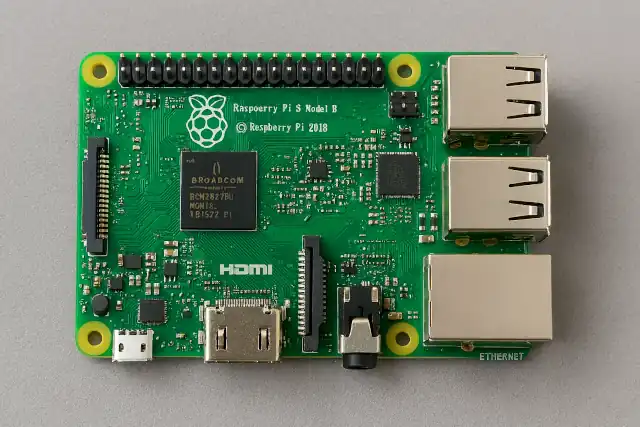
Raspberry Pi, the Cambridge-based maker of affordable single-board computers beloved by educators, hobbyists, and professionals worldwide, has announced its third round of price increases in recent months — and this time the hikes are dramatic. The company simultaneously unveiled a new Raspberry Pi 4 equipped with 3 GB of RAM, priced at $83.75, in a bid to give users a more affordable middle-ground option as memory costs spiral out of control.
The announcement, made on April 1, 2026, was accompanied by an unusually firm disclaimer: this is not an April Fools’ Day prank. Eben Upton, founder of Raspberry Pi, stated plainly in the company’s official blog post that every item of news published today is real, and that the new 3 GB computer “is as real as the rest of our products,” available immediately through Raspberry Pi Approved Resellers worldwide.
Providing low-cost general-purpose computing remains a non-negotiable priority for us at Raspberry Pi, so while we can’t avoid passing on a portion of these increased costs, we’re also doing engineering work to expand the range of memory-density options available to our customers.
— Eben Upton, Founder, Raspberry PiThe Root Cause: A Sevenfold Memory Price Surge
The price driver is stark: the cost of LPDDR4 DRAM — used across the Raspberry Pi 4 and Raspberry Pi 5 product families — has risen by a factor of seven over the past twelve months. Industry analysts point to a supply squeeze caused by major memory manufacturers, including Samsung, SK Hynix, and Micron, redirecting production capacity toward the far more lucrative AI data-center market. As hyperscalers compete for high-bandwidth memory to power large language models, the components that power affordable consumer and educational hardware have become scarce and expensive.
This is not the first time Raspberry Pi has been forced to act. A previous round of increases was implemented in February 2026, at that point limited mainly to the Pi 4 and Pi 5 lines. The April 2026 increases are considerably broader and steeper, extending to keyboard computers, compute modules, and AI accessories.
What’s Going Up — And By How Much
Price Adjustment Summary — April 1, 2026
| Product | Memory | Price Change |
|---|---|---|
| Raspberry Pi 4 & 5 | 4 GB | + $25 |
| Raspberry Pi 4 & 5 | 8 GB | + $50 |
| Raspberry Pi 5 | 16 GB | + $100 |
| Raspberry Pi 500 | — | + $50 |
| Raspberry Pi 500+ | — | + $150 |
| Compute Module 5 | various | up to + $100 |
| Compute Module 4 / 4S | various | $11.25 – $100 |
| Raspberry Pi AI HAT+ 2 | — | affected |
| Raspberry Pi 400 (4 GB) | 4 GB | No change — $60 |
| Raspberry Pi 4 & 5 (1–2 GB) | 1–2 GB | No change — $35–$65 |
| Pi Zero / Pi 3 series / CM1 / CM3+ | LPDDR2 | No change |
| NEW: Raspberry Pi 4 3 GB | 3 GB | $83.75 (new) |
* Prices shown in USD. Local currency pricing varies by region and reseller.
A New 3 GB Model to Bridge the Gap
The launch of the Raspberry Pi 4 with 3 GB of RAM is an engineering response to the pricing crunch. As the cost of 4 GB memory configurations has climbed sharply, a gap emerged between the accessible 2 GB tier and the increasingly expensive 4 GB option. The new 3 GB model, priced at $83.75, is designed to fill that gap and ensure users do not pay for memory capacity beyond what their workloads actually require.
Technically, the 3 GB variant is understood to use the revised dual-RAM PCB layout introduced in early 2026, pairing two 1.5 GB LPDDR4 chips on a redesigned board. The underlying processor and connectivity remain identical to other Raspberry Pi 4 Model B variants. The product is listed on the official Raspberry Pi product page and was made available through authorised resellers on announcement day.
Raspberry Pi confirmed it is holding the line on entry-level products: the Raspberry Pi 400 with 4 GB stays at $60, and the 1 GB and 2 GB variants of both the Raspberry Pi 4 and 5 remain priced between $35 and $65 — ensuring that accessible computing options continue to exist even amid the memory crisis.
Classic Models Left Untouched
Older products in the Raspberry Pi ecosystem are not affected by the current wave of increases. The Raspberry Pi Zero, Zero W, Zero 2 W, Raspberry Pi 1, 3, 3B+, 3A+, Compute Module 1, and Compute Module 3+ all use an older LPDDR2 DRAM standard, for which the company reports holding substantial inventory. Because LPDDR2 supply is not subject to the same AI-driven demand pressures, the company sees no need — and has stated no plans — to raise prices on these models for the foreseeable future.
Will Prices Come Back Down?
Raspberry Pi has framed the current situation as painful but temporary. The company has committed, repeatedly and publicly, to reversing its price increases once memory market conditions normalise. In the words of the official announcement: “The circumstances in which we find ourselves are challenging, but in the future they will abate. When they do, we will reverse our price increases, and until they do, we will continue to work hard to limit their impact in every way we can.”
Whether that normalisation comes soon depends largely on forces outside Raspberry Pi’s control — primarily, the pace at which AI infrastructure investment continues to crowd out consumer memory supply. For now, the company is focused on creative engineering solutions, such as new memory-density configurations, to keep as many products as possible within reach of the education and hobbyist communities it was built to serve.
Industry Context
Raspberry Pi is far from alone in feeling the pressure. Competing single-board computer vendors, including Orange Pi, Radxa, Banana Pi, and Hardkernel, are also grappling with rising DRAM costs, though the impact varies by manufacturer and by the specific memory chips used. Elsewhere in consumer hardware, at least one high-profile gaming handheld — Ayaneo’s Next 3 — has been cancelled outright, while other products face indefinite delays as their makers struggle to secure components at viable prices.
The broader memory market remains volatile, and industry observers are watching closely to see whether the AI infrastructure spending cycle peaks or sustains. For the millions of Raspberry Pi users around the world, the hope is that the cycle turns — and that the prices on the world’s most recognisable single-board computer find their way back down.