Server CPU Shortage Intensifies as AI Infrastructure Boom Strains Intel and AMD Supply Chains
Server CPU Shortage Intensifies as AI Infrastructure Boom Strains Intel and AMD Supply Chains
- 60% of MD5 Password Hashes Can Be Cracked in Under an Hour with a Single GPU
- Dirty Frag: Root Access on Every Major Linux Distribution — No Patch, No Warning
- Ubuntu 26.04 LTS (Resolute Raccoon): The Most Ambitious Ubuntu LTS in a Decade
- Proton Mail: Data Transferred to FBI Again!
- How Close Are Quantum Computers to Breaking RSA-2048?
- How to Prevent Ransomware Infection Risks?
- What is the best alternative to Microsoft Office?
Server CPU Shortage Intensifies as AI Infrastructure Boom Strains Intel and AMD Supply Chains
Global server processor manufacturers warn of delivery delays up to six months as memory crisis and agentic AI demand reshape semiconductor priorities
February 6, 2026
The global technology industry is facing an escalating crisis in server CPU availability, with Intel and AMD recently notifying customers of significant supply shortages and extended delivery times.
The shortage represents a broader transformation of the semiconductor supply chain, where the explosive growth of artificial intelligence infrastructure is creating unprecedented demand across multiple chip categories simultaneously.
Critical Supply Constraints Hit Major Markets
Intel and AMD have issued warnings to customers, particularly in China, about severe delays in server CPU deliveries. Intel has warned of delivery lead times of up to six months, while AMD has notified customers that some of its CPUs will have delivery lead times of eight to 10 weeks.
The supply constraints have already translated into significant price increases. Supply constraints have driven up prices for Intel’s server products in China by more than 10%, though final pricing varies based on customer contracts.
China represents a critical market for both companies. China accounts for more than a fifth of Intel’s overall revenue, with major customers including cloud computing giants Alibaba and Tencent, as well as leading server manufacturers.
Market Share Dynamics Shift
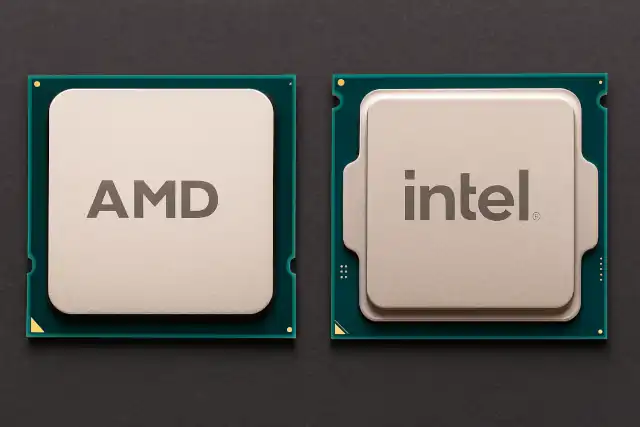
The CPU shortage comes amid a dramatic reshuffling of market positions between the two dominant x86 server processor manufacturers. Intel’s market share has declined from over 90% in 2019 to about 60% in 2025, while AMD’s share has climbed from around 5% in 2019 to more than 20% last year, according to a UBS report in January.
Despite their competing positions, both companies face similar supply challenges, though for different reasons related to their manufacturing strategies.
Multiple Factors Driving the Shortage
The current CPU shortage stems from a complex interplay of manufacturing challenges, strategic capacity reallocation, and surging demand across the AI ecosystem.
Manufacturing and Capacity Constraints
Intel has struggled to ramp up production amid persistent manufacturing yield challenges. The company’s efforts to expand internal production capacity have been hampered by ongoing technical difficulties in its fabrication processes.
AMD outsources production to Taiwan’s TSMC, the world’s top contract foundry, which has prioritized AI chip manufacturing and left limited capacity for CPUs. TSMC, which produces the vast majority of the world’s most advanced chips, faces its own capacity constraints as it balances competing demands from multiple high-value customers.
The Memory Chip Cascade Effect
A critical factor exacerbating the CPU shortage is the severe global memory chip crisis. The 2024-2026 global memory supply shortage, sometimes referred to as “RAMmageddon” or the “RAMpocalypse,” is an ongoing period of supply constraints and rapid price escalation in the semiconductor memory market.
TrendForce expects average DRAM memory prices to rise between 50% and 55% this quarter versus the fourth quarter of 2025, an increase analysts describe as unprecedented.
The memory shortage created a rush effect on CPU purchases. When memory prices began rising late last year in China, customers accelerated purchases of CPUs to lock in lower prices for memory, according to distributors who sell both server CPUs and memory products.
AI’s Structural Reallocation of Silicon Capacity
Unlike previous chip shortages driven by temporary supply chain disruptions, the current crisis reflects a fundamental restructuring of semiconductor manufacturing priorities. This shortage is driven by a structural reallocation of manufacturing capacity toward high-margin products for artificial intelligence infrastructure, creating scarcity in consumer and enterprise PC markets.
The voracious demand for HBM by hyperscalers, such as Microsoft, Google, Meta and Amazon, has forced the three biggest memory manufacturers to pivot their limited cleanroom space and capital expenditure towards higher-margin enterprise-grade components.
Manufacturing capacity represents a zero-sum game in the semiconductor industry. Every wafer allocated to an HBM stack for an Nvidia GPU is a wafer denied to the LPDDR5X module of a mid-range smartphone or the SSD of a consumer laptop.
The Rise of Agentic AI Creates New CPU Demands
A crucial new factor intensifying server CPU demand is the emergence of agentic AI systems—advanced artificial intelligence applications that go far beyond simple chatbot functionality.
Surging demand for agentic AI systems, which perform complex, multi-step operations beyond simple chatbot functionality, has further strained supply. These advanced applications require significantly more CPU processing power than traditional workloads.
Unlike traditional AI chatbots that primarily generate responses, agentic AI systems orchestrate complex workflows across multiple tools, databases, and systems. These applications require substantial CPU processing power for coordination, data movement, and orchestration tasks that GPUs cannot efficiently handle.
Agentic workflows are orchestrated as sequences of heterogeneous, control-heavy operations that CPUs manage, and the CPU often dictates overall system latency, throughput, and scalability.
Industry Response and Timeline for Relief
Both Intel and AMD have acknowledged the supply challenges and outlined their strategies for addressing them.
Intel expects inventory at lowest level in Q1, but the company is addressing aggressively and expects supply improvement in Q2 through 2026, according to a company statement.
AMD reiterated that it remains confident in its ability to meet customer demand globally based on strong supplier agreements and supply chain, including its partnership with TSMC.
However, economists warn that the supply-demand imbalance may persist well into 2027. Makoto Tsuchiya, senior economist at Oxford Economics, stated: “We expect the current supply-demand imbalance to persist over the next few years, as long as the AI investment boom continues”.
Broader Market Implications
The CPU shortage has implications extending beyond data center operators and cloud providers. The constraints are affecting various sectors:
Enterprise IT: Organizations planning infrastructure upgrades face longer procurement cycles and budget pressures from rising component costs.
Cloud Service Providers: Hyperscalers may face challenges scaling capacity to meet customer demand, potentially affecting service availability and pricing.
AI Development: AI companies building new infrastructure may encounter delays in deployment timelines, potentially slowing the pace of AI innovation and product launches.
Consumer Electronics: The memory shortage is already driving price increases of 15-20% for PCs and laptops, with smartphones and other consumer electronics also affected.
Long-Term Structural Changes
The current shortage reflects a potentially permanent shift in how semiconductor manufacturing capacity is allocated. This is not just a cyclical shortage driven by a mismatch in supply and demand, but a potentially permanent, strategic reallocation of the world’s silicon wafer capacity.
For decades, production of DRAM and other components for consumer devices like smartphones and PCs drove semiconductor manufacturing decisions. That dynamic has now inverted, with AI infrastructure requirements becoming the primary driver of capacity allocation decisions.
Industry analysts note that even as new manufacturing capacity comes online in the coming years, much of it is being specifically designed for AI-optimized products rather than traditional computing components. This suggests that the current imbalance between AI and non-AI silicon demand may persist as a structural feature of the semiconductor industry.
Looking Ahead
As the industry navigates these supply challenges, several trends appear clear:
-
Continued Prioritization of AI: Semiconductor manufacturers will continue prioritizing high-margin AI components over traditional products.
-
Extended Lead Times: Organizations should expect longer procurement cycles and plan infrastructure investments further in advance.
-
Price Pressure: Both enterprise and consumer technology products will likely see continued price increases through 2026 and potentially beyond.
-
Supply Chain Diversification: Companies may increasingly seek alternative architectures or suppliers to reduce dependency on constrained x86 server CPUs.
The server CPU shortage of 2026 marks a defining moment in the semiconductor industry—one where the transformative power of artificial intelligence is literally reshaping the physical infrastructure of global technology supply chains. As organizations across industries race to deploy AI capabilities, the fundamental building blocks of computing infrastructure have become the critical bottleneck, with far-reaching implications for innovation, economics, and technological progress.