The End of an Era: Japanese Blu-ray Recorders Face Extinction as Sony Exits Market
The End of an Era: Japanese Blu-ray Recorders Face Extinction as Sony Exits Market
- Linux Kernel Drops 40-Year-Old AppleTalk Protocol — AI-Generated Patch Flood Was the Last Straw
- Apple’s Native Linux Container Tool Has Arrived — But Can It Really Replace Docker?
- 60% of MD5 Password Hashes Can Be Cracked in Under an Hour with a Single GPU
- Dirty Frag: Root Access on Every Major Linux Distribution — No Patch, No Warning
- How Close Are Quantum Computers to Breaking RSA-2048?
- What is the best alternative to Microsoft Office?
The End of an Era: Japanese Blu-ray Recorders Face Extinction as Sony Exits Market
Major manufacturers abandon recordable disc technology as streaming dominates home entertainment
February 9, 2026 — The landscape of home entertainment in Japan is undergoing a seismic shift as Sony announces it will end shipments of Blu-ray recorders by February 2026, following TVS REGZA’s exit from the market in early 2025.
This leaves Panasonic and Sharp as the only remaining Japanese manufacturers producing devices capable of recording to Blu-ray discs.
A Perfect Storm of Market Forces
The exodus from Blu-ray recorder production comes amid a dramatic collapse in demand. According to the Japan Electronics and Information Technology Industries Association (JEITA), Blu-ray recorder shipments in Japan plummeted nearly 25% annually during the COVID-19 pandemic, dropping to just 623,000 units by the end of 2025. This represents a catastrophic decline from the format’s peak following Japan’s digital terrestrial broadcasting transition in 2011.
Sony’s decision to exit the recorder market is particularly significant given the company’s pioneering role in Blu-ray technology. However, the electronics giant confirmed it will continue producing Blu-ray and Ultra HD Blu-ray players for movie playback, and the PlayStation 5 will retain its optical disc capabilities. In February 2025, Sony also ended production of recordable Blu-ray discs, along with MiniDiscs and cassettes, signaling a comprehensive retreat from recordable media formats.
TVS REGZA’s departure came after supplier Funai Electric filed for bankruptcy, forcing the brand to discontinue BD/DVD players by late 2024 and end recorder production by September 2025.
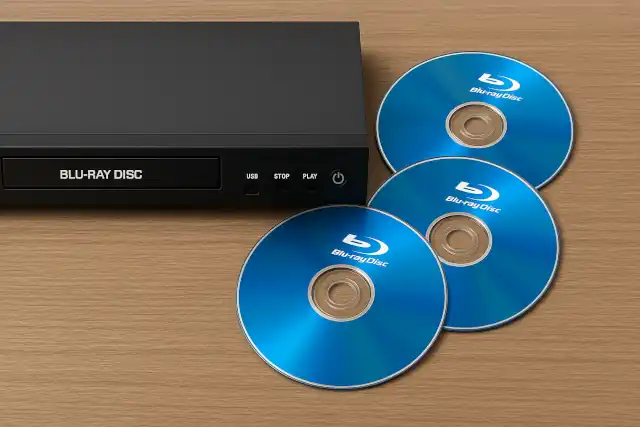
A Market Born in Japan, Dying in Japan
The story of Blu-ray recorders is uniquely Japanese. Unlike Western markets where Blu-ray gained traction primarily as a movie distribution format, Japan developed a robust culture of recording television broadcasts to disc. This practice, inherited from the DVD recorder era beginning in 2001, treated hard disk recording as temporary “view and erase” storage, while burning to disc was considered archival or for sharing with others.
Japanese manufacturers took the lead in formulating recordable Blu-ray standards, even before ROM standards for movie distribution were finalized. Sony’s first Blu-ray device, released specifically for recording digital broadcasts, targeted only the Japanese market. When Hollywood studios later drove the format war between HD DVD and Blu-ray, their interest centered exclusively on ROM distribution media, not recording capabilities.
This exclusive focus on the Japanese market proved to be both the format’s strength and its fatal weakness. As global demand never materialized, manufacturers struggled to justify continued investment in components and technology serving only one country.
The Component Crisis
The most critical challenge facing remaining manufacturers is procuring Blu-ray recorder drives. Unlike drives for playback-only players, which maintain global demand, recordable drives face a dwindling supplier base willing to manufacture for the limited Japanese market.
The PC industry foreshadowed this crisis, with optical drives largely disappearing from computers well before home appliances. Demand for drives compatible with recordable media beyond DVD has essentially evaporated in the PC market.
I-O DATA’s recent release of the “BD Reco,” a PC-connected device for storing TV programs, highlights both the persistence of niche demand and the challenges of procurement. Industry observers note the company likely succeeded through careful supply chain management and commitment to minimum order quantities despite tough market conditions.
Panasonic’s ability to continue producing Blu-ray recorders stems partly from its vertical integration and in-house component production. However, with declining volumes, prices inevitably rise. Sharp’s future in the market remains uncertain, though the company continues production for now.
The Streaming Tsunami
The COVID-19 pandemic accelerated Japan’s adoption of video streaming services, fundamentally changing consumer behavior. Households that once considered recorders essential began questioning whether they needed anything beyond a television. Products purchased during the digital terrestrial transition around 2011 aged out without replacement, while younger consumers never developed the recording habit at all.
Physical media sales across all formats tell a sobering story. In the United States, DVD, Blu-ray, and 4K Blu-ray disc sales fell below $1 billion for the first time in 2024, down from a $16 billion peak in 2005. The decline accelerated with a 23.4% year-over-year drop. Meanwhile, subscription streaming spending surged 27% in the same period.
Yet the picture is not entirely bleak for physical media enthusiasts. While overall disc sales crater, premium formats show resilience. Sales of 4K Ultra HD Blu-rays increased 10% in 2024, and steelbook collector editions jumped 25%. This suggests a bifurcation in the market: mass-market consumers have moved to streaming, while a dedicated niche of collectors and cinephiles values physical ownership and superior quality.
A Collector’s Format Emerges
Paradoxically, as Blu-ray recorders disappear, Blu-ray as a playback format may be finding new life in collector culture. Filmmakers including Christopher Nolan and Wes Anderson have become vocal advocates for physical media, with Nolan bluntly stating that consumers need “a version you can buy and own at home and put on a shelf so no evil streaming service can come steal it from you.”
Nolan’s “Oppenheimer” became a phenomenon in collector circles, selling out its initial 4K Blu-ray run and tracking to become Universal’s best-selling 4K disc of all time. Premium boutique labels continue releasing restored classics and special editions that command premium prices from enthusiasts.
This shift mirrors the vinyl record revival in music, where tangible ownership and superior fidelity attract consumers tired of algorithmic recommendations and compressed digital files. Industry data shows physical media sales increased 15% in some markets during 2025, driven entirely by premium formats and collector editions.
Quality Still Matters
Technical advantages keep Blu-ray relevant for serious home theater enthusiasts. Streaming services compress both video and audio, with particularly noticeable impact on Dolby Atmos soundtracks. Uncompressed audio on Blu-ray discs delivers clarity and power that streaming cannot match, especially on high-end home theater systems.
The format also offers permanence that digital libraries cannot. When Disney pulled Marvel titles from its platform due to licensing disputes, or when studios quietly edit films post-release on streaming platforms, physical media owners remained unaffected. For archivists and purists, discs preserve the original artistic vision without risk of corporate revision or removal.
The Road Ahead
While Blu-ray recorders face extinction in Japan, playback devices will persist for the foreseeable future. Sony, Panasonic, and boutique manufacturers continue producing players for the international market. Game consoles including PlayStation 5 and Xbox Series X maintain optical drives, though their inclusion in next-generation hardware remains uncertain given that 70-80% of game sales now occur through digital downloads.
The critical question is not whether Blu-ray players will disappear immediately, but whether the format can sustain production over the next decade. Blu-ray technology is now over 20 years old, and redesigning components for current manufacturing lines requires clear profitability projections. License costs for codecs and encryption mechanisms add complexity compared to older DVD technology.
Crucially, no successor format exists. DVD survived through its transition to Blu-ray, but Blu-ray has no heir apparent. Ultra HD Blu-ray, standardized in 2015, never received a recording standard, reflecting the industry’s recognition that disc-based recording was already obsolete.
For Japanese consumers accustomed to recording television broadcasts, the transition away from disc-based recording is complete. Modern televisions from Sony’s BRAVIA and TVS REGZA lines offer built-in hard drive recording, eliminating the need for external recorders for many users. Cloud-based DVR services from cable and satellite providers offer similar functionality.
Recommendations for Consumers
Industry experts recommend that consumers who value physical media replace aging Blu-ray players sooner rather than later. While production continues for now, the trajectory is clear. In five to ten years, the availability and support for Blu-ray equipment becomes increasingly uncertain.
For those building physical media collections, the focus should be on acquiring discs rather than hardware. Quality playback equipment remains available, but specific titles may become difficult to obtain as publishers shift focus entirely to streaming.
The industry faces a longer-term challenge: ensuring access to content as physical media fades. If internet-based distribution becomes the sole option, consumer protections and long-term viewing guarantees become essential. The digital-only future requires addressing concerns about content preservation, corporate control over libraries, and ensuring that purchases represent genuine ownership rather than revocable licenses.
A Format’s Legacy
The Blu-ray recorder’s demise in Japan marks the end of a 30-year era of disc-based media recording, from VHS through DVD to Blu-ray. The technology served Japanese consumers well, preserving broadcasts and building personal libraries in an era before streaming made content available on-demand.
Yet as with all technology transitions, consumer behavior ultimately determines survival. When streaming’s convenience outweighed disc recording’s archival benefits for the mass market, the format’s fate was sealed. What remains is a niche market of collectors and enthusiasts who value ownership, quality, and permanence over algorithmic recommendations and compressed convenience.
For them, the physical disc—whether Blu-ray or its eventual successor—represents more than nostalgia. It represents control over one’s media library in an increasingly digital, platform-dependent entertainment landscape. As one format expert noted, the question isn’t whether physical media will survive, but rather what new forms it might take to serve those who refuse to surrender ownership of their entertainment.
With the Japanese Blu-ray recorder market down to just two manufacturers and demand declining 20% annually, the format that once defined home entertainment in the world’s third-largest economy faces an uncertain future. Only time will tell whether Panasonic and Sharp can sustain production, or if this technology will soon exist only in the collections of dedicated enthusiasts and the memories of a generation.