Thirty Years of SIP: Why the Protocol Behind VoIP Refuses to Be Replaced?
Thirty Years of SIP: Why the Protocol Behind VoIP Refuses to Be Replaced?
- 60% of MD5 Password Hashes Can Be Cracked in Under an Hour with a Single GPU
- Dirty Frag: Root Access on Every Major Linux Distribution — No Patch, No Warning
- Ubuntu 26.04 LTS (Resolute Raccoon): The Most Ambitious Ubuntu LTS in a Decade
- Proton Mail: Data Transferred to FBI Again!
- How Close Are Quantum Computers to Breaking RSA-2048?
- How to Prevent Ransomware Infection Risks?
- What is the best alternative to Microsoft Office?
Thirty Years of SIP: Why the Protocol Behind VoIP Refuses to Be Replaced?
By Technology Analysis | February 2026
In the fast-moving world of technology, few protocols survive a decade without being superseded.
Email’s SMTP, HTTP for the web, and DNS have proven to be exceptions — workhorses of the internet era that simply refuse to retire.
Into this exclusive club, we must now welcome another veteran: the Session Initiation Protocol, better known as SIP.
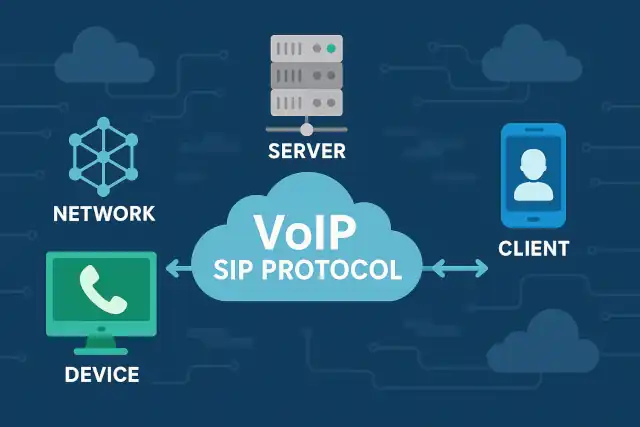
Originally designed in 1996 and formally standardized by the IETF in 1999, SIP recently crossed the thirty-year mark.
Yet rather than fading into obsolescence, it continues to serve as the backbone of global voice communications. In 2024 alone, SIP trunking commanded the largest revenue share — 46% — of the entire VoIP market.
The SIP phones market is projected to grow at a compound annual growth rate of 6.6% through 2035, reaching USD 5 billion. So why, in an era of Zoom, Microsoft Teams, WebRTC, and 5G, is a protocol born in the Clinton administration still dominating the way the world places phone calls?
A Protocol Born from the Internet — Not the Telephone Company
To understand why SIP has lasted, we must first appreciate where it came from. Unlike H.323 — its chief early rival, which was developed under the umbrella of the International Telecommunication Union (ITU) — SIP was designed by internet engineers at Columbia University, led by Henning Schulzrinne and Mark Handley. This lineage mattered enormously. SIP was built with the same philosophical DNA as the internet itself: open, text-based, modular, and deliberately agnostic about the underlying transport layer.
Modeled on the structure of HTTP and SMTP, SIP feels familiar to any developer who has built a web application. Its messages are readable text, its architecture is stateless and distributed, and it delegates media transport to companion protocols — chiefly RTP for voice and SDP for session description. This design philosophy meant SIP could evolve alongside the internet, absorbing new capabilities through extensions without requiring a wholesale redesign. When the 3GPP accepted SIP as its signaling protocol in November 2000, embedding it into the IP Multimedia Subsystem (IMS) architecture for cellular networks, the protocol’s trajectory was set. It was no longer simply a clever academic experiment; it was the foundation of how carriers intended to deliver next-generation voice services.
The Scale of SIP’s Dominance in 2025
Numbers tell the story most compellingly. The global VoIP market was valued at approximately USD 167 billion in 2024 and is projected to reach USD 752 billion by 2034, growing at a CAGR of nearly 16%. Within that market, SIP trunking alone represented 46% of service revenues in 2024 — making it the single largest segment. Over 82 million business VoIP lines were active globally in 2023, and more than 69% of large enterprises in the United States, Germany, and Japan have replaced their legacy PSTN infrastructure with VoIP or IP PBX systems, the vast majority of which use SIP as their signaling protocol.
Corporate users account for 78.7% of all VoIP adoption worldwide. Cisco alone has deployed over 14 million VoIP endpoints globally across more than 120 countries. In North America, over 180 million VoIP-enabled endpoints were active in corporate networks in 2024. Businesses that have switched to SIP-based VoIP report saving between 30% and 75% on telecom costs, including up to 90% on international calls — a financial incentive powerful enough to override almost any skepticism about replacing a working system.
The Five Pillars of SIP’s Staying Power
1. Deep Infrastructure Investment
The most fundamental reason SIP cannot be easily displaced is the sheer depth of investment made in SIP-compatible infrastructure. Decades of deployment have produced an ecosystem of hundreds of millions of endpoints — hardware phones, software clients, PBX systems, session border controllers, and carrier-grade switching equipment — all speaking SIP. Ripping out that infrastructure is not a technical decision; it is a financial and operational one that most enterprises and carriers have little appetite for. The United Kingdom’s planned retirement of its copper PSTN network in 2025 to 2027 is, in practice, a migration to SIP over broadband — not away from it.
2. An Open Standard in a World of Walled Gardens
Microsoft Teams uses a proprietary signaling stack. Zoom has its own private protocol. WhatsApp, FaceTime, and WeChat are each locked into their respective ecosystems. SIP, by contrast, is an open standard. Any SIP-compliant device or service can communicate with any other, regardless of manufacturer or provider. This interoperability is not merely a technical convenience — it is a strategic necessity for enterprises that must connect with customers, partners, and regulators across different platforms and geographies. No amount of feature polish in a closed ecosystem can substitute for the universal reach that SIP provides.
3. Adaptability and Continuous Extension
SIP was not designed to handle only voice calls, and it has not remained a voice-only protocol. Over three decades, it has been extended to support video conferencing, instant messaging, presence information, file transfer, fax over IP, and even online gaming session management. Its modular architecture means that new capabilities are added through RFCs without breaking backward compatibility. When WebRTC emerged as a browser-native real-time communication technology, the industry did not abandon SIP — it built SIP-WebRTC gateways, allowing browsers to interoperate with SIP infrastructure seamlessly. SIP absorbed the challenge rather than being replaced by it.
4. The Remote Work Dividend
The COVID-19 pandemic accelerated a shift that has since become permanent. Remote work now involves 48% of the global workforce in 2025, up from 20% in 2020. SIP-based systems — whether hosted cloud PBX or SIP trunked on-premises infrastructure — are uniquely suited to distributed work environments. Employees can receive and place calls from smartphones, laptops, or desk phones using the same corporate number, with full access to features like call recording, transfer, conferencing, and CRM integration, regardless of location. This location-independence, combined with the pay-as-you-grow pricing model that SIP trunking enables, has made SIP more relevant to modern enterprise needs than it was in 1999.
5. The Bridge Between Legacy and the Future
Rather than representing the past, SIP has positioned itself as the migration path to the future. As organizations move from on-premises PBX to cloud-hosted UCaaS platforms, SIP trunking serves as the critical bridge that allows legacy systems to connect to cloud infrastructure without a complete replacement. Analysts describe SIP as enabling “a gradual transition to the cloud” — a strategic asset for enterprises not yet ready for full UCaaS migration but unwilling to be stranded on aging PSTN infrastructure. For telecom service providers, this creates a durable revenue stream: serve customers where they are today while keeping them in the pipeline for tomorrow’s upgrades.
Security: The Persistent Challenge
A candid assessment of SIP must acknowledge its weaknesses, the most significant of which is security. Designed in an era when network security threats were far less sophisticated, SIP’s default configurations rely on unencrypted UDP transport and a simple MD5-based authentication mechanism. This has enabled a range of attacks over the years: registration hijacking, caller ID spoofing, denial-of-service floods, man-in-the-middle interception of calls, and — most damaging in financial terms — toll fraud, where attackers compromise SIP credentials to make unauthorized international calls at the victim’s expense.
The industry has responded with a layered security framework. TLS encryption now protects SIP signaling in transit; SRTP secures the media stream itself. Session Border Controllers (SBCs) deployed at network edges filter anomalous traffic and conceal internal topology. The STIR/SHAKEN framework, mandated for North American carriers, provides cryptographic authentication of caller identity to combat the spoofing that enables much of today’s telephone fraud. These mitigations work, but they require deliberate configuration — and in the long tail of small businesses and poorly maintained deployments, vulnerabilities remain common. SIP’s security posture is adequate when properly implemented; the challenge is ensuring that “properly implemented” becomes the default rather than the exception.
The Challengers: Why They Compete Rather Than Replace
Every few years, a new technology is positioned as SIP’s successor. Each time, the outcome has been the same: the challenger carves out a niche while SIP absorbs what it can and continues to operate where it always has.
WebRTC, introduced in 2012, promised to bring real-time voice and video to the browser without plugins. It succeeded brilliantly in consumer-facing applications — it powers Google Meet, Discord, and countless others. But WebRTC is a media framework, not a complete telephony stack. It does not define how sessions are discovered, routed through carrier networks, or connected to the PSTN. In most enterprise deployments, WebRTC endpoints connect to SIP infrastructure through gateways. The two technologies are complementary, not competitive.
The major collaboration platforms — Microsoft Teams, Zoom, Google Meet — have captured enormous market share in workplace communication. But these platforms are, at their edges, built on SIP. Microsoft Teams uses Direct Routing to connect to the PSTN, a mechanism that relies on SIP trunks. Zoom Phone integrates with carrier SIP trunking. The UCaaS revolution did not eliminate SIP; it drove demand for SIP trunking services as the connection point between cloud platforms and the global telephone network.
SIP and Artificial Intelligence: A New Chapter Begins
If anything is extending SIP’s relevance into the 2030s, it is the integration of artificial intelligence into voice communication. AI does not displace SIP — it sits on top of it. As one industry analysis puts it, SIP will continue to set up and tear down calls, while AI will decide routing, assess quality in real time, detect and block fraud, and coach customer service agents during live conversations. Every call becomes structured data: a transcript, a sentiment map, a set of action items that feed product decisions, compliance workflows, and training programs.
The Communications Platform as a Service (CPaaS) market, which exposes programmable voice and messaging APIs built on SIP infrastructure, is projected to grow at roughly 30% annually from its roughly USD 20 billion base in 2025. Enterprises are shifting from purchasing “phone systems” to consuming programmable communication APIs — but those APIs are, overwhelmingly, built on SIP at the infrastructure layer. AI-enhanced SIP is not a contradiction; it is the natural evolution of a protocol designed for extensibility.
Conclusion: The Paradox of Indispensable Infrastructure
SIP at thirty is a case study in what it means for a technology to become infrastructure. True infrastructure is rarely celebrated or replaced on a schedule; it is maintained, extended, and relied upon precisely because the cost and risk of replacement exceed the benefits of any alternative. The internet’s fundamental protocols — TCP/IP, DNS, SMTP — have persisted not because no one has tried to improve on them, but because the global coordination required to replace them is staggering, and because they have proven extensible enough to serve needs their designers never imagined.
SIP has earned its place in that company. It is not perfect. Its security model requires active remediation. Its complexity can be daunting. And in the consumer market, it has largely been displaced by the seamless experiences offered by proprietary platforms. But in the enterprise, in the carrier network, in the contact center, and in the emerging world of AI-powered voice applications, SIP remains the protocol of record — the invisible layer that makes the connected world’s voice infrastructure function.
The question of when SIP will be replaced may be less interesting than recognizing why it has not been yet: because replacing it would require coordinating the simultaneous migration of hundreds of millions of endpoints, thousands of carriers, and decades of accumulated operational expertise — for marginal gains in a domain where the incumbent works well enough. In technology, “well enough” that is also “everywhere” is an extraordinarily durable competitive position. At thirty, SIP does not look like a protocol on its way out. It looks like a protocol settling in for the long term.
© 2026 Technology Analysis Report | Based on market data through Q1 2026