Western Digital Launches Industry’s First Post-Quantum Cryptography Hard Drives to Secure AI-Era Data
Western Digital Launches Industry’s First Post-Quantum Cryptography Hard Drives to Secure AI-Era Data
- Linux Kernel Removes strncpy After Six Years and 362 Patches
- Linux Kernel Drops 40-Year-Old AppleTalk Protocol — AI-Generated Patch Flood Was the Last Straw
- Apple’s Native Linux Container Tool Has Arrived — But Can It Really Replace Docker?
- 60% of MD5 Password Hashes Can Be Cracked in Under an Hour with a Single GPU
- Dirty Frag: Root Access on Every Major Linux Distribution — No Patch, No Warning
Western Digital Launches Industry’s First Post-Quantum Cryptography Hard Drives to Secure AI-Era Data
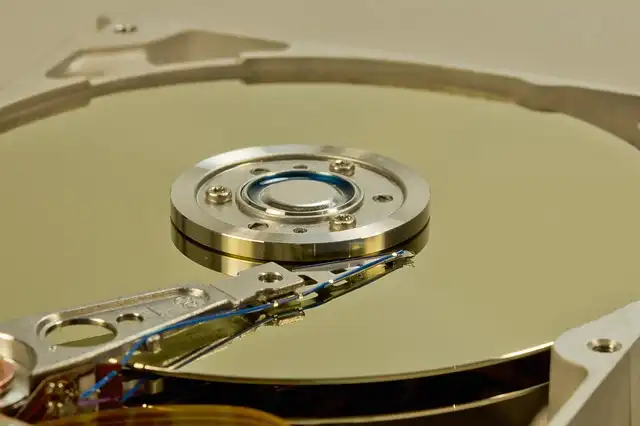
The Ultrastar DC HC6100 UltraSMR integrates NIST-approved quantum-resistant algorithms to protect device firmware and trust chains — a first for production hard disk drives.
Western Digital Corporation (Nasdaq: WDC) announced today the integration of post-quantum cryptography (PQC) into its newest high-capacity Ultrastar UltraSMR hard disk drives — marking a significant milestone as the storage industry’s first production hard drives to implement NIST-approved quantum-resistant algorithms. The move signals a definitive shift in enterprise storage security, from long-term theoretical planning to actual hardware-level deployment.
The announcement, made from San Jose, California, comes as AI infrastructure rapidly evolves from compute-centric deployments to vast, persistent data systems that retain information across every model training run, inference job, and user interaction. In that environment, Western Digital argues that securing data not merely for years but for decades has become a baseline infrastructure requirement — not an optional enhancement.
The specific product at the center of this launch is the Ultrastar DC HC6100 UltraSMR, currently undergoing qualification with multiple hyperscale customers. The company cited strong early interest from large-scale cloud and enterprise operators as evidence of the market’s readiness for quantum-resilient storage architectures.
“Integrating post-quantum cryptography into our Ultrastar enterprise-class drives is part of our commitment to helping customers stay ahead of threats that are already present in the form of HNDL attacks.”
— Dr. Xiaodong (Carl) Che, CTO & SVP, Western DigitalProtecting the Device Trust Chain, Not Just the Data
A key distinction in Western Digital’s implementation is what PQC is actually being used to protect. Unlike conventional encryption-at-rest, this system is specifically designed to secure the device trust chain — covering firmware integrity, secure boot, and key management — from the point of manufacturing all the way through field service. This is a foundational layer of protection, meant to ensure that the drive itself cannot be compromised or have its firmware tampered with through a cryptographic attack.
To accomplish this, Western Digital selected ML-DSA-87 (NIST FIPS 204) as its primary algorithm for high-assurance code signing. This is paired with a dual-signing approach using RSA-3072, combining an established legacy standard with the new quantum-resistant one. The dual-signing strategy is designed to ensure backward compatibility and operational continuity across diverse enterprise fleets without disrupting existing deployments.
- Product Ultrastar DC HC6100 UltraSMR
- PQC Algorithm ML-DSA-87 (NIST FIPS 204)
- Dual-Signing RSA-3072 for backward compatibility
- Protection Scope Device trust chain: firmware integrity & key management (not data-at-rest encryption)
- Standards Alignment NIST FIPS 204 & NSA CNSA 2.0
- Infrastructure PQC-capable PKI and HSM workflows for key issuance, rotation & lifecycle
- Status In qualification with multiple hyperscale customers
The “Harvest Now, Decrypt Later” Threat
Central to Western Digital’s security rationale is the risk of so-called harvest now, decrypt later (HNDL) attacks. In this threat model, adversaries intercept and store encrypted or cryptographically signed data today — even though they cannot currently break it — with the intention of decrypting it once sufficiently powerful quantum computers become available. Because enterprise hard drives often remain in active service for five years or more, data secured by today’s conventional cryptographic algorithms may eventually fall within reach of future quantum systems.
By deploying NIST-standardized quantum-resistant algorithms now, Western Digital is positioning the HC6100 UltraSMR as a hedge against that future risk. The company also aligned its implementation with the U.S. National Security Agency’s Commercial National Security Algorithm Suite 2.0 (CNSA 2.0), a framework guiding organizations toward longer-term cryptographic resilience.
Infrastructure Built for the Quantum Transition
Beyond the drive-level algorithms, Western Digital has also deployed the supporting infrastructure required for enterprise-scale PQC operations. This includes PQC-capable Public Key Infrastructure (PKI) and Hardware Security Module (HSM) workflows to manage the full lifecycle of cryptographic keys — covering issuance, rotation, and revocation. Rollback protection and double-signing mechanisms are designed to allow phased deployment across mixed hardware fleets without breaking operational continuity.
The company framed this as more than a product feature. It described the launch as reflecting a broader industry shift toward embedding quantum-resilient security directly at the foundation of data infrastructure — built in from the start, rather than added through software patches or operational workarounds after the fact.
What Comes Next
Western Digital said it expects to expand PQC capabilities to additional enterprise-class hard drive product lines over time. The HC6100 UltraSMR launch is positioned as the beginning of a broader roadmap rather than a one-off product feature. As quantum security requirements continue to evolve across regulatory and enterprise frameworks, the company is signaling its intent to define the new baseline of trust across its entire enterprise storage portfolio.
For hyperscale operators, cloud providers, and data-intensive enterprises planning infrastructure refresh cycles that will extend well into the next decade, the arrival of production-grade, standards-compliant, quantum-resistant storage hardware represents a meaningful new option — one that addresses a security timeline measured not in months, but in years and decades.