Windows 11 Ends Support for Legacy Printer Drivers in Major Security Overhaul
Windows 11 Ends Support for Legacy Printer Drivers in Major Security Overhaul
- Linux Kernel Removes strncpy After Six Years and 362 Patches
- Linux Kernel Drops 40-Year-Old AppleTalk Protocol — AI-Generated Patch Flood Was the Last Straw
- Apple’s Native Linux Container Tool Has Arrived — But Can It Really Replace Docker?
- 60% of MD5 Password Hashes Can Be Cracked in Under an Hour with a Single GPU
- Dirty Frag: Root Access on Every Major Linux Distribution — No Patch, No Warning
Windows 11 Ends Support for Legacy Printer Drivers in Major Security Overhaul
Microsoft implements long-planned deprecation of V3 and V4 printer drivers, pushing users toward modern IPP-based printing
February 7, 2026
Microsoft has officially ended support for legacy V3 and V4 printer drivers in Windows 11, marking a significant milestone in the company’s multi-year effort to modernize the Windows printing stack and eliminate persistent security vulnerabilities.
The Change Takes Effect
Starting with updates released on January 15, 2026, Windows 11 versions 24H2 and 25H2 no longer support legacy third-party printer drivers through Windows Update. The change affects users who installed the non-security update KB5074105 in January or will install the upcoming February 2026 security updates.
This move represents the culmination of a deprecation plan first announced in September 2023, giving hardware manufacturers and users over two years to prepare for the transition.
Security-First Decision
The primary driver behind this change is security. Legacy printer drivers have been a persistent vulnerability in Windows systems, most notably exploited in the 2021 PrintNightmare attacks (CVE-2021-34527 and related vulnerabilities). These critical flaws allowed attackers to execute arbitrary code with elevated SYSTEM privileges by exploiting weaknesses in how the Windows Print Spooler service handled driver installations.
According to Microsoft, approximately 9% of all Windows security vulnerabilities were related to printer drivers. The deep system access required by traditional print drivers created attack surfaces that were repeatedly exploited by malicious actors to install malware, ransomware, and create backdoors into systems.
“There is no combination of mitigations that is equivalent to setting RestrictDriverInstallationToAdministrators to 1,” Microsoft stated in their technical documentation, acknowledging that the only truly effective solution was to fundamentally change the printing architecture.
The Modern Alternative: IPP and Mopria
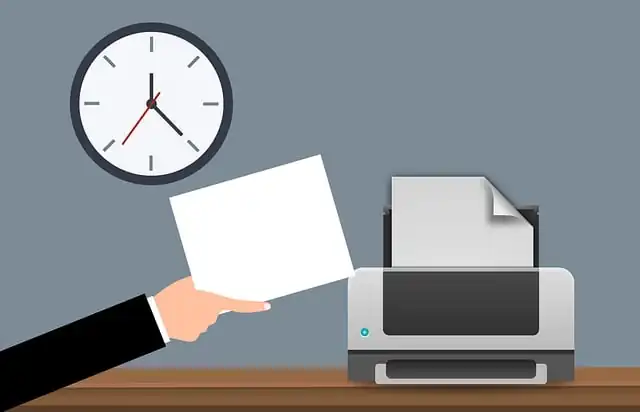
Microsoft is transitioning users to a modern printing platform built on the Internet Printing Protocol (IPP) and Mopria certification standards. This new approach offers several advantages:
- Security: The IPP Class Driver operates with reduced system privileges and eliminates the need for kernel-mode driver installations
- Simplicity: Automatic driver installation without manufacturer-specific installers
- Cross-platform compatibility: Works across all Windows versions and editions
- Maintenance: No need for manufacturers to rebuild drivers for each Windows update
Since Windows 10 21H2, Microsoft has included inbox support for Mopria-compliant printers over both network and USB interfaces. Device customization is now handled through Print Support Apps (PSAs) distributed via the Windows Store, moving functionality from the legacy Win32 framework to the modern UWP development environment.
What This Means for Users
The impact varies depending on your printer and how you use it:
Most users will experience minimal disruption. The majority of modern printers from major manufacturers like Canon, HP, Epson, Samsung, and Xerox are already Mopria-certified and work seamlessly with Microsoft’s IPP Class Driver. Over 6,000 printer models from Mopria Alliance members are supported.
Some features may be affected. Users who rely on advanced printer features may notice limitations with the IPP driver:
- Finishing options (stapling, hole punching)
- Advanced paper tray selection
- Detailed status monitoring
- Color management profiles
- Secure print/pull printing features
For these cases, users can still install manufacturer-provided Print Support Apps to regain functionality, or manually install vendor-supplied drivers outside of Windows Update.
Legacy printers may require action. Older printer models that are not Mopria-certified and lack IPP support may stop functioning entirely. Microsoft recommends:
- Contacting the printer manufacturer for updated drivers or Print Support Apps
- Installing manufacturer drivers directly from vendor websites (not through Windows Update)
- Considering printer replacement if no supported solution exists
The Timeline Ahead
Microsoft’s deprecation follows a staged approach:
-
January 15, 2026 (now implemented): New third-party printer drivers will no longer be published to Windows Update for Windows 11+ and Windows Server 2025+. Existing drivers may only be updated on a case-by-case basis with explicit justification.
-
July 1, 2026: Windows will change internal driver ranking to automatically prefer the Microsoft IPP Class Driver when multiple options are available.
-
July 1, 2027: Third-party printer driver updates via Windows Update will be restricted to security-related fixes only.
Exception Process for Manufacturers
Microsoft has implemented a manual review process for printer driver submissions. Hardware partners must now provide detailed justification documentation in JSON format for any new driver submissions. Exceptions are granted only for specific cases:
- Printers that cannot support Mopria certification due to hardware limitations
- Drivers targeting only Windows 10/Windows Server 2022 (not Windows 11+)
- Native ARM64 printer drivers
- Fax device drivers
- Critical security fixes
- Rare, well-justified technical cases (medical devices, government-mandated protocols, etc.)
Windows Protected Print Mode
Looking forward, Microsoft has also introduced Windows Protected Print Mode (WPP) as an optional security feature in Windows 11 Pro.
When enabled, WPP completely removes third-party printer drivers and restricts all printing to Microsoft’s class drivers. While currently optional, this signals Microsoft’s long-term vision for Windows printing.
What to Do Now
IT administrators and users should:
- Inventory your printers: Check if your devices are Mopria-certified and IPP-compatible
- Test the IPP driver: Verify that critical printing workflows function properly
- Download Print Support Apps: Install manufacturer apps if you need advanced features
- Contact vendors: Reach out to manufacturers for devices that aren’t working
- Plan hardware refresh: Consider replacing truly legacy devices during your next upgrade cycle
The Bigger Picture
This change reflects Microsoft’s broader strategy to modernize Windows 11’s core components for improved reliability, security, and user experience. While the transition may cause short-term inconvenience for some users, the long-term benefits include a more secure, stable, and maintainable printing infrastructure.
The elimination of legacy printer drivers represents a significant reduction in Windows’ attack surface—particularly important as remote work and distributed printing environments become increasingly common. By forcing the ecosystem toward modern standards, Microsoft aims to prevent future PrintNightmare-style exploits while simplifying the printing experience for the majority of users.
For most Windows 11 users, the transition will be largely transparent. For the small percentage affected by compatibility issues, the path forward involves either updating to modern printer hardware or working with manufacturers to implement Print Support Apps—an investment in security that Microsoft deems essential for the platform’s future.
For detailed technical information, IT administrators can review Microsoft’s official documentation at https://learn.microsoft.com/windows-hardware/drivers/print/end-of-servicing-plan-for-third-party-printer-drivers-on-windows