World’s Largest Motor Maker Nidec Hit by Double Scandal: 1000+ Quality Violations Erupt Atop a ¥160 Billion Accounting Crisis
World’s Largest Motor Maker Nidec Hit by Double Scandal: 1000+ Quality Violations Erupt Atop a ¥160 Billion Accounting Crisis
- Linux Kernel Removes strncpy After Six Years and 362 Patches
- Linux Kernel Drops 40-Year-Old AppleTalk Protocol — AI-Generated Patch Flood Was the Last Straw
- Apple’s Native Linux Container Tool Has Arrived — But Can It Really Replace Docker?
- 60% of MD5 Password Hashes Can Be Cracked in Under an Hour with a Single GPU
- Dirty Frag: Root Access on Every Major Linux Distribution — No Patch, No Warning
World’s Largest Motor Maker Nidec Hit by Double Scandal: 1,000+ Quality Violations Erupt Atop a ¥160 Billion Accounting Crisis
Japan’s Nidec Corporation — a key automotive motor supplier to global automakers — has disclosed over 1,000 suspected quality violations, sending shares plunging 18% and deepening a compliance collapse that began with one of Japan Inc.’s largest accounting scandals in recent memory.
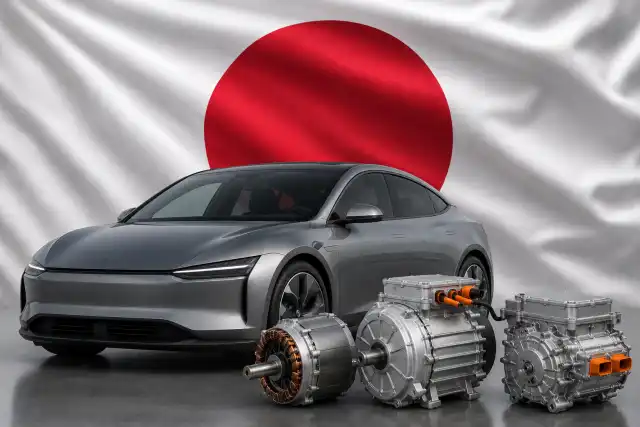
Nidec Corporation, the Kyoto-based manufacturer widely regarded as the world’s largest maker of precision motors, is reeling from a widening double scandal: a sweeping accounting fraud that has already erased ¥160.7 billion in net profit, now compounded by the disclosure of more than 1,000 suspected quality violations spanning its home appliance and automotive motor divisions.
The company’s stock fell as much as 18% in Tokyo trading on May 13, 2026 — its steepest single-session decline in six months — after Nidec confirmed the quality misconduct in an official statement and announced the formation of an external investigation committee. The twin crises have stripped the company of much of its leadership and are raising fundamental questions about the “Made in Japan” quality reputation that Nidec helped build over five decades.
Quality Violations: What Nidec Actually Confirmed
According to Nidec’s own official disclosure dated May 13, 2026, the vast majority of identified violations — 96.7% — involved unauthorized changes to materials, production processes, or product designs without obtaining required customer approval. The remaining cases involved improper handling of testing and inspection data, and mislabeling of product manufacturing locations.
The affected products span two primary segments: the home appliances division — primarily within the Global Appliances Division of its Appliance, Commercial & Industrial Motor Business Unit (ACIM GA), Nidec Instruments, and Nidec Technomotor — and the automotive components segment. Nidec stated that no issues have been identified that would immediately affect product functionality or safety, and that it has begun visiting customers one by one to explain the situation and apologize.
“Along with the accounting irregularities, we deeply apologize for causing significant trouble to everyone involved.” — Mitsuya Kishida, Nidec President, press conference May 13, 2026
An investigation committee composed of outside legal experts was formally established on May 13, with a mandate to determine all facts and causes by the end of August 2026. Critically, these quality violations were not discovered through routine oversight — they emerged during the internal investigation into the prior accounting scandal, suggesting the governance breakdown runs deep across the organization.
The Accounting Scandal: A Crisis That Started in 2025
The current quality scandal is the second major blow to hit Nidec in under a year. In September 2025, the company disclosed a sweeping accounting fraud that ultimately led to a third-party investigation committee delivering its final report on February 27, 2026. That report confirmed wide-ranging misconduct across many Nidec Group business units.
The confirmed damage to net profit stands at ¥160.7 billion through the first quarter of fiscal 2025. The schemes included avoiding recognition of valuation losses on obsolete raw materials and finished goods, improperly avoiding impairment losses based on unrealistic sales plans, overstating inventory values, misreporting customs valuations, and booking government subsidies and labor costs in ways that artificially inflated reported profits.
Nidec’s own investigation traced the root cause to a corporate culture defined by founder Shigenobu Nagamori’s demand for performance targets that, according to investigators, were “severely detached from reality.” A tacit internal norm of achieving targets by any means necessary permeated the organization, while internal and external audit mechanisms failed to catch or correct the misconduct.
A Leadership Exodus
The cascading scandals have devastated Nidec’s executive ranks. Founder and former CEO Nagamori stepped down as representative director and global group representative in late 2025, and resigned as honorary chairman in February 2026, stating publicly that he felt “extremely guilty” about the matter. In the wake of his departure, Chairman Hiroshi Kobe, Chief Financial Officer Akinobu Samura, and Vice President Yoshihisa Kitao also resigned.
On April 30, 2026, the Japan Exchange Group announced a ¥91.2 million penalty against Nidec for violating its listing agreement, citing breaches of conduct rules. The Tokyo Stock Exchange had already designated Nidec’s stock as a “security on special alert” in October 2025 — a designation that signals a requirement for substantial improvements to internal management systems and carries real delisting risk.
Timeline of the Collapse
- September 2025 Accounting fraud discovered; Nidec forms third-party investigation committee. TSE places stock on “special alert” (October 28, 2025).
- Late 2025 Founder Shigenobu Nagamori resigns as representative director and global group representative.
- February 27, 2026 Third-party committee delivers investigation report confirming widespread accounting misconduct across Nidec Group entities.
- March 3, 2026 Nidec discloses ¥250 billion in assets subject to potential impairment; chairman and CFO resign.
- April 17, 2026 Final supplemental investigation report received; accounting corrections ongoing back to March 2022.
- April 30, 2026 TSE issues ¥91.2 million penalty for listing rule violations.
- May 12–13, 2026 Nikkei Asia breaks story of 1,000+ quality violations. Nidec officially confirms misconduct; shares fall 18%. External legal committee established.
- End of August 2026 Target date for external committee to complete quality fraud investigation.
Nidec’s Role in the Global Motor Supply Chain
Founded in Kyoto in 1973, Nidec grew from a small motor factory into a global conglomerate with over 100,000 employees across more than 340 subsidiaries in 40-plus countries. It is widely recognized as the world’s largest integrated motor manufacturer, with annual sales of approximately ¥2.6 trillion. Its business spans precision miniature motors, home appliance and industrial motors, automotive motors and drive systems, and components for medical and aerospace applications.
The company holds dominant global market positions, including over 70% share in spindle motors for hard disk drives and the top global position in automotive electric power steering motors. Automotive components now represent approximately a quarter of total sales, making Nidec a Tier 1 supplier embedded in the supply chains of major automakers including BMW, Toyota, Volkswagen, and General Motors, among others.
Market Fallout and Customer Response
Following the disclosure, Nidec’s shares tumbled as much as 18% on May 13 — the largest intraday drop in six months — and are now trading at roughly one-third of their level five years ago. According to reports, some customers have suspended new orders and begun seeking alternative suppliers, though the full scope of commercial fallout is still emerging.
The company has also been forced to delay its earnings release for the fiscal year ending March 2026, as it works to correct financial results stretching back to March 2022. No year-end dividend will be paid for fiscal 2026 due to the ongoing financial uncertainty.
A Pattern Across Japanese Manufacturing
Nidec’s crisis arrives against a backdrop of recurring quality and data integrity scandals in Japanese industry. In January 2024, Toyota Automatic Loom Works was found to have falsified engine certification data. By mid-2024, all five major Japanese automakers — Toyota, Honda, Mazda, Yamaha, and Suzuki — had been implicated in certification data irregularities. A survey by Japanese analytics firm Fureitai found that roughly one in four Japanese companies reported some form of compliance misconduct over the preceding five years.
For Nidec specifically, the damage extends well beyond financial figures. The company built its reputation on the back of precision manufacturing and an ethos of relentless performance. That same performance pressure, investigators concluded, is precisely what created the conditions for systemic fraud. How Nidec reconstructs its governance, restores customer trust, and stabilizes its finances will be one of the defining corporate turnaround stories — or cautionary tales — of 2026.
This article is based on verified primary sources including Nidec Corporation’s official disclosures (May 13, 2026), Nikkei Asia, Bloomberg, The Japan Times, Japan Today, and Nippon.com. Claims regarding Nidec’s relationship with Tesla have been independently reviewed and reflect available public evidence as of the publication date.