WD Reinvents the Hard Drive: 100TB Roadmap and AI-Era Performance Breakthroughs
WD Reinvents the Hard Drive: 100TB Roadmap and AI-Era Performance Breakthroughs
- Linux Kernel Removes strncpy After Six Years and 362 Patches
- Linux Kernel Drops 40-Year-Old AppleTalk Protocol — AI-Generated Patch Flood Was the Last Straw
- Apple’s Native Linux Container Tool Has Arrived — But Can It Really Replace Docker?
- 60% of MD5 Password Hashes Can Be Cracked in Under an Hour with a Single GPU
- Dirty Frag: Root Access on Every Major Linux Distribution — No Patch, No Warning
WD Reinvents the Hard Drive: 100TB Roadmap and AI-Era Performance Breakthroughs
SAN JOSE & NEW YORK — In a major strategic shift aimed at the AI-driven data economy, Western Digital (officially rebranding its corporate identity to WD) unveiled a comprehensive multi-year technology roadmap at its Innovation Day 2026 on February 3.
The announcement signals a new era for Hard Disk Drives (HDDs), positioning them not just as low-cost storage, but as high-performance components capable of challenging SSDs in massive AI data lakes.
1. The Capacity Race: 40TB Now, 100TB by 2029
WD is pursuing a “Dual-Path” strategy, utilizing both ePMR (energy-assisted Perpendicular Magnetic Recording) and HAMR (Heat-Assisted Magnetic Recording) to give customers flexibility.
-
40TB UltraSMR: Currently the world’s highest capacity HDD, this drive is in customer qualification with volume production scheduled for H2 2026.
-
60TB Milestone: WD plans to extend the ePMR platform to 60TB by leveraging innovations originally developed for HAMR, allowing for higher density without increased power draw.
-
The 100TB Horizon: True HAMR-based drives are expected to ramp in 2027, with the roadmap officially targeting 100TB capacities by 2029.
Note: By using a common architecture for both ePMR and HAMR, WD allows hyperscale data centers to transition between technologies without massive infrastructure overhauls.
2. Breaking the Bandwidth Barrier
Historically, HDDs have struggled with slow I/O relative to their massive size. WD’s new “High Bandwidth” technologies aim to bridge the gap with QLC NAND flash.
High Bandwidth Drive (HBD) Technology
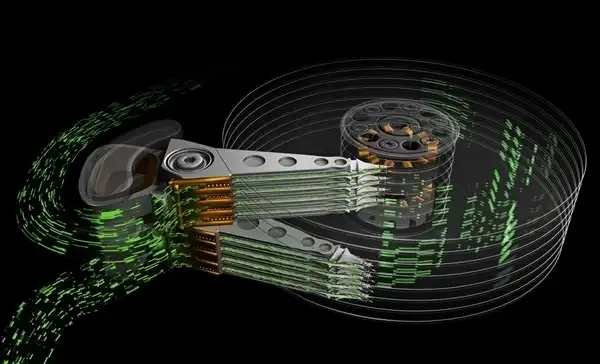
Using a high-precision Triple-Stage Actuator (TSA), HBD allows a drive to read and write from multiple heads and tracks simultaneously.
-
Current Phase: Already in customer validation, offering 2x the bandwidth of traditional drives.
-
Future Path: Scalable up to 8-track parallel processing, potentially increasing bandwidth by 8x.
Dual Pivot Technology
To be introduced in 2028, this adds a second independent actuator system.
-
Unlike previous dual-actuator designs, Dual Pivot allows for more platters (higher capacity) while doubling sequential I/O performance.
-
The Combined Result: By pairing HBD and Dual Pivot, WD expects to deliver a 4x overall increase in sequential I/O, keeping the “Performance-per-TB” metric stable even as drive sizes balloon to 100TB.
3. Power-Optimized “Active Cold” Storage
As AI training generates mountains of “cold” data that must still be accessible in seconds (rather than the hours required for tape), WD is launching a dedicated Power-Optimized HDD series.
-
Efficiency: Designed to reduce power consumption by 20% compared to standard enterprise drives.
-
Trade-off: These drives sacrifice some random I/O performance in exchange for lower Total Cost of Ownership (TCO) and better sustainability.
-
Availability: Planned for customer qualification in 2027.
Summary of Key Milestones
| Milestone | Expected Timing | Key Technology |
| 40TB Volume Production | H2 2026 | UltraSMR / ePMR |
| 60TB Drive Arrival | 2027 | Extended ePMR |
| Power-Optimized Series | 2027 (Qual) | 20% Power Reduction |
| Dual Pivot Launch | 2028 | 2x Sequential I/O |
| 100TB Mass Delivery | 2029 | HAMR |
The Verdict: Can HDDs Survive the AI Era?
While NAND flash (SSDs) has taken over the consumer market, WD’s roadmap suggests that for data centers, the HDD is entering a “second youth.”
By combining massive 100TB density with 8x bandwidth gains and specialized power-saving tiers, WD is ensuring that the spinning disk remains the backbone of the AI-driven world.