Google’s OS Revolution: “Aluminium OS” to Replace ChromeOS by 2034
Google’s OS Revolution: “Aluminium OS” to Replace ChromeOS by 2034, Aiming for Unified AI-Powered Future
- Linux Kernel Removes strncpy After Six Years and 362 Patches
- Linux Kernel Drops 40-Year-Old AppleTalk Protocol — AI-Generated Patch Flood Was the Last Straw
- Apple’s Native Linux Container Tool Has Arrived — But Can It Really Replace Docker?
- 60% of MD5 Password Hashes Can Be Cracked in Under an Hour with a Single GPU
- Dirty Frag: Root Access on Every Major Linux Distribution — No Patch, No Warning
Google’s OS Revolution: “Aluminium OS” to Replace ChromeOS by 2034, Aiming for Unified AI-Powered Future
Google is embarking on an ambitious operating system overhaul, with newly surfaced court documents and recent announcements confirming its plan to phase out ChromeOS by 2034.
Its successor, internally codenamed “Aluminium OS” (often referred to as ALOS), is poised to merge the best of Android and ChromeOS into a powerful, AI-first platform designed to challenge the dominance of Windows and macOS.
The existence and strategic importance of Aluminium OS were brought to light through unsealed court documents from the Google search antitrust case, providing an unprecedented look into Google’s long-term operating system strategy.
These revelations were further corroborated by official statements from Google executives at the Qualcomm Snapdragon Summit in late 2025.
The Rise of Aluminium OS: A Unified Vision
Rick Osterloh, Google’s Senior Vice President of Devices & Services, officially unveiled the concept of a unified Android-ChromeOS experience at the Snapdragon Summit. While not explicitly naming “Aluminium OS” at the time, Osterloh emphasized Google’s commitment to “bringing Android to the PC market” with a full-stack, AI-integrated solution. The court documents confirm that Aluminium OS is indeed the vehicle for this vision, designed to offer a robust desktop experience powered by the extensive Android app ecosystem.
“Aluminium OS represents Google’s answer to the evolving landscape of personal computing,” explained a Google insider familiar with the project. “It’s about creating a cohesive, high-performance environment where AI is seamlessly integrated across all user interactions, from productivity to entertainment.”
ChromeOS’s Sunset: A Phased Transition by 2034
Perhaps the most significant revelation from the court proceedings is the concrete timeline for the deprecation of ChromeOS. Google’s legal team affirmed that the company plans to phase out ChromeOS by 2034. This lengthy transition period is crucial, as it allows Google to honor its industry-leading commitment of providing 10 years of software updates for existing ChromeOS devices.
“The 2034 timeline is a testament to Google’s commitment to its current user base,” a Google lawyer reportedly stated in court. “Support timelines vary by region and device lifespan, and we are ensuring a smooth, extended transition period.” This means that Chromebooks purchased even in 2024 or 2025 will continue to receive official ChromeOS updates until at least 2034 or 2035, alleviating immediate concerns for current owners.
Release Timeline: A Strategic Adjustment
While the Snapdragon Summit hinted at an ambitious 2026 release for the new OS, the court documents provide a more nuanced and perhaps realistic timeline.
According to the filings, Aluminium OS is slated to begin commercial testing by the end of 2026, with an official public release, particularly for enterprise and education segments, expected in 2028.
This adjustment likely reflects the complexity of integrating two major operating system architectures and ensuring stability across a diverse hardware ecosystem.
Why the Shift? AI, App Ecosystem, and Antitrust Implications
The strategic pivot to Aluminium OS is driven by several key factors:
-
AI Integration: With the rapid advancement of generative AI, particularly Google’s Gemini models, a more powerful and integrated operating system is essential. Aluminium OS is being built from the ground up with deep AI capabilities, promising a fundamentally smarter and more intuitive user experience.
-
Unified App Ecosystem: By leveraging the Android stack, Aluminium OS will gain native access to millions of high-quality applications available on the Google Play Store, eliminating the compatibility challenges often associated with ChromeOS’s reliance on web apps and containerized Android apps. This is expected to offer superior performance and a richer user experience.
-
Competitive Edge: This move positions Google to directly compete with Windows and macOS by offering a modern, feature-rich, and AI-powered desktop experience, particularly appealing to users seeking seamless integration with Google’s broader services.
-
Antitrust Defense: Curiously, the court documents also revealed that the very existence of ChromeOS—and the technical challenges of disentangling it from the Chrome browser—played a role in the judge’s decision not to force Google to divest Chrome during the antitrust trial. This highlights the intricate web of Google’s product ecosystem.
The Future is Aluminium
As Google continues to develop Aluminium OS, the tech world will be watching closely.
This ambitious undertaking signifies a major strategic shift, promising a unified, AI-centric future for Google’s computing platforms.
While ChromeOS will gradually fade, its legacy will undoubtedly inform the next generation of Google’s operating system, paving the way for a new era of innovation.
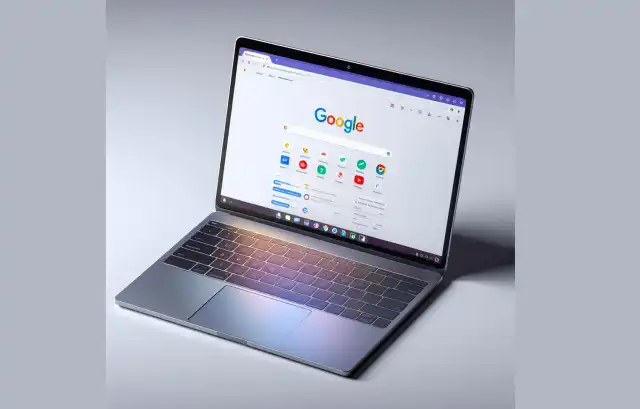
Image: Conceptual render of “Aluminium OS” UI, showing a blend of ChromeOS’s minimalist aesthetic with Android’s vibrant app icons and a prominent AI assistant interface.