AMD Admits It Can’t Catch Up with NVIDIA Yet: Perfect Radeon Graphics Cards Will Have to Wait Several More Generations — RX 9070 GRE Tests the Waters First
- 60% of MD5 Password Hashes Can Be Cracked in Under an Hour with a Single GPU
- Dirty Frag: Root Access on Every Major Linux Distribution — No Patch, No Warning
- Ubuntu 26.04 LTS (Resolute Raccoon): The Most Ambitious Ubuntu LTS in a Decade
- Proton Mail: Data Transferred to FBI Again!
- How Close Are Quantum Computers to Breaking RSA-2048?
- How to Prevent Ransomware Infection Risks?
- What is the best alternative to Microsoft Office?
AMD Admits It Can’t Catch Up with NVIDIA Yet: Perfect Radeon Graphics Cards Will Have to Wait Several More Generations — RX 9070 GRE Tests the Waters First
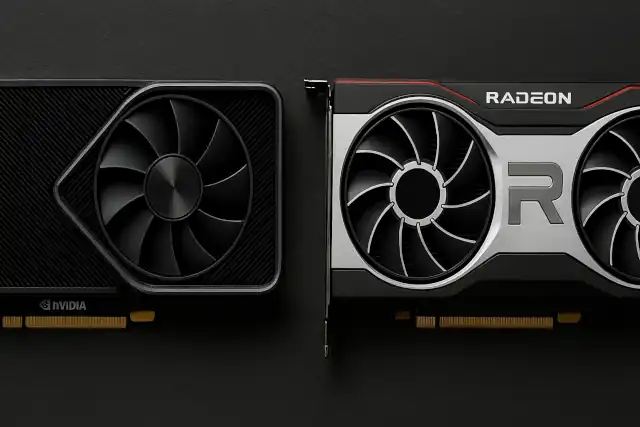
AMD’s long-China-exclusive Radeon RX 9070 GRE goes global at $549, as executives concede the road to a perfect Radeon platform runs through multiple future generations.
AMD brought the Radeon RX 9070 GRE to the global market on June 1–2, 2026, at a suggested retail price of $549 — the same price slot the standard RX 9070 originally occupied before AMD quietly raised that card to $619. While the launch gives budget-conscious PC gamers a fresh RDNA 4 option, it also marks a candid moment for the company: AMD’s own leadership has openly acknowledged that building a truly “perfect” Radeon graphics card platform will take several more generations of hardware.
RX 9070 GRE: Specs & What’s Cut
The RX 9070 GRE is built on the Navi 48 XL silicon — a cut-down variant of the same 4nm die used in the full RX 9070 and RX 9070 XT. The card activates 48 Compute Units (versus 56 in the standard RX 9070 and 64 in the XT), a reduction of roughly 14% and 25% respectively. To compensate for the lower CU count, AMD tuned the boost clock upward to 2.79 GHz — higher than the standard RX 9070’s 2.52 GHz.
The memory configuration represents the most meaningful trade-off: 12 GB of GDDR6 on a 192-bit bus delivers 432 GB/s of bandwidth, compared to the full RX 9070’s 16 GB on a 256-bit bus. Independent reviewers have noted that this 12 GB ceiling creates a framebuffer bottleneck at 4K and under heavy ray-tracing loads above 1080p, making the card best suited to 1440p gaming. AMD claims the RX 9070 GRE averages 22% faster than the GeForce RTX 5060 Ti 16GB across more than 40 titles at 1440p Ultra settings.
The card is available through AMD board partners including ASUS (PRIME RX 9070 GRE O12G), Sapphire (PULSE Radeon RX 9070 GRE Gaming OC), and XFX (Swift RX 9070 GRE), with AMD offering no reference design for this SKU. It connects via PCIe 5.0 ×16 and supports both DisplayPort 2.1a and HDMI 2.1b.
The “Ryzen Moment” AMD Wants — But Admits Is Still Far Away
Beyond the hardware specs, the RX 9070 GRE launch arrived alongside a striking admission from AMD’s graphics leadership. David McAfee, AMD’s Corporate Vice President and General Manager of the Graphics Business Unit, stated plainly that building the company’s ideal Radeon platform is a multi-generation journey.
Sure, it’s going to take us generations to build the perfect Radeon platform — but the core of Radeon has to be all about value to the end user and what they get out of that system.
David McAfee — VP & GM, AMD Graphics Business UnitAMD’s long-term aspiration is to replicate the success of its Ryzen CPU line within the graphics card market. Ryzen’s debut in 2017 transformed the CPU landscape, eroding Intel’s dominance through a combination of chiplet engineering, competitive pricing, and strong performance-per-dollar. AMD is hoping to engineer a similar reversal in discrete GPUs — what some have dubbed the company’s “Ryzen moment” for Radeon.
However, the GPU market presents far steeper obstacles. While CPU performance is largely governed by core counts, clock speeds, and cache design, GPU competitiveness hinges on a deeply intertwined mix of rasterization throughput, ray-tracing hardware, AI compute, software ecosystems, and developer integration. These are areas where NVIDIA has compounded advantages built over years.
NVIDIA’s Stranglehold on the Discrete GPU Market
The competitive backdrop is sobering for AMD. According to analyst data from Jon Peddie Research, NVIDIA claimed approximately 94% of discrete desktop GPU shipments in 2025, while AMD’s Radeon division fell to around 5–6% — a historic low. AMD’s market share had already been under pressure before the RDNA 4 generation arrived; even the well-reviewed RX 9070 XT, which competes creditably against NVIDIA’s RTX 5070 in rasterization, could not meaningfully move the needle on overall share.
Jack Huynh, AMD’s Senior Vice President and General Manager of the Computing and Graphics Business Group, has stated that increasing market share is one of the central goals for future RDNA product generations. AMD’s strategy is to prioritize the mainstream and high-end segments — not the extreme flagship tier where NVIDIA’s RTX 5090 and RTX 5080 command enormous margins — and instead win on value and software.
FSR 4.1 Expands to Older Radeon Hardware
In parallel with the RX 9070 GRE launch, AMD confirmed a significant expansion of its FSR 4.1 upscaling technology. Announced by Jack Huynh on May 14, 2026, FSR 4.1 — which uses machine-learning-based upscaling previously exclusive to RDNA 4’s second-generation AI accelerators — will extend to older Radeon architectures.
Owners of RDNA 3-based Radeon RX 7000 series cards will receive FSR 4.1 support starting in July 2026, compatible out of the box with over 300 supported game titles at launch. The implementation was specifically optimized for RDNA 3’s first-generation AI accelerators using INT8 instructions, enabling ML-based upscaling without requiring the FP8 hardware found in RDNA 4. Radeon RX 6000 series owners (RDNA 2 architecture) will receive their FSR 4.1 support in early 2027.
Additionally, AMD plans to release FSR Diamond, a next-evolution upscaling technology intended to further close the gap with NVIDIA’s DLSS, though specific timelines and technical details for FSR Diamond have not yet been disclosed.
The Long Road Ahead
The RX 9070 GRE’s global rollout is a pragmatic move: by repurposing a China-exclusive SKU to fill the $549 price gap left by the RX 9070’s price increase, AMD avoids developing a new chip while maintaining lineup breadth. It is, in many ways, a holding action — useful for consumers who want RDNA 4 performance at a lower cost, but not the blockbuster product launch that could alter AMD’s trajectory in the discrete GPU market.
AMD’s candid acknowledgment that a “perfect Radeon platform” is still multiple generations away should be read less as defeat and more as a road map: RDNA 4 represents an earnest step forward, the FSR 4.1 expansion signals a maturing software strategy, and the company’s focus on mainstream value could gradually rebuild trust with consumers who have been swayed by NVIDIA’s ecosystem. Whether the Radeon division can pull off its Ryzen moment remains one of the defining questions of the current GPU generation.