Google Introduces “Googlebook”: A New Laptop Category Powered by Android, ChromeOS, and Gemini AI
Google Introduces “Googlebook”: A New Laptop Category Powered by Android, ChromeOS, and Gemini AI
- Linux Kernel Removes strncpy After Six Years and 362 Patches
- Linux Kernel Drops 40-Year-Old AppleTalk Protocol — AI-Generated Patch Flood Was the Last Straw
- Apple’s Native Linux Container Tool Has Arrived — But Can It Really Replace Docker?
- 60% of MD5 Password Hashes Can Be Cracked in Under an Hour with a Single GPU
- Dirty Frag: Root Access on Every Major Linux Distribution — No Patch, No Warning
Google Introduces “Googlebook”: A New Laptop Category Powered by Android, ChromeOS, and Gemini AI
Unveiled at The Android Show: I/O Edition today, the Googlebook merges Google’s two operating systems into a single AI-first laptop platform — with a Gemini-powered cursor, custom widgets, and deep Android phone integration.
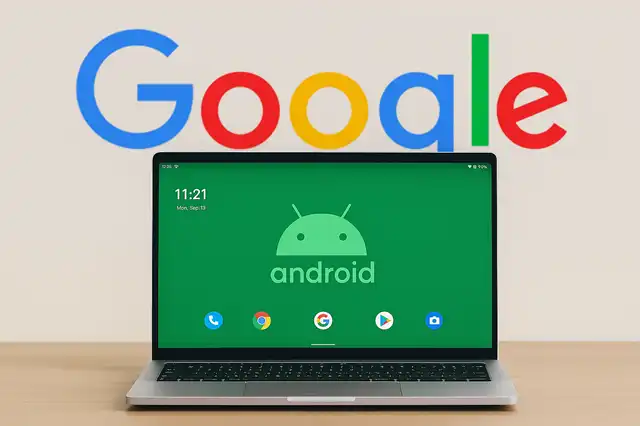
Google has officially unveiled the Googlebook, a new category of laptops that brings together the best of Android and ChromeOS under a single Gemini-powered platform. The announcement was made today at The Android Show: I/O Edition, positioning the Googlebook as a fundamental reimagining of the laptop experience — not as a traditional operating system, but as an AI-native “intelligent system.”
The product marks a significant strategic shift for Google, which has maintained separate ChromeOS and Android ecosystems for years. The Googlebook merges both, combining Android’s vast app ecosystem and modern OS architecture with ChromeOS’s deep integration of the Chrome browser — all unified by Gemini intelligence woven throughout the system.
“We’re bringing together the best of Android and ChromeOS. The result is Googlebook: a new category of laptops built with Gemini’s helpfulness at its core.”
— Google Official Blog, May 12, 2026Magic Pointer: Gemini at Your Cursor
The most visible and distinctive feature of the Googlebook is the Magic Pointer, developed in partnership with the Google DeepMind team. The feature brings Gemini’s contextual intelligence directly to the mouse cursor — simply wiggle the pointer and Gemini activates, offering relevant suggestions based on whatever is currently on screen.
Practical use cases demonstrated by Google include pointing at a date within an email to instantly set up a calendar meeting, or simultaneously selecting two images — such as a living room photo and a piece of furniture — to have Gemini visualize them together. The goal, Google says, is to reduce complex multi-step tasks to just a few clicks.
Create Your Widget: A Personalized AI Desktop
Another headline feature is Create Your Widget, which also appears on Android phones. Users can prompt Gemini in plain language to generate custom desktop widgets that pull information from the web, Gmail, Calendar, and other Google services.
Google demonstrated a travel-planning widget that consolidates flight bookings, hotel reservations, restaurant suggestions, and a trip countdown into a single, automatically updated dashboard on the desktop — all created with a single verbal instruction.
Deep Android Phone Integration
The Googlebook is designed to function as a natural extension of an Android smartphone. Two key features power this integration:
Cast My Apps allows users to open and interact with applications installed on their Android phone directly on the Googlebook’s screen — no local app installation or emulation required. Google specifically cited food delivery apps and language learning applications as examples of apps users could control from the laptop without picking up their phone.
Quick Access brings the phone’s file system directly into the Googlebook’s file browser. Users can search, preview, and insert files stored on their phone into documents or applications on the laptop without email forwarding, USB cables, or cloud sync.
Glowbar: A Shared Hardware Identity
On the hardware side, every Googlebook device will feature a distinctive design element called the Glowbar — a luminous strip embedded in the laptop’s exterior casing. Google describes it as “both functional and beautiful,” though the company has not yet specified what actions or states the Glowbar will visually indicate. It is widely expected to react to Gemini interactions, mirroring the animated light behavior already used by Google Assistant and Gemini on Android phones.
The Glowbar serves as a unifying identity across all Googlebook hardware, regardless of manufacturer — allowing users to instantly recognize a Googlebook device in the wild.
Hardware Partners & Availability
Google is not manufacturing Googlebook hardware itself. Instead, it is partnering with five major PC manufacturers — Acer, ASUS, Dell, HP, and Lenovo — to produce the first wave of devices. Each partner will offer devices in a variety of form factors, sizes, and price points, all built with what Google describes as “premium craftsmanship and materials.”
Google is explicit that today’s announcement is a sneak peek, with full product details and availability expected closer to the launch window. The first Googlebook devices are slated to arrive this fall. More information is available at googlebook.com.
This article is based on information disclosed at Google’s Android Show: I/O Edition on May 12, 2026, and reporting from 9to5Google, The Verge, Axios, VideoCardz, and Google’s official blog. Some product details remain unconfirmed pending the full launch.