Qualcomm Launches Snapdragon C Processor Targeting the $300 Windows Laptop Market
- Linux Kernel Removes strncpy After Six Years and 362 Patches
- Linux Kernel Drops 40-Year-Old AppleTalk Protocol — AI-Generated Patch Flood Was the Last Straw
- Apple’s Native Linux Container Tool Has Arrived — But Can It Really Replace Docker?
- 60% of MD5 Password Hashes Can Be Cracked in Under an Hour with a Single GPU
- Dirty Frag: Root Access on Every Major Linux Distribution — No Patch, No Warning
Qualcomm Launches Snapdragon C Processor Targeting the $300 Windows Laptop Market
Unveiled at Computex 2026, the budget ARM chip aims to bring all-day battery life and on-device AI to entry-level PCs — but is Windows ready to compete at this price?
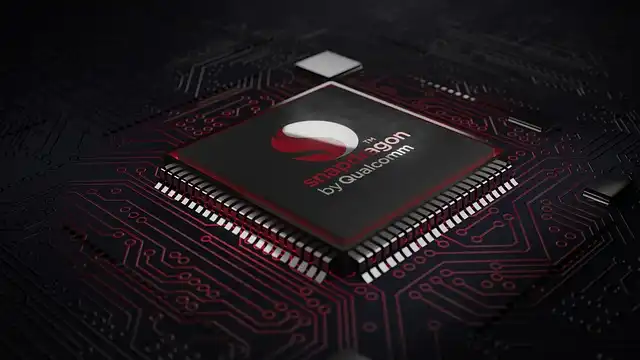
Qualcomm has officially unveiled its Snapdragon C platform at Computex 2026, a new entry-level processor designed to push Windows on ARM into genuinely affordable territory — targeting laptops priced at $300 and above. The announcement comes as Apple’s $599 MacBook Neo (or $499 for students) has reset consumer expectations for what a low-cost laptop should deliver, putting renewed pressure on Windows PC manufacturers to respond.
“We’re delivering modern computing experiences that help our ecosystem reach new audiences and expanding access to reliable, efficient technology for students, families, and small businesses.”
— Qualcomm, Official Statement, Computex 2026
Qualcomm describes the Snapdragon C as designed for “smooth web browsing, video streaming, productivity tasks, and video calls,” paired with fanless or low-noise thermal designs and all-day battery life. The chip includes an integrated Neural Processing Unit (NPU) capable of running some AI workloads locally on the device — bringing on-device AI down to the budget tier for the first time in Qualcomm’s PC lineup.
Not a Copilot+ PC Chip
There is a critical distinction buyers should be aware of: while the Snapdragon C includes an NPU, its AI compute performance does not meet Microsoft’s threshold for Copilot+ PC certification. That program requires a minimum of 40 TOPS (trillion operations per second) of NPU performance. Features such as Recall, Cocreator, and other local AI tools exclusive to Copilot+ will therefore not be available on Snapdragon C devices. Consumers seeking those capabilities will need to look at laptops powered by the Snapdragon X series or the latest Intel or AMD processors that meet the requirement. The Aspire Go 15 does, however, include a Copilot key on the keyboard.
Architecture: Kryo Cores, Not Oryon
In terms of silicon design, the Snapdragon C is built around Qualcomm’s Kryo CPU cores — the same architecture that has powered Qualcomm’s mobile and mid-range platforms for years. This is a significant difference from the Oryon cores used in the premium Snapdragon X series, which were custom-designed specifically for PC workloads and represent Qualcomm’s highest-performance ARM architecture for laptops.
The choice of Kryo cores makes the Snapdragon C’s positioning clear: this is a platform that adapts mobile efficiency to the entry-level PC market, rather than a downmarket version of a high-end PC chip. It prioritises power efficiency, thermal performance, and cost over raw computational throughput.
First Device: Acer Aspire Go 15
Acer is the first manufacturer to announce a device built on the Snapdragon C platform. The Aspire Go 15 (model AG15-Q31P) is a 15.6-inch mainstream laptop featuring a Full HD (1920×1080) display, a 1080p webcam, and connectivity via Wi-Fi 6E, Bluetooth 5.4, dual full-function USB-C ports, USB-A, and HDMI 1.4. It runs Windows 11 Home.
Acer Aspire Go 15 — Key Specifications
Acer has not yet announced a price or release date for the Aspire Go 15. HP and Lenovo are also confirmed as OEM partners for the Snapdragon C platform, though neither has announced specific products yet. Qualcomm has indicated that Snapdragon C laptops are expected to reach consumers later in 2026.
The $300 Floor — and Its Trade-offs
Qualcomm’s positioning of Snapdragon C for devices “priced $300 and above” raises a familiar concern in the PC industry: at that price floor, compromises are inevitable. Industry observers have noted that while confirmed specs for the Aspire Go 15 list up to 8GB of RAM, actual $300-tier configurations may ship with as little as 4GB — a spec that was largely phased out of mainstream Windows laptops in recent years. The exact resolution of screens, quality of keyboards, chassis materials, and storage capacities at the lowest price points will only become clear as product configurations are formally announced.
The Aspire Go 15’s all-plastic construction is in keeping with its budget positioning, contrasting sharply with the MacBook Neo’s aluminium build — the Apple device that Qualcomm and PC manufacturers are most directly aiming to challenge. One analyst source (Windows Forum) put it plainly: a chip alone cannot fix a bad panel, cramped chassis, or an inadequate RAM allocation — the risk is that OEMs treat Snapdragon C as licence to build the cheapest possible laptop rather than the best possible $300 laptop.
Can Qualcomm Win the Budget Battle?
The Snapdragon C announcement represents a meaningful expansion of Qualcomm’s PC strategy. The company has previously focused its Windows ARM efforts on the premium end of the market — Snapdragon X Elite and X Plus chips power Copilot+ PCs priced from around $600. With Snapdragon C, Qualcomm is attempting to replicate the efficiency and quiet operation story of Windows on ARM at a price point previously dominated by Chromebooks and — now — Apple’s budget MacBook Neo.
Whether the Snapdragon C can succeed where past attempts at cheap Windows laptops have stumbled will ultimately depend on execution: not just from Qualcomm, but from the OEMs assembling the devices and from Microsoft in ensuring that Windows 11 delivers a genuinely modern, responsive experience on modest hardware. The history of budget Windows PCs — from netbooks to the early ARM experiments — is littered with devices that felt like warnings rather than products. Snapdragon C, with better silicon, a more mature operating system, and stronger software ecosystems, has a better chance than any of its predecessors. But the proof will be in the product.