Tesla Cuts Model 3 to US$29,000 — And Canada’s EV Landscape Just Changed
Tesla Cuts Model 3 to US$29,000 — And Canada’s EV Landscape Just Changed
- Linux Kernel Removes strncpy After Six Years and 362 Patches
- Linux Kernel Drops 40-Year-Old AppleTalk Protocol — AI-Generated Patch Flood Was the Last Straw
- Apple’s Native Linux Container Tool Has Arrived — But Can It Really Replace Docker?
- 60% of MD5 Password Hashes Can Be Cracked in Under an Hour with a Single GPU
- Dirty Frag: Root Access on Every Major Linux Distribution — No Patch, No Warning
Tesla Cuts Model 3 to $39,490(about US$29,000) — And Canada’s EV Landscape Just Changed
By shifting production to its Shanghai Gigafactory, Tesla has introduced the cheapest new Model 3 in Canadian history. Here’s what it means — and how it compares to key rivals under $55,000.
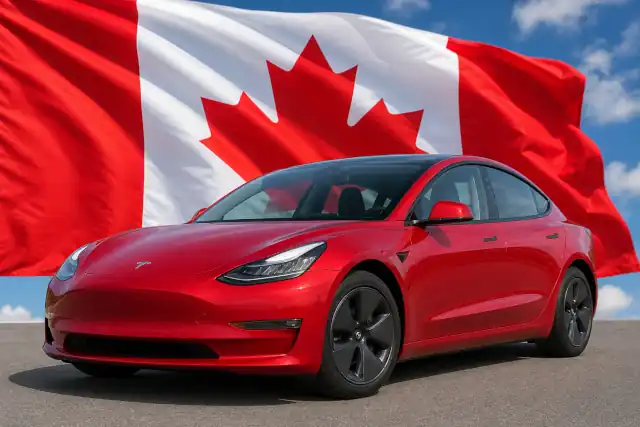
Tesla has made a striking move in the Canadian market: the Model 3 is back — and at a price never seen before north of the border. Starting May 1, 2026, the new Model 3 Premium Rear-Wheel Drive is available to order in Canada at $39,490 CAD, marking the lowest MSRP Tesla has ever offered for this vehicle in the country.
The price cut is the direct result of a supply chain realignment. Tesla has shifted Canadian Model 3 production to its Giga Shanghai facility in China, taking advantage of a January 2026 trade agreement between Ottawa and Beijing — often informally called the “Canola for Cars” deal — which slashed the duty on Chinese-made EVs from a prohibitive 100% down to just 6.1%, the standard most-favoured-nation rate, under a managed quota of 49,000 vehicles per year.
Canada began accepting import permits for Chinese-built EVs on March 1, 2026, and Tesla became the first automaker to capitalize on the arrangement with live product on the Canadian market.
A reshaped lineup
The new Canadian Model 3 roster is now leaner. The previous Premium Long Range variant — priced at $79,990 CAD — has been discontinued. In its place, customers choose between just two configurations: the entry-level Model 3 Premium RWD at $39,490, and the Model 3 Performance, now at $74,990 — down from $89,990 when it was sourced from the United States and subject to tariffs. That represents a reduction of $15,000, or roughly 17%.
The entry-level Premium RWD variant delivers 463 km of NRCan-estimated range and accelerates from 0–100 km/h in 4.2 seconds. Tesla is at pains to stress this is the full Premium configuration — not the stripped-down Standard model introduced in some markets last year.
The EVAP subsidy question: still unresolved
Canada’s new Electric Vehicle Affordability Program (EVAP) — which replaced the earlier iZEV rebate in February 2026 — provides up to $5,000 CAD off eligible EVs with a final transaction value of $50,000 or less. Because China does not have a free trade agreement with Canada, most reporting indicates Shanghai-built vehicles do not meet the program’s country-of-origin requirements, which limits the rebate to vehicles built in countries with Canadian free trade agreements.
Some sources, including TeslaNorth, initially reported that the Model 3 Premium RWD qualified on price alone. However, multiple subsequent analyses — including Electrek and the eletric-vehicles.com tracker — concluded the model is ineligible due to facility-of-origin rules. Tesla’s own configurator reportedly does not show the EVAP incentive applied to the Model 3 as of this writing. Until Transport Canada issues a definitive ruling, treat subsidy eligibility as unconfirmed.
Notably, competing EVs that qualify for EVAP — including the Hyundai Ioniq 6 and Chevrolet Equinox EV — effectively become cheaper out-of-pocket for subsidy-eligible buyers even at higher sticker prices, narrowing Tesla’s pricing advantage.
A gap in the market, filled
The context for this pricing move matters. Canada’s sub-$45,000 electric sedan segment has effectively been barren for years. The Chevrolet Bolt EV, which once anchored this price range, was discontinued in late 2023. The Chevrolet Equinox EV enters at $44,999 — and is a crossover, not a sedan. The Hyundai Ioniq 5 starts above $52,000. Tesla has placed the new Model 3 directly beneath the psychologically important $40,000 threshold, occupying a space with no direct competition.
That advantage may prove short-lived. BYD has announced plans for 20 Canadian dealerships within the year, with Toronto as its first market. The 49,000-unit annual quota for Chinese-made EVs expands to 70,000 by 2030, and by that year, half of all imported Chinese EVs must be priced below $35,000 CAD. Tesla has the first-mover advantage — its existing retail footprint, service centres, and Supercharger network are hard assets no new entrant can match immediately.
First deliveries on the new Canadian lineup are expected in May or June 2026.
Canada MSRP (CAD & approx. USD), range, and key trade-offs — before taxes and incentives, as of May 2026.
| Model | Canada MSRP (CAD) | Approx. USD | EV Range |
|---|---|---|---|
|
2025 Fiat 500e
(RED) Edition, FWD
Lowest sticker
|
From ~$32,000
MSRP ~$42,000; dealer discounts apply
|
≈ $23,000–31,000 |
227 km
42.2 kWh battery
|
|
2025 Nissan Leaf SV
40 kWh, FWD
Pioneer EV
|
~$41,748
Before incentives; EVAP rebate eligible
|
≈ $30,000–31,000 |
240 km
SV Plus: 341 km (60 kWh)
|
|
2026 Kia EV4
Light FWD → GT-Line Limited
New for 2026
|
From $38,995
GT-Line Limited $51,995; EVAP rebate eligible
|
≈ $28,500–38,000 |
391–552 km
58.3 kWh (base) / 81.4 kWh (long range)
|
|
Tesla Model 3 Premium RWD
Shanghai-built, RWD
Record low price
|
$39,490
EVAP rebate likely not applicable (China-built)
|
≈ $29,000 |
463 km
0–100 km/h in 4.2 sec
|
All prices are MSRP in CAD before taxes, freight/PDI, and incentives. USD conversion at approx. $0.735 CAD/USD (May 2026). Range figures are NRCan combined city/highway estimates. EVAP eligibility for the Tesla Model 3 (Shanghai-built) is unconfirmed — verify with Transport Canada before purchase.
The Fiat 500e holds the distinction of being Canada’s lowest-priced new battery electric vehicle in 2025, and it qualifies for the federal EVAP rebate — making it genuinely attainable for first-time EV buyers. Its compact footprint and distinctive Italian design make it well-suited for city driving, and Fiat backs the battery with an 8-year/160,000 km warranty. The trade-offs, however, are significant: at 227 km, it has the shortest range of any vehicle in this comparison, DC fast charging is not available on base trims, rear seating is cramped, and there is no AWD option. For urban commuters who charge at home every night, it works. For anyone who drives regularly beyond city limits, the range anxiety is real.
Key advantages: Lowest entry price of any new BEV in Canada (2025); compact, city-friendly footprint; distinctive Italian design; 8-year/160,000 km battery warranty; eligible for EVAP federal rebate.
Key disadvantages: Very limited 227 km range — worst of this group; no DC fast charging on base trims; cramped rear seating and minimal cargo space; no AWD option available; dealer availability can be limited outside major cities.
The Leaf’s greatest asset is trust. With over 12 billion electric miles driven globally since 2010, it is the most battle-tested EV in this comparison by a wide margin. The 2025 SV comes standard with Nissan Safety Shield 360, ProPILOT Assist semi-autonomous driving, and confirmed eligibility for both the federal EVAP rebate and most provincial incentives. Running costs are low, dealer coverage is broad, and the resale track record is solid. But the Leaf is showing its age. The base SV’s 240 km range is modest, and more critically, its CHAdeMO DC fast-charging port is an increasingly stranded standard — most new charging stations in Canada are being built around NACS and CCS, leaving Leaf owners with a shrinking pool of compatible fast chargers. Buyers who value longevity and proven reliability above cutting-edge specs will still find strong value here; buyers focused on future-proofing their charging setup should think carefully.
The EV4 is the most compelling new entrant in Canada’s affordable EV segment. At $38,995, its base price actually undercuts the new Tesla Model 3 by $495, and — crucially — it qualifies for the $5,000 federal EVAP rebate, meaning the effective out-of-pocket gap between the two is substantial. It is built on Kia’s dedicated E-GMP platform, charges from 10% to 80% in roughly 30 minutes on a DC fast charger, and uses the NACS port — meaning it works natively with the Tesla Supercharger network across Canada. The top-trim GT-Line’s 81.4 kWh battery delivers 488 km of claimed range, and the long-range Wind variant reaches an estimated 552 km, the best of any car here. The fastback design is genuinely striking, and the interior makes strong use of available space. The main caveats: the EV4 is brand new, with no long-term reliability data yet in Canadian conditions, and it is FWD only at launch, which matters for winter driving in much of the country.
The new Model 3 Premium RWD is genuinely compelling in ways that go beyond its sticker price. At $39,490 CAD — roughly $29,000 USD — it is the cheapest Tesla ever sold new in Canada, and its performance figures are class-leading at this price point: 463 km of range and a 4.2-second 0–100 time that no rival here can touch. The mature Tesla software ecosystem, over-the-air updates, and the unmatched breadth of the Supercharger network across Canada give it a day-to-day ownership experience that newer entrants like the EV4 are still working toward. Resale value has historically been stronger than most competitors as well. The significant asterisk is the EVAP subsidy question: because this Model 3 is built in China, and China has no free trade agreement with Canada, it almost certainly does not qualify for the $5,000 federal rebate — meaning the true out-of-pocket comparison against the EVAP-eligible Kia EV4 is closer to $44,490 versus $33,995 after incentives. That is a meaningful gap. Other considerations for some buyers: the minimalist interior with no physical controls divides opinion, there is no AWD on this base trim, and Elon Musk’s high political profile has caused some Canadian consumers to reconsider the brand. Delivery also depends on quota availability under the 49,000-unit annual cap for Chinese-made EVs.
All prices are MSRP in CAD before taxes, freight/PDI, and government incentives unless noted. USD conversion based on approximate May 2026 exchange rate (~$0.735 CAD/USD). Range figures are NRCan combined city/highway estimates; real-world results vary with temperature and driving style. EVAP eligibility for the Tesla Model 3 (Shanghai) is disputed — verify with Transport Canada or your retailer before purchase.
What this means for Canadian EV buyers
For buyers prioritising sticker price, the market under $40,000 has suddenly become much more interesting. The Kia EV4 Light actually starts fractionally below the new Tesla at $38,995 — and crucially, the Kia is eligible for the $5,000 EVAP federal rebate, potentially making its effective out-of-pocket cost competitive even against Tesla’s headline number. The EV4’s range on the 81.4 kWh long-range variant also surpasses the Model 3 Premium RWD by a wide margin.
For buyers who value charging infrastructure and software maturity above all else, Tesla’s offer is still compelling. The Supercharger network remains the most extensive fast-charging network in Canada, and the Model 3’s 4.2-second 0–100 time is unmatched at this price point.
The 2025 Nissan Leaf SV remains a strong choice for risk-averse buyers who want a proven platform, wide dealer access, and confirmed federal incentive eligibility — despite its shorter range. Its CHAdeMO charging standard, however, is a growing concern as North American infrastructure increasingly migrates toward NACS.
The Fiat 500e occupies its own lane: if you live in a city, charge primarily at home, and want the lowest possible entry price with a dose of European style, it makes a compelling case. Its 227 km range makes it a hard sell for anyone who ventures far from urban centres.