Tesla’s War on FSD Jailbreaks: Prison Sentences, Permanent Bans, and a Global Crackdown
Tesla’s War on FSD Jailbreaks: Prison Sentences, Permanent Bans, and a Global Crackdown
- Linux Kernel Removes strncpy After Six Years and 362 Patches
- Linux Kernel Drops 40-Year-Old AppleTalk Protocol — AI-Generated Patch Flood Was the Last Straw
- Apple’s Native Linux Container Tool Has Arrived — But Can It Really Replace Docker?
- 60% of MD5 Password Hashes Can Be Cracked in Under an Hour with a Single GPU
- Dirty Frag: Root Access on Every Major Linux Distribution — No Patch, No Warning
Tesla’s War on FSD Jailbreaks: Prison Sentences, Permanent Bans, and a Global Crackdown
A gray-market surge of CAN bus devices is unlocking Tesla’s Full Self-Driving in unauthorized regions — and Tesla, backed by South Korean authorities, is striking back with bans, voided warranties, and criminal charges.
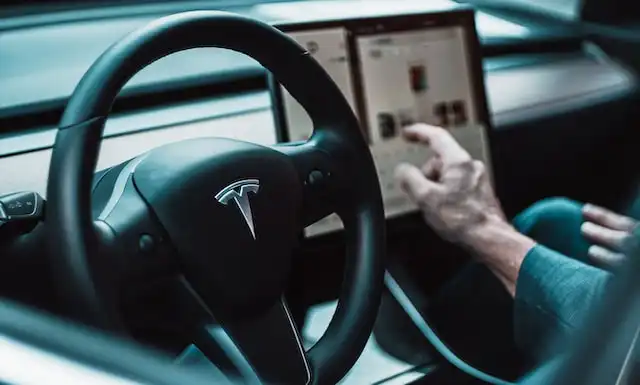
Illustration: AutoDispatch / Tesla FSD geo-restriction architecture
What started as an engineering curiosity has escalated into a full-blown international dispute. Over the past several weeks, a gray market has emerged for small, USB-like devices — typically priced around €500 — that plug directly into a vehicle’s Controller Area Network (CAN) bus, bypassing Tesla’s regional software locks to activate Full Self-Driving (Supervised) in countries where it has not been officially approved.
The technique gained widespread attention after Michal Gapinski, the developer behind the popular Tesla Android project, demonstrated how a CAN bus device could be used to enable FSD in Europe — where the software remains pending regulatory approval. The method piggybacked on Tesla’s infotainment system to spoof authorization, allowing vehicles in unsupported regions to run FSD as if they were in North America.
Tesla Responds: Bans, Warnings, and Voided Warranties
Tesla moved swiftly. The automaker began mass-emailing customers and issuing in-app notifications warning that use of any unauthorized device to modify FSD software is a direct violation of its terms of service. The message was unambiguous: owners caught using these tools face permanent revocation of FSD access, even if they originally purchased the feature.
Tesla’s Official Penalties for Jailbreaking
- Permanent ban from FSD — even for paying customers
- Full legal liability transferred to the owner for any accident involving the hacked feature
- Warranty coverage voided for the entire vehicle, regardless of whether the device caused the damage
- Driver-assistance suite reset to standard Autopilot with no advanced features
In China, the consequences have already materialized. Owners who activated FSD through the CAN bus exploit received in-vehicle notifications confirming they had been permanently banned from the feature. Their driver-assistance packages were also reset to basic Autopilot configurations, stripping away any enhanced functionality.
If you use these devices, you are 100% liable for any accident that occurs — and we reserve the right to refuse warranty repairs regardless of whether the device caused the damage.
— Tesla, official warning to owners, March–April 2026Tesla also flagged the devices as a cybersecurity threat, warning that connecting third-party hardware to the CAN bus could introduce software vulnerabilities exploitable by malicious actors — a concern that extends well beyond unauthorized FSD activation.
South Korea: The Crackdown Goes Criminal
The most severe response has come from South Korea, where government intervention has elevated the situation from a corporate policy dispute to a criminal matter. The South Korean Ministry of Land, Infrastructure and Transport (MOLIT) issued a formal warning classifying the use of unauthorized FSD activation tools as a violation of the country’s Motor Vehicle Management Act.
The situation in South Korea is complicated by the country’s certification framework. Under a Korea–U.S. Free Trade Agreement exemption, FSD is already available on American-built Teslas — the Model S, Model X, and Cybertruck — because U.S.-manufactured vehicles meeting federal safety standards can receive over-the-air software updates without separate local certification. However, China-built models, namely the Model 3 and Model Y, follow UNECE safety standards and have not yet received FSD certification under South Korea’s regulatory framework. These vehicles account for an estimated 99.7% of Tesla’s Korean sales in 2024.
This means thousands of South Korean owners who paid upwards of $6,000 for the FSD package are legally blocked from using a feature they own — creating precisely the frustration that has fueled the jailbreak market in the first place.
A Gray Market Born from Regulatory Delay
The anger is understandable. Tesla has been geo-blocking FSD from most of the world not because the technology doesn’t work there, but because formal regulatory approvals have lagged significantly behind the software’s global rollout. Europe remains the most prominent example: Tesla has been conducting FSD demo rides on the continent for months, and the company’s latest software update (version 2026.8.6) carries FSD v14.2.2.5 already running in the background on European vehicles in shadow mode.
Editor’s Context
Tesla has submitted all documentation required for UN R-171 approval in the Netherlands, working closely with Dutch vehicle authority RDW. Approval — expected in April 2026 — would likely trigger a broader EU rollout. South Korean authorities, meanwhile, are preparing to adopt the UNECE Driver Control Assist Systems framework, which could open the door for China-built Teslas to use supervised FSD as early as 2027.
Publicly available source code related to the bypass method — a point explicitly flagged by MOLIT in its warning — has lowered the technical barrier further, raising concerns that jailbreaking attempts could spread rapidly before official approvals are secured.
What This Means for Tesla Owners
For owners outside North America who purchased FSD, the message from Tesla and regulators is stark: the legitimate path exists and is expanding, but attempting to shortcut it carries severe consequences. In South Korea, this is no longer just a warranty matter — it is a potential criminal offense. In China, permanent bans are already being enforced. Globally, Tesla has made clear that its connected vehicle architecture gives it full visibility into which vehicles are running unauthorized modifications.
The broader issue this episode exposes is a tension that will only intensify as advanced driver-assistance systems proliferate globally: the gap between a technology’s technical readiness and the pace of regulatory approval creates demand for workarounds that no amount of enforcement can fully suppress. Tesla’s crackdown may deter casual attempts, but until FSD is genuinely available in every market where owners have paid for it, the gray market it is fighting will have a ready supply of frustrated customers.