VoIP SIP Protocol: Is It No Longer Safe Today?
VoIP SIP Protocol: Is It No Longer Safe Today?
- Linux Kernel Removes strncpy After Six Years and 362 Patches
- Linux Kernel Drops 40-Year-Old AppleTalk Protocol — AI-Generated Patch Flood Was the Last Straw
- Apple’s Native Linux Container Tool Has Arrived — But Can It Really Replace Docker?
- 60% of MD5 Password Hashes Can Be Cracked in Under an Hour with a Single GPU
- Dirty Frag: Root Access on Every Major Linux Distribution — No Patch, No Warning
Cybersecurity Analysis | April 2026
A comprehensive look at the growing threat landscape targeting Session Initiation Protocol infrastructure — and what organizations must do about it.
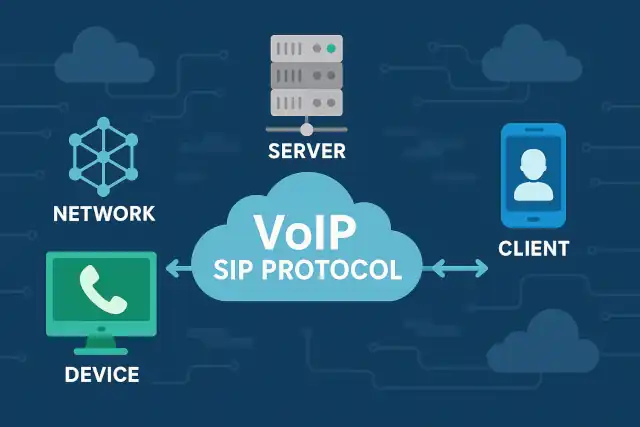
Voice over Internet Protocol (VoIP) has fundamentally transformed business communications over the past two decades. By routing voice calls over data networks instead of traditional telephone lines, it offered cost savings, flexibility, and rich features that legacy telephony could never match. The backbone of most VoIP deployments is the Session Initiation Protocol (SIP) — the signaling standard that sets up, manages, and tears down voice and video calls across IP networks.
But as SIP became ubiquitous, it also became a target. Today, in 2026, the question facing every IT security professional, network administrator, and business owner is no longer simply whether their phone system works — it is whether it is secure. The answer, increasingly, is that it depends heavily on how it has been implemented, hardened, and maintained.
“The question is no longer whether SIP Trunking is safe, but whether it is implemented safely.” — BizNet Technology, 2026
This article examines the major, well-documented security vulnerabilities inherent to SIP and VoIP infrastructure in 2025–2026, why the threat landscape is accelerating, and what practical defenses exist.
1. The Expanded Attack Surface
When organizations moved their voice communications onto IP networks, they gained tremendous capability — but they also exposed their phone systems to the same cyber threats already targeting corporate networks, cloud systems, and digital assets. Security experts refer to this as an “expanded attack surface.”
The convergence of voice and data networks means cybercriminals now have multiple entry points to compromise VoIP systems — from exploiting network vulnerabilities to targeting endpoint devices, from intercepting SIP traffic to launching sophisticated social engineering campaigns. The complexity increases further when businesses deploy hybrid environments that integrate cloud-based VoIP services with on-premises infrastructure.
The scale of the problem is significant. According to recent cybersecurity reports, VoIP-related security incidents have increased by 47% since 2024, with businesses experiencing everything from eavesdropping attacks to complete system takeovers. In 2026, automated scanning tools continuously probe internet-facing SIP infrastructure, identifying misconfigured systems within minutes of deployment.
2. Core Vulnerabilities in SIP Infrastructure
2.1 Unencrypted Signaling and Media
Perhaps the most fundamental problem with SIP is that it was designed at a time when security was an afterthought. Plain SIP signaling typically runs over ports 5060 (UDP/TCP) and 5061 (TLS). When TLS is not enforced, all call setup information — including credentials, phone numbers, and session metadata — travels in cleartext across the network.
Compounding this, the voice media itself is carried separately by the Real-Time Transport Protocol (RTP). Even when SIP signaling is protected by TLS, media traveling as plaintext RTP remains fully exposed. An attacker who can capture packets on the network path between two endpoints can reconstruct the audio of any call in real time using widely available tools. For organizations handling healthcare, financial, or legal communications, this is both a security risk and a compliance failure.
2.2 Weak Authentication and Credential Stuffing
SIP uses digest authentication — a challenge-response mechanism that, while better than nothing, has well-documented weaknesses. Many SIP endpoints and PBX systems still ship with default usernames and weak passwords, leaving them vulnerable to credential stuffing and brute-force attacks.
Automated tools continuously scan the internet for open SIP services, and unprotected registrars can receive thousands of registration attempts per hour. Once an attacker obtains valid SIP credentials, they can reroute calls, eavesdrop on conversations, or move laterally within the network.
2.3 Registration Hijacking
Registration hijacking occurs when an attacker sends forged SIP REGISTER messages to redirect a legitimate user’s calls to a different endpoint. If the registrar accepts the forged registration, inbound calls intended for the real user are delivered to the attacker — silently, without the victim knowing. Brute-force registration scanning is the most common vector for this type of attack.
2.4 Misconfiguration as a Root Cause
A significant number of SIP breaches are caused not by sophisticated zero-day exploits, but by poor configuration. Open SIP ports exposed directly to the internet, permissive dial plans, unused services left active, and weak or absent access controls all create easy footholds for attackers. Security researchers consistently identify misconfiguration as one of the leading causes of SIP infrastructure compromise.
3. Toll Fraud: The Financial Weapon
Toll fraud — also known as International Revenue Share Fraud (IRSF) — remains one of the most financially damaging and pervasive threats targeting SIP infrastructure. Cybercriminals exploit unsecured SIP accounts, PBX servers, or weak credentials to place unauthorized international calls to premium-rate numbers they control. These calls often go unnoticed until significant financial loss has already occurred.
The mechanics are brutally efficient. Attackers deploy automated bots to scan the internet for exposed SIP endpoints. Once they gain access, they place thousands of outbound calls to expensive international destinations. Losses can exceed $200,000 per hour in severe cases, with IRSF attacks capable of depleting a prepaid account within two to four hours.
This is no longer a fringe threat. Call center fraud generated over $1.9 billion in losses in 2024 alone, according to industry reports. Toll fraud affects organizations of all sizes — from SMBs with a single SIP trunk to large enterprises with multi-site voice infrastructure.
4. SIP-Based Denial of Service Attacks
SIP servers are inherently sensitive to high volumes of requests. In a denial-of-service attack, adversaries overwhelm SIP infrastructure with malformed or fake SIP packets — SIP INVITE floods, registration floods, or other protocol-level abuse — making the system unavailable for legitimate users. VoIP networks are particularly vulnerable to SIP-based DDoS attacks because call-processing is real-time and latency-sensitive.
For organizations that rely on voice for operations — call centers, emergency services, financial trading floors — a SIP-based DoS attack can halt business entirely. Telephony Denial of Service (TDoS) is sometimes used as a diversion tactic, keeping security teams occupied on voice outages while a larger attack unfolds elsewhere on the network.
5. The AI Dimension: Voice Cloning and Vishing
The threat landscape has taken a dramatic turn with the weaponization of artificial intelligence against voice communications. What was once a theoretical concern is now an active, industrial-scale attack vector.
5.1 Voice Cloning Has Crossed the Indistinguishable Threshold
Voice cloning technology now requires as little as three seconds of audio to produce a convincing replica of a specific person’s voice — complete with natural intonation, rhythm, emphasis, emotion, pauses, and breathing. According to Fortune’s analysis in late 2025, AI-generated voice has crossed what researchers call the “indistinguishable threshold”: the average listener can no longer reliably distinguish a cloned voice from a real one.
This capability is actively fueling large-scale fraud. Some major retailers report receiving over 1,000 AI-generated scam calls per day. Deepfake-enabled vishing attacks surged by over 1,600% in Q1 2025 compared to Q4 2024, and vishing overall doubled in 2025 according to the CrowdStrike 2025 Global Threat Report.
5.2 Integration with VoIP Infrastructure
The reason this matters directly to SIP security is that AI voice attacks are delivered over VoIP infrastructure. Caller ID spoofing — trivially performed using VoIP platforms — allows attackers to display any trusted number, including those of banks, executives, or government agencies, increasing the likelihood calls are answered and believed.
AI-powered tools now integrate seamlessly with enterprise VoIP and collaboration platforms, enabling one operator to run thousands of concurrent, personalized calls. Real-world incidents have caused devastating losses: a Canadian insurance firm lost nearly $12 million in early 2025 after attackers used an AI-cloned CFO voice to pressure a subordinate into authorizing wire transfers. In early 2025, fraudsters cloned the voice of Italian Defense Minister Guido Crosetto and used it to solicit ransom payments from high-profile business leaders.
“By the end of 2026, most voice-based social engineering will not involve a true human voice. Hacking via social engineering is getting ready to change forever.” — NCC Group researcher, October 2025
5.3 Organizational Impact
Deepfake fraud losses exceeded $200 million globally in 2025. Organizations lose an average of $14 million annually to vishing attacks. Perhaps most alarming, human detection accuracy for high-quality deepfake audio can drop to as low as 24.5% — meaning most people cannot reliably identify a cloned voice even when specifically trying to.
6. The Compliance and Regulatory Response
Regulatory bodies have begun to take notice. The U.S. Federal Communications Commission (FCC) issued a ruling in November 2024 (FCC 24-120) requiring every voice service provider to sign calls using their own STIR/SHAKEN digital certificate by September 2025. STIR/SHAKEN is a framework for caller ID authentication that uses cryptographic tokens to let terminating providers verify that the calling number was legitimately assigned by the originating provider.
While STIR/SHAKEN addresses the specific problem of caller ID spoofing within the public telephone network, it does not resolve the broader SIP security challenges of encryption, authentication, DoS protection, or AI-driven fraud. It is a necessary but far from sufficient response.
For organizations in regulated industries — healthcare, finance, legal — the failure to secure VoIP infrastructure also creates direct compliance exposure under frameworks such as HIPAA, PCI-DSS, and various data protection regulations that require the confidentiality of sensitive communications.
7. How to Secure SIP Infrastructure Today
The good news is that SIP can be secured. The bad news is that securing it requires deliberate, layered effort — it does not happen by default. The following are the essential countermeasures that security professionals and the industry broadly recommend for 2026:
🔒 ENCRYPTION
- Enforce TLS (Transport Layer Security) for all SIP signaling — use port 5061 rather than 5060
- Deploy SRTP (Secure Real-Time Transport Protocol) for voice media on every call leg
- Require TLS 1.3 where supported; reject older protocol versions
🔑 AUTHENTICATION AND ACCESS CONTROL
- Replace all default credentials immediately; enforce minimum 12-character passwords
- Implement IP-based whitelisting — restrict SIP traffic to known, authorized endpoints
- Enable multi-factor authentication for VoIP administration interfaces
- Apply the principle of least privilege: disable unused SIP features, restrict dial plans
🌐 NETWORK SEGMENTATION
- Place VoIP phones and SIP servers in dedicated VLANs, isolated from general corporate networks
- Block SIP management ports (80, 443, 5060) from untrusted networks using firewalls
- Treat VoIP infrastructure as mission-critical, not as an unmonitored utility
📡 MONITORING AND DETECTION
- Monitor in real time for anomalous SIP traffic: unexpected REGISTER requests, unknown SIP peers, calls to new international destinations, and traffic outside business hours
- Configure SIEM alerts for unusual call volume patterns, authentication failures, and rapid account lockouts
- Conduct quarterly penetration testing of SIP infrastructure
🚫 ANTI-FRAUD CONTROLS
- Implement geo-blocking and restrict international calling to users and destinations that require it
- Set concurrent call limits and credit caps to limit IRSF exposure
- Enable real-time fraud detection and automated alerts for anomalous call patterns
🧑💼 HUMAN LAYER DEFENSES
- Train employees to verify voice-based requests through independent callback procedures, especially for financial authorizations
- Establish code word protocols for sensitive operational communications
- Run regular vishing simulation exercises — quarterly at minimum
Conclusion: Implementation Safety Is the Real Question
The question of whether VoIP SIP protocol is “safe” does not have a simple yes or no answer. SIP, when implemented with modern encryption, strong authentication, network segmentation, real-time monitoring, and robust fraud controls, can be made substantially secure. The protocol itself, however, was not built with security as a first principle, and its default state remains dangerously permissive.
What has changed in 2025 and 2026 is the scale and sophistication of the threat. Automated scanning tools find misconfigured SIP endpoints within minutes. AI-powered voice cloning has rendered traditional voice authentication unreliable. Financial fraud via compromised VoIP infrastructure is measured in billions of dollars annually. And the regulatory environment is tightening.
The industry consensus, reinforced by every major security research publication, points to the same conclusion: organizations that treat voice infrastructure as a utility — set it up, forget it, and never patch or monitor it — are accepting unacceptable risk. Those that apply the same security discipline to SIP that they apply to their web servers, email systems, and cloud applications can dramatically reduce their exposure.
VoIP SIP is not inherently broken. But in today’s threat environment, an unsecured SIP deployment is effectively an open door — and sophisticated adversaries, both human and AI-assisted, are actively looking for it.
Sources and Further Reading
BizNet Technology | Cellcrypt | CrowdStrike 2025 Global Threat Report | ENISA | Fortune | Google Cloud / Mandiant | NCC Group | Rapid7 | TelcoBridges | Vectra AI | VoIP Security News (Contactivity.io)