AMD Confirms AM5 Socket Will Support at Least Two More Generations of New CPUs: Next Socket Arrives Only After DDR6 & PCIe 6.0 Mature
- 60% of MD5 Password Hashes Can Be Cracked in Under an Hour with a Single GPU
- Dirty Frag: Root Access on Every Major Linux Distribution — No Patch, No Warning
- Ubuntu 26.04 LTS (Resolute Raccoon): The Most Ambitious Ubuntu LTS in a Decade
- Proton Mail: Data Transferred to FBI Again!
- How Close Are Quantum Computers to Breaking RSA-2048?
- How to Prevent Ransomware Infection Risks?
- What is the best alternative to Microsoft Office?
AMD Confirms AM5 Socket Will Support at Least Two More Generations of New CPUs: Next Socket Arrives Only After DDR6 & PCIe 6.0 Mature
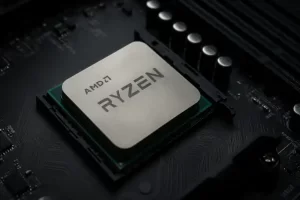
At Computex 2026 in Taipei, AMD’s Corporate Vice President and General Manager of Client Channel and Graphics Business, David McAfee, sat down with WCCFtech for a roundtable interview and delivered a landmark commitment: the AM5 platform will receive continued support through at least 2029, encompassing at least two entirely new Zen architectures — Zen 6 and Zen 7.
AM5 Extended Through 2029 — Two More Zen Generations Confirmed
When AMD launched the AM5 socket in 2022 alongside its Ryzen 7000 (Zen 4) processors, the company had internally projected a shift to a next-generation platform — tied to DDR6 memory adoption — around 2027–2028. That timeline has now been officially pushed back. At Computex 2026, AMD confirmed the AM5 platform will remain its primary desktop socket all the way through 2029, extending the original plan by roughly two years.
“In 2026, we see this window going out further. We have products that support it. We believe the memory ecosystem clearly supports this. And we have confidence that we’ll be bringing new products and architectures into the AM5 platform through 2029.”
— David McAfee, Corporate VP & GM, Client Channel & Graphics Business, AMD
The extension means AM5 will host at least two brand-new CPU microarchitectures: Zen 6 (codenamed “Morpheus,” expected on TSMC 2nm in 2026–2027) and Zen 7 (with early rumblings pointing to TSMC’s A14 1.4nm node and a potential flagship 32-core design, slated for around 2028). Both will be accompanied by refresh and variant products, consistent with AMD’s AM4-era strategy.
- AM5 support officially confirmed through 2029 — up from the previous “2027+” commitment
- At least two new Zen architectures (Zen 6 and Zen 7) will launch on AM5
- AM5 launched in 2022 with Zen 4; Zen 5 followed in 2024; AM5 will span at least three major Zen generations
- The original 2027–2028 DDR6 transition window was pushed back due to soaring memory prices and DDR6/PCIe 6.0 ecosystem immaturity
- A new socket will only arrive when DDR6 and PCIe 6.0 deliver tangible, real-world user value
Why the Extension? The “RAMpocalypse” and Ecosystem Readiness
McAfee cited two principal factors driving the extended timeline. First, memory prices have surged dramatically — what the industry has dubbed the “RAMpocalypse” — making it difficult for consumers to justify a full platform rebuild. Second, DDR6 and PCIe 6.0 have not yet matured to the point where they deliver meaningful, real-world performance advantages for mainstream users, especially gamers.
McAfee drew a direct parallel to the PCIe 4.0-to-5.0 transition, which significantly raised motherboard costs while providing almost no perceptible gaming performance benefit in most scenarios. AMD’s stated policy going forward is straightforward: a next-generation platform will only be introduced when the new standards actually provide differentiated, valuable improvements for end users — not simply because they exist.
“The transition from PCIe 4.0 to 5.0 significantly increased motherboard costs, but in most gaming scenarios users will hardly feel a noticeable difference. We will only consider switching platforms when the new standard provides a differentiated and valuable experience for end users.”
— David McAfee, AMD
A “Disruptive” Change — AMD Reflects on Past Platform Churn
McAfee was candid about the cost — both to consumers and partners — of frequent platform transitions. Before AM4, AMD cycled through new motherboard platforms every one to two years, a practice he described bluntly as “very painful” for the ecosystem. A new socket is not merely a connector change; it demands a complete redesign of motherboard layout, memory routing, signal integrity engineering, PCIe trace design, and power delivery architecture.
AM4, which launched in 2016 and spanned multiple Zen generations, served as proof that long-lived platforms benefit everyone. AM5 is now on track to replicate — or even exceed — that legacy. McAfee also endorsed Intel’s recent move toward greater platform longevity, calling it the “more sensible approach” for the industry as a whole.
Good News for Budget Builders: X3D Barely Needs Dual-Channel RAM
In a segment likely to be welcomed by cost-conscious gamers, McAfee shared an eye-opening datapoint about AMD’s 3D V-Cache processors. Internal testing across 30 games showed that running an X3D CPU with a single memory module versus two resulted in a performance difference of just 0.5% — essentially imperceptible. Because X3D designs leverage large on-die cache to compensate for memory bandwidth limitations, they are largely insensitive to the dual-channel bandwidth advantage that matters more on conventional CPU designs.
The practical implication: consumers facing today’s elevated memory prices can purchase a single DDR5 module now, run their X3D system without meaningful performance compromise, and add a second module later when prices normalize.
More Overclocking Headroom Coming — AMD Changes Strategy
McAfee also outlined a change to AMD’s CPU tuning philosophy. Going forward, AMD plans to reserve more headroom for user overclocking rather than extracting every last bit of performance at the factory clock speed. This shift reflects a broader effort to give enthusiasts and overclockers more room to push their hardware — a welcome signal for the DIY community that has long pushed for greater out-of-box tuning flexibility. AMD also announced EXPO Ultra Low Latency (EXPO ULL) memory profiles at Computex, promising up to 4% additional gaming performance compared to standard EXPO profiles on existing AM5 systems.
In an era of record hardware prices and relentless upgrade cycles, AMD’s commitment to AM5 through 2029 is a meaningful, consumer-friendly statement. Owners of existing AM5 motherboards can confidently plan for at least two future CPU upgrades within the same platform. For those still on AM4 or considering a first-time AM5 build, the extended support window substantially improves the long-term value proposition of any investment made today.
WCCFtech — “AMD Says It Will Bring New Zen Architectures & Products To AM5 Through 2029” (June 6, 2026)
AMD Official Blog — “AMD Computex 2026: 10 Years of AM4, AM5 Support Through 2029” (June 2026)
Tom’s Hardware, VideoCardz, PC Gamer, TweakTown — Computex 2026 coverage
Note: David McAfee’s accurate title is Corporate Vice President and General Manager, Client Channel and Graphics Business, AMD. The WCCFtech interview was published June 6, 2026, not June 7.