Why Are Microsoft, IBM, and Bezos Betting on DNA Storage Technology?
Why Are Microsoft, IBM, and Bezos Betting on DNA Storage Technology?
- Linux Kernel Removes strncpy After Six Years and 362 Patches
- Linux Kernel Drops 40-Year-Old AppleTalk Protocol — AI-Generated Patch Flood Was the Last Straw
- Apple’s Native Linux Container Tool Has Arrived — But Can It Really Replace Docker?
- 60% of MD5 Password Hashes Can Be Cracked in Under an Hour with a Single GPU
- Dirty Frag: Root Access on Every Major Linux Distribution — No Patch, No Warning
Why Are Microsoft, IBM, and Bezos Betting on DNA Storage Technology?
How a once-theoretical technology crossed a critical commercial threshold in 2025
Published February 2026 | Technology & Innovation Report
The world generates data at a pace no existing storage infrastructure can comfortably keep up with. Hard drives, solid-state drives, and magnetic tape — the workhorses of enterprise archiving — are approaching the physical limits of their density, require constant power to maintain, and degrade over decades.
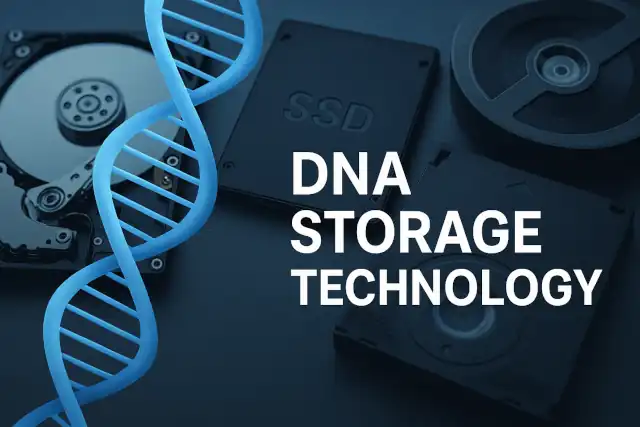
Into this gap steps DNA data storage: a technology that encodes binary data into the four-letter chemical alphabet of deoxyribonucleic acid, promising densities, longevity, and energy profiles that conventional media cannot match.
After years of research-lab demonstrations, 2025 marked the year the technology began its transition from theoretical promise to commercial reality.
How DNA Storage Works
The four nucleotide bases that form the building blocks of DNA — adenine (A), thymine (T), guanine (G), and cytosine (C) — can be mapped directly to binary code. In a typical encoding scheme, each base pair represents two bits (for example, 00=A, 01=C, 10=G, 11=T), allowing digital files to be translated into synthetic DNA strands. Crucially, DNA storage systems do not use living organisms. Data is written into chemically synthesized DNA sequences, stored in a stable physical container such as a glass bead or zeolite-coated enclosure, and later read back using DNA sequencing technology.
Error-correction algorithms are layered throughout the process to guard against the chemical errors that can occur during synthesis or sequencing. The result is a read/write cycle that is far slower than a flash drive — retrieval can take hours — but a storage medium that requires no ongoing power and can remain stable for centuries under the right conditions.
Three Core Advantages Over Conventional Storage
1. Extreme Storage Density
DNA’s information density dwarfs anything silicon or magnetic media can achieve. Research has demonstrated the theoretical capacity to store over 200 petabytes of data per gram of DNA — roughly equivalent to tens of millions of DVDs in a volume smaller than a sugar cube. A breakthrough published in Nature in September 2025 by researchers at the Southern University of Science and Technology demonstrated a DNA-encoded cassette capable of holding up to 36 petabytes on a compact reel, protected by a zeolite imidazolate framework (ZIF) coating and projecting stability of more than 2,000 years at room temperature.
2. Long-Term Durability Without Active Power
Unlike magnetic tape or HDDs, which require periodic migration cycles every five to ten years to prevent data loss, DNA stores information passively. Once written, it demands zero power to maintain. The same zeolite-based encapsulation used in the 2025 Nature study projects data integrity over millennia under ambient conditions. For government archives, cultural heritage institutions, and scientific repositories, this eliminates the recurring cost and risk of media refresh cycles.
3. Minimal Ongoing Energy Consumption
Data centers consume enormous amounts of electricity simply to keep storage media powered, cooled, and accessible. DNA storage requires energy only during the write and read phases; stored DNA consumes nothing in between. As enterprises and governments face growing pressure to reduce the carbon footprint of their data infrastructure, this characteristic makes DNA an attractive long-term complement to active storage tiers.
The Challenges That Remain
DNA storage’s advantages are real, but the barriers to broad commercial adoption are equally significant and should not be understated.
Cost
DNA synthesis and sequencing remain expensive. A 2021 MIT study estimated the cost of storing one petabyte of data on DNA at approximately one trillion dollars — a figure that illustrates just how far costs must fall before the technology can compete with tape for general-purpose archiving. The costs have declined significantly since then, and continued improvements in enzymatic synthesis (a greener, faster alternative to chemical phosphoramidite-based synthesis) are accelerating that trajectory, but mass-market price parity with magnetic tape is likely still years away.
Speed
Reading and writing data to DNA can take hours or even days. This makes DNA storage entirely unsuitable for hot or warm data — it is best positioned as a cold-tier archival medium for data that is written once and rarely, if ever, accessed. Research is ongoing to improve throughput. In March 2025, researchers at the Technion in Israel unveiled DNAformer, an AI-based method that accelerates DNA sequence retrieval speeds by up to 3,200 times while maintaining accuracy, a significant step toward making read operations more practical.
Error Rates and Accuracy
Chemical errors during synthesis and sequencing can introduce data corruption. Advanced error-correction codes are embedded throughout modern DNA storage systems, but achieving the near-perfect accuracy that enterprise data storage demands — without dramatically inflating cost — remains an active area of research.
Integration Complexity
Incorporating DNA storage into existing IT infrastructure requires new workflows, specialized equipment, and trained personnel. There are currently no plug-and-play integration paths into standard enterprise storage systems, though the DNA Data Storage Alliance (DDSA) — now operating under the Storage Networking Industry Association (SNIA) — has published a 52-page technology review outlining commercialization roadmaps and standards work intended to bridge this gap.
2025: A Turning Point Year
Despite the remaining challenges, 2025 produced a series of milestones that moved DNA storage decisively from the laboratory into the commercial arena.
Atlas Eon 100: The First Commercial-Scale DNA Storage Service
The most consequential development of the year was the December 2025 launch of Atlas Eon 100 by Atlas Data Storage, a Twist Bioscience spin-out. Atlas describes its offering as the world’s first scalable DNA data storage service. The company — which raised $155 million in seed funding from investors including ARCH Venture Partners, Bezos Expeditions, and In-Q-Tel — targets ‘cold’ data: the roughly 80% of enterprise information written once and accessed infrequently. Atlas CTO Bill Banyai, who co-founded Twist Bioscience and spent over a decade developing the underlying technology, noted the product addresses long-term archiving, AI model data preservation, and heritage content safeguarding.
Research Breakthroughs Reinforced Viability
Alongside commercial progress, 2025 delivered important scientific advances. The Nature cassette paper from Southern University of Science and Technology demonstrated that a ZIF-protected DNA reel could store 36 petabytes with multi-millennial stability projections. In April 2025, the European MI-DNA Disc initiative, funded under the Horizon Europe EIC Pathfinder programme, unveiled the first in-vivo system capable of writing, editing, storing, and retrieving data using living bacterial cells — an entirely different approach aimed at achieving low-cost, energy-efficient storage for applications including healthcare data and cultural heritage archives.
The Enzymatic Synthesis Shift
The industry is converging on enzymatic DNA synthesis as the preferred alternative to traditional chemical phosphoramidite methods. Enzymatic synthesis is faster, generates less chemical waste, and operates under ambient conditions — advantages that are critical for achieving the cost and throughput levels needed for commercial viability. Startups and research consortia are racing to develop proprietary enzymes capable of synthesizing DNA strands at high fidelity and scale.
Key Players and the Industry Ecosystem
A growing ecosystem of companies and institutions is shaping the DNA storage landscape:
- Atlas Data Storage (USA): Twist Bioscience spin-out and the leading commercial DNA storage provider. Launched Atlas Eon 100 in December 2025 with $155M in seed funding.
- Catalog Technologies (USA): Developing a proprietary DNA-based computation and storage platform with a focus on mass-parallel data writing and exascale archiving.
- Biomemory (France): A European pioneer in DNA data synthesis and storage, backed by eureKARE and the French Tech Seed Fund.
- Microsoft (USA): Collaborating with academic institutions on automated DNA read/write systems and AI-driven encoding algorithms, with a long-term R&D focus on molecular storage.
- IBM (USA): Exploring DNA and molecular storage as part of its nanotechnology and quantum data systems research, with AI-driven encoding and decoding emphasis.
- Illumina (USA): A sequencing technology leader providing next-generation sequencing tools increasingly tailored to DNA storage read operations.
- Fraunhofer Institutes (Germany): Three institutes collaborating on the BIOSYNTH project to develop portable, low-energy microchip platforms for synthetic DNA-based mass data storage.
Industry coordination is provided by the DNA Data Storage Alliance (DDSA), now housed within SNIA, which publishes technical standards, commercialization guidance, and technology reviews to support interoperability and reduce integration friction.
Market Outlook
Market analysts project rapid growth from a small base. The North American DNA data storage market alone was estimated at approximately $83 million in 2025, with projections pointing toward multi-billion-dollar scale by the early 2030s. The technology is best understood in phases: pilot programs and early commercial deployments are underway now through roughly 2027; broader enterprise adoption is expected between 2028 and 2032; and transformative applications — including AI training data archiving and national-level genomic archives — are projected to emerge post-2035.
The signals that DNA storage is approaching mainstream viability are worth watching: continuing declines in the per-base cost of DNA synthesis, maturation of enzymatic synthesis platforms, publication of interoperability standards by SNIA/DDSA, pilot programs by government agencies and hyperscalers, and the expansion of vendor product offerings beyond Atlas’s initial service.
Conclusion: A Complement, Not a Replacement
DNA data storage will not replace hard drives or magnetic tape in the near term — and it may never be appropriate for hot or warm data tiers given its inherently slow read/write speeds. What it offers is something conventional media fundamentally cannot: passive, ultra-dense, millennia-stable archiving that requires no power after the write phase is complete.
For organizations managing scientific research data, government records, cultural heritage content, and AI training datasets — where data volumes are enormous and access is infrequent but data integrity over very long time horizons is paramount — DNA storage is becoming a serious option to evaluate. The commercial launch of Atlas Eon 100 in December 2025, combined with the scientific progress achieved throughout the year, means this is no longer a technology to monitor from a safe distance. It is a technology to begin piloting.
Sources: Atlas Data Storage (PR Newswire, Dec 2025); Nature (Southern University of Science and Technology, Sep 2025); Blocks & Files; SNIA DNA Data Storage Alliance Technical Review; Fraunhofer IPMS (May 2025); Precedence Research; Technion / DNAformer (Mar 2025); MI-DNA Disc / Horizon Europe (Apr 2025).